Best Router Sled for Flattening Slabs: Linear Bearing, Gantry, and DIY Compared
Compare the best router sleds for flattening slabs, including linear bearing, gantry, and DIY options, to find the right fit for your woodworking projects.
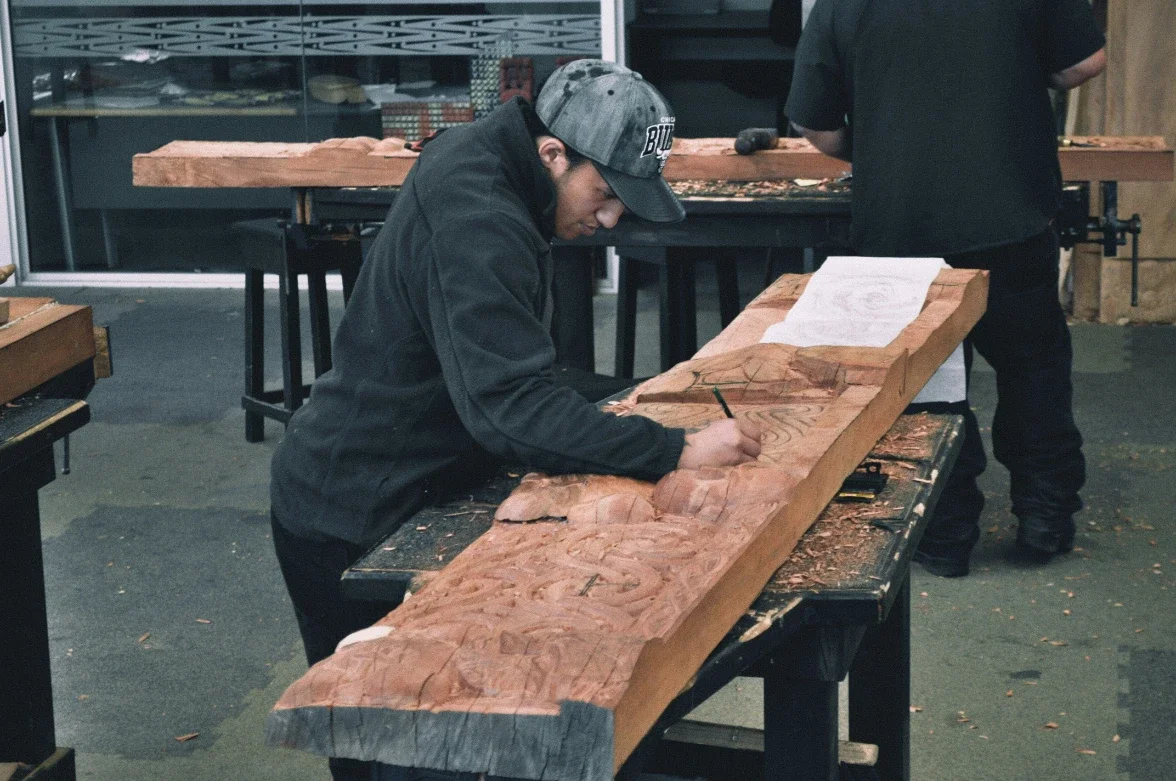
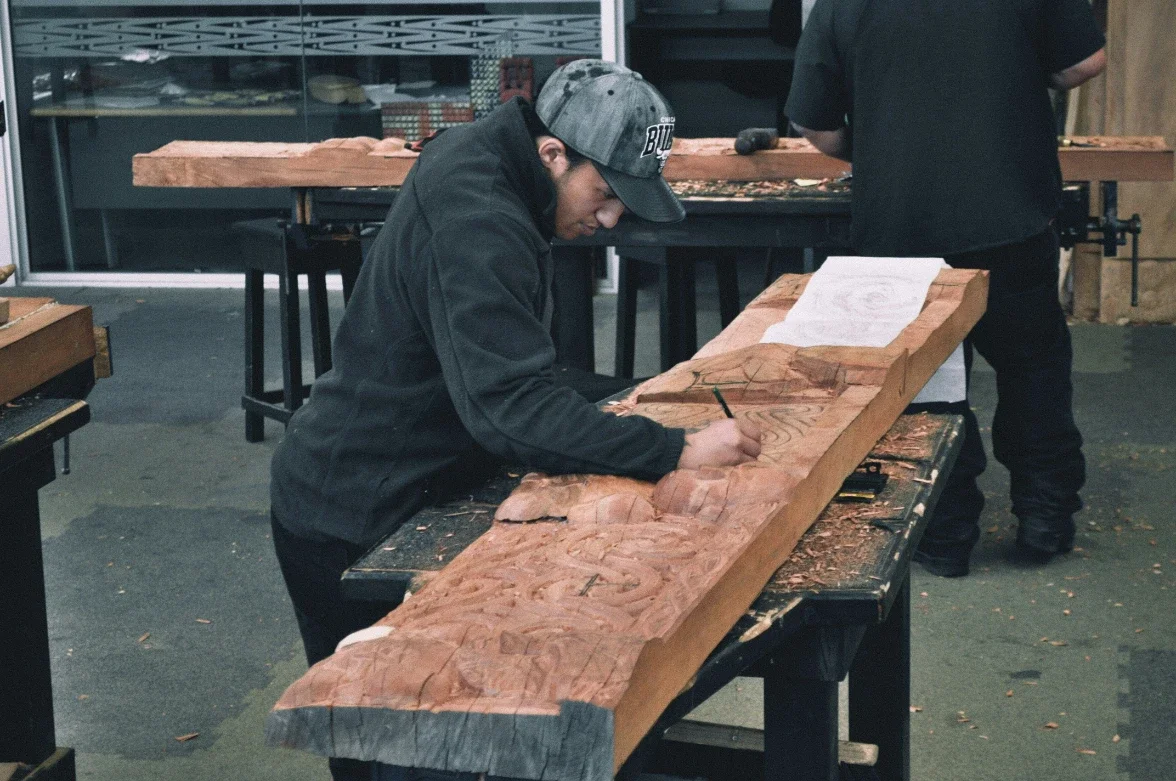
Few woodworking projects are as satisfying as turning a rough live-edge slab into a perfectly flat tabletop. But achieving that flat surface depends less on the router itself and more on the system guiding it.
The best router sled isn't simply the most expensive model. It is the one that matches the size of your slabs, the number of projects you build each year, and the level of accuracy you expect. A hobbyist flattening a coffee table every few months has very different needs from a furniture maker surfacing oversized walnut slabs every week.
Today there are three main router sled designs:
DIY plywood sleds
Aluminium extrusion sleds
Linear bearing or gantry systems
Each solves the same problem differently, and understanding those differences is far more important than choosing between brands.
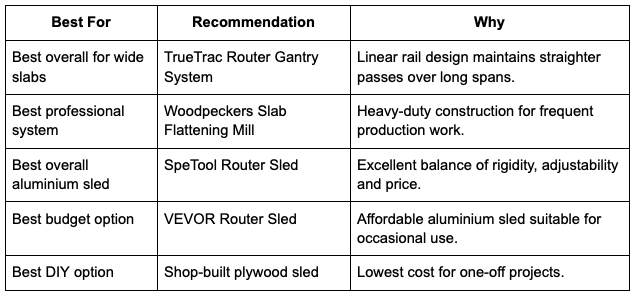
Quick Recommendations
Why Router Sled Design Matters
Many buyers compare router sleds by price alone, but the design of the sled has a much greater effect on the finished surface.
Every router sled supports a heavy plunge router while moving it across the slab. The farther that router is supported from the rails, the greater the chance of flex.
Even tiny amounts of movement become visible once the cutter begins removing material.
A deflection of only a few tenths of a millimetre can leave:
shallow ridges
low spots
uneven surfacing
extra sanding
additional finishing work
As slab width increases, these small inaccuracies become much more noticeable.
This is why professional shops place so much importance on rigidity rather than simply buying the biggest router available.
The Three Types of Router Sled
1. DIY Plywood Router Sled
A DIY router sled is usually built from plywood or MDF with two straight rails supporting a simple carriage.
It remains one of the cheapest ways to flatten a slab and can often be built using leftover materials from the workshop.
Advantages
Lowest overall cost
Easy to customise
Can be built in a weekend
Unlimited working length
Good learning project
Drawbacks
Plywood can warp over time.
More friction while pushing the router.
Accuracy depends entirely on how straight the rails are.
Height adjustments are usually manual.
Requires regular checking for alignment.
For someone flattening one or two slabs each year, these compromises are often perfectly acceptable.
However, if slab flattening becomes a regular part of your workflow, the extra effort quickly becomes noticeable.
2. Aluminium Extrusion Router Sled
This is the most common commercial router sled available today.
Instead of plywood, these systems use machined aluminium extrusions to support the router carriage.
Examples include many models from SpeTool, VEVOR and similar manufacturers.
The advantages are immediately noticeable.
The aluminium frame is:
straighter
lighter
more rigid
easier to assemble
less affected by humidity
Height adjustment is also typically much more precise than on homemade sleds.
For most hobby furniture builders, this category represents the best balance between cost and performance.
Advantages
Good rigidity
Smooth travel
Lightweight
Simple assembly
Suitable for most live-edge slabs
Better durability than plywood
Potential limitations
Although aluminium is much stiffer than plywood, long unsupported spans can still flex slightly under the combined weight of a large plunge router and surfacing bit.
This becomes more noticeable once slab widths approach 50 to 60 inches.
3. Linear Bearing or Gantry Systems
Linear bearing systems take a different approach.
Instead of allowing the carriage to slide directly along an extrusion, the router moves on dedicated precision rails using bearing blocks similar to those found on CNC machines.
This produces smoother movement while resisting twisting and deflection over much longer distances.
For professional slab flattening, this architecture generally delivers the highest level of accuracy.
Advantages include:
smoother travel
lower friction
improved repeatability
straighter cuts
reduced flex
easier movement with heavy routers
The larger the slab becomes, the greater these advantages become.
For workshops regularly flattening oversized dining tables, conference tables or thick hardwood slabs, the extra investment often pays for itself through reduced sanding time and improved surface quality.
Router Sled Comparison
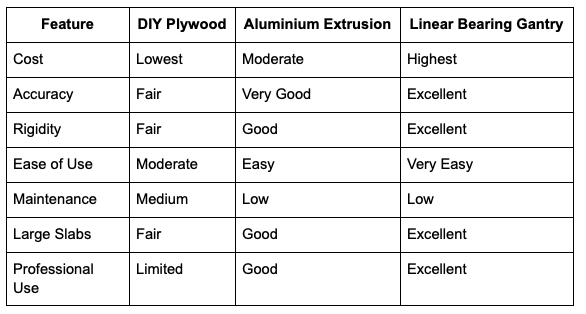
For most woodworkers, an aluminium extrusion sled is the practical middle ground.
Only shops regularly surfacing very large slabs are likely to benefit enough from a gantry system to justify the higher purchase price.
Why Router Sleds Flex
One of the biggest misconceptions is that the router bit causes uneven cuts.
In reality, the cutter is rarely the problem.
The movement comes from the entire system.
Several factors contribute to deflection:
unsupported rail span
carriage design
router weight
surfacing bit diameter
cutting depth
feed pressure
bearing quality
Imagine holding a long ruler between two supports.
Press in the middle and it bends slightly.
A router sled behaves the same way.
As the span between supports increases, even a rigid aluminium extrusion can bend just enough for the cutter to leave shallow valleys across the slab.
Linear rail systems reduce this movement by keeping the carriage better supported throughout its travel.
Which Router Sled Should You Buy?
For Small Projects
If your projects include:
cutting boards
serving boards
charcuterie boards
epoxy trays
small coffee tables
a compact aluminium sled or even a DIY build is usually sufficient.
You are unlikely to notice significant flex over these shorter spans.
For Furniture Makers
If you're regularly building:
dining tables
desks
workbenches
butcher block tops
live-edge furniture
an aluminium extrusion sled offers an excellent balance between precision and affordability.
It is easier to set up than a DIY jig while providing noticeably smoother operation.
For Professional Slab Work
If your workshop regularly flattens slabs wider than approximately 50 to 60 inches, rigidity becomes increasingly important.
This is where linear bearing or gantry systems begin to justify their higher cost.
The improved tracking helps maintain a flatter surface across the entire slab, reducing both sanding time and the risk of low spots that can appear when the carriage flexes over longer spans.
Individual Router Sled Reviews
Rather than simply ranking products from most expensive to least expensive, it is more useful to match each system to the type of work it does best. A professional furniture maker flattening oversized hardwood slabs has very different requirements from a hobbyist building the occasional coffee table.
TrueTrac Router Gantry System
Best for: Wide slabs and maximum accuracy
The TrueTrac Router Gantry System uses a rail-guided design rather than relying solely on aluminium extrusion. The router carriage travels on dedicated rails, helping maintain a consistent cutting path across long spans where lighter systems may begin to flex.
This design is particularly well suited to large dining tables, conference tables, and oversized live-edge slabs where maintaining a flat surface from edge to edge is critical.
Pros
Excellent rigidity over long spans
Smooth carriage movement
Well suited to heavy plunge routers
Ideal for repeated slab flattening
Scalable for larger projects
Cons
Higher initial investment
Larger footprint than compact sleds
More assembly than entry-level systems
Best suited for: Professional shops or serious hobbyists regularly flattening large slabs.
Woodpeckers Slab Flattening Mill
Best for: Professional production work
Woodpeckers has built a strong reputation for precision woodworking tools, and its slab flattening system is designed with heavy use in mind.
The rigid carriage and substantial frame are intended to minimise movement during cutting, making it a popular choice for workshops processing valuable hardwood slabs.
It is a premium system aimed at users who prioritise durability, repeatability, and long-term performance over initial purchase price.
Pros
Heavy-duty construction
Smooth operation
Designed for frequent use
High-quality machining
Excellent fit and finish
Cons
Premium price
Larger storage requirements
More than many hobbyists need
Best suited for: Commercial furniture makers and professional woodworkers.
SpeTool Router Sled
Best for: Overall value
For many woodworkers, the SpeTool Router Sled offers the best balance between price, rigidity, and ease of use.
Its aluminium construction provides a significant improvement over DIY plywood sleds while remaining far more affordable than full gantry systems.
It is capable of handling most live-edge slabs, workbenches, and table tops that hobbyists are likely to encounter.
Pros
Good rigidity
Easy assembly
Precise height adjustment
Suitable for most workshops
Competitive pricing
Cons
Less rigid than dedicated gantry systems
Large slabs may still require careful setup
Best suited for: Hobbyists and small furniture workshops.
VEVOR Router Sled
Best for: Budget buyers
VEVOR offers one of the lowest-cost commercial aluminium router sleds available.
While machining tolerances and finish quality are not typically at the same level as premium brands, many users find it capable of producing flat slabs with careful setup and sensible cutting depths.
For occasional projects, it represents good value.
Pros
Affordable
Aluminium construction
Adjustable router mounting
Suitable for most plunge routers
Cons
Finish quality varies
Assembly may require additional adjustment
Less refined than premium alternatives
Best suited for: Beginners and occasional woodworkers.
DIY Router Sled
Best for: One-off projects
Sometimes the best router sled is simply the one you build yourself.
A straightforward plywood jig can flatten surprisingly large slabs if built carefully and checked for alignment before each use.
The trade-off is time.
Building, adjusting, and maintaining a homemade sled requires more effort than purchasing a commercial system.
If slab flattening becomes a regular part of your woodworking, many users eventually upgrade to aluminium or rail-guided systems.
Choosing the Right Router
A high-quality sled performs best when paired with the right router.
For slab flattening, a plunge router in the 3 HP class is generally the preferred choice because it offers enough power to spin large surfacing bits while maintaining consistent cutting speed.
Popular options include:
Milwaukee 5625-20
Bosch 1617EVS
Triton TRA001
Makita RP2301FC
DeWalt DW625
When selecting a router, consider:
horsepower
plunge mechanism
fine depth adjustment
soft start
variable speed
compatibility with larger collets
More power allows the router to remove material smoothly without placing excessive strain on the motor.
Choosing the Right Surfacing Bit
The router sled provides the movement, but the cutter determines the finish.
Most slab flattening is performed using carbide insert surfacing bits between 1½ and 2 inches in diameter.
These bits provide:
smoother finishes
faster material removal
replaceable carbide inserts
reduced tear-out
longer service life
Insert-style cutters also eliminate the need to sharpen the entire bit when an edge becomes dull.
Instead, the carbide inserts can simply be rotated or replaced.
Dust Collection Matters More Than You Think
Flattening a large hardwood slab creates an enormous volume of chips and fine dust.
Without dust extraction, visibility quickly suffers, cleanup takes longer, and airborne dust becomes a health concern.
When comparing router sleds, look for features such as:
integrated dust shrouds
vacuum ports
enclosed router housings
clear chip evacuation
compatibility with workshop dust extractors
Even a simple dust hood connected to a shop vacuum can dramatically improve the working environment.
Common Router Sled Mistakes
Many surface imperfections are caused by technique rather than equipment.
Avoid these common mistakes:
Taking cuts that are too deep
Heavy passes increase router strain and make deflection more noticeable.
Several shallow passes usually produce a flatter result.
Skipping rail alignment
If the rails are not perfectly parallel and level, the router simply copies those inaccuracies onto the slab.
Take time to check alignment before every major project.
Using a dull cutter
A sharp surfacing bit produces cleaner cuts with less effort.
Dull cutters generate heat, increase tear-out, and leave rough machining marks.
Flattening only one side
Always flatten both faces of a slab.
Removing material from only one side can leave internal stresses that may cause the slab to move over time.
Rushing feed speed
Moving too quickly creates ridges.
Moving too slowly may burn the timber.
Aim for a steady, consistent feed rate that allows the cutter to remove material cleanly.
Maintaining Your Router Sled
Routine maintenance helps preserve accuracy and extends the life of the system.
A few minutes after each project can prevent larger problems later.
Maintenance checklist:
Brush dust from rails and bearings.
Wipe aluminium extrusions clean.
Lubricate linear bearings if recommended by the manufacturer.
Check all bolts for tightness.
Inspect router mounting hardware.
Replace worn bearings promptly.
Store rails flat to avoid accidental damage.
Keep surfacing bits clean and sharp.
Proper maintenance not only improves accuracy but also makes each surfacing session smoother and more predictable.
Router Sled Buying Guide
Before buying a router sled, think about the type of work you expect to do over the next few years rather than the next project. While it's tempting to choose the cheapest option, upgrading later often costs more than buying the right system from the start.
These are the most important factors to compare.
Slab Width
The width of your typical workpiece should guide your choice more than the advertised maximum capacity.
Up to 30 inches: A DIY plywood sled or compact aluminium system is usually sufficient.
30 to 50 inches: An aluminium extrusion sled offers a good balance of rigidity and affordability.
Over 50 inches: A linear rail or gantry system provides better support over long spans and is less prone to flex.
If you occasionally work on larger slabs, consider buying a system with more travel than you currently need. It provides greater flexibility for future projects.
Frequency of Use
How often you flatten slabs has a significant impact on which system offers the best value.
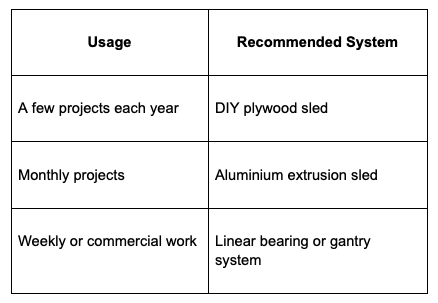
If slab flattening is becoming a regular part of your workflow, smoother operation and improved accuracy can save considerable time during sanding and finishing.
Router Compatibility
Most commercial sleds are designed for mid-size and large plunge routers, but compatibility varies.
Before purchasing, check:
mounting hole pattern
base plate diameter
router weight
plunge depth
available adjustment range
A heavier router isn't always better. While additional weight can help the cutter stay planted, it also increases the load placed on the sled.
Ease of Assembly
Some sleds are ready to use within an hour, while others require careful assembly and alignment.
If you prefer spending time woodworking rather than adjusting hardware, a well-machined commercial system is usually worth the extra investment.
Dust Collection
Router sleds generate a surprising amount of waste.
A model that accepts a dust hood or vacuum attachment helps keep the workpiece visible, reduces cleanup, and improves workshop air quality.
Storage Space
A full-size slab flattening sled can occupy a significant amount of workshop space.
Before purchasing, consider:
overall footprint
rail length
ability to disassemble
wall storage options
portability
Compact workshops may benefit from modular systems that can be taken apart when not in use.
Which Router Sled Is Right for You?
If you're still deciding, these recommendations provide a practical starting point.
Buy a DIY Router Sled if...
you're on a tight budget
you flatten slabs only occasionally
you enjoy building workshop jigs
precision isn't absolutely critical
Buy an Aluminium Router Sled if...
you build furniture regularly
you want smoother operation
you work with slabs up to about 50 inches wide
you want the best balance of performance and price
For most hobbyists and small professional shops, this is the sweet spot.
Buy a Linear Bearing or Gantry System if...
you flatten large slabs every week
you regularly work with hardwoods
your slabs exceed 50 to 60 inches in width
repeatable accuracy matters
reducing sanding time is a priority
Although these systems cost more, they offer greater rigidity and consistency for demanding work.
Final Verdict: Which Router Sled Is Best?
For most woodworkers, the best router sled is an aluminium extrusion model.
It is stiffer and easier to use than a plywood sled, yet costs far less than a professional gantry system. For ordinary tables, benches, and live-edge slabs, it offers the best return on your money.
Build a plywood sled when price matters more than speed. It will do the job, but it demands careful setup and more effort on every pass.
Buy a linear-bearing or gantry system when you flatten wide slabs regularly. Its greater rigidity keeps the cutter on a straighter path and leaves less corrective sanding afterward.
Do not buy more machine than your work requires. Choose for the widest slab you expect to flatten and the number of times you will use it. For most shops, aluminium is the sensible answer.
Stay up to date with our latest ideas!