16 Modern Zen Bedroom Ideas to Create a Peaceful Retreat
Discover 16 modern zen bedroom ideas that transform your space into a peaceful retreat. Embrace tranquility and minimalist beauty!
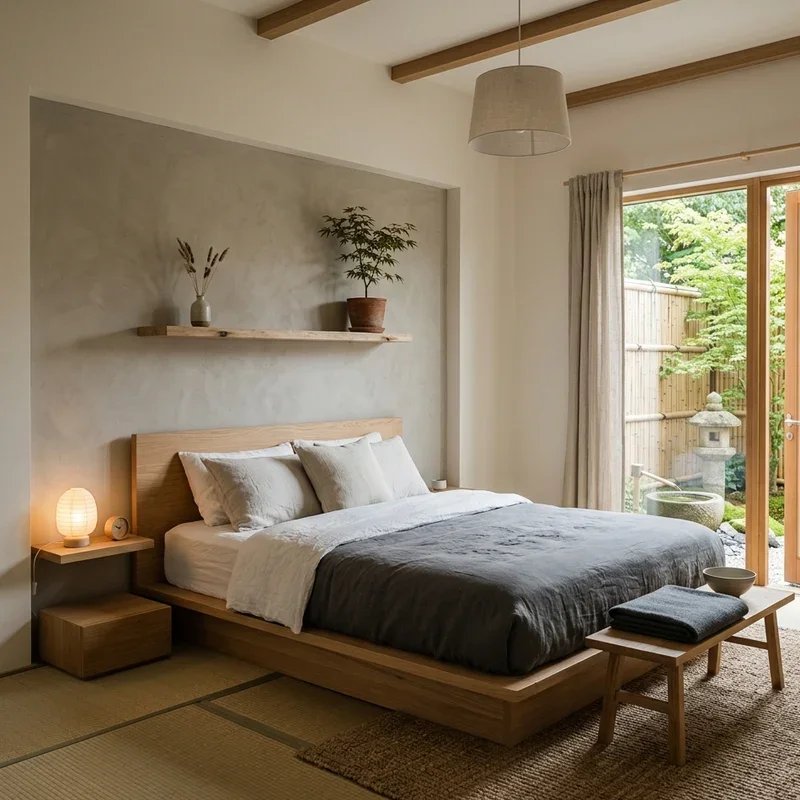
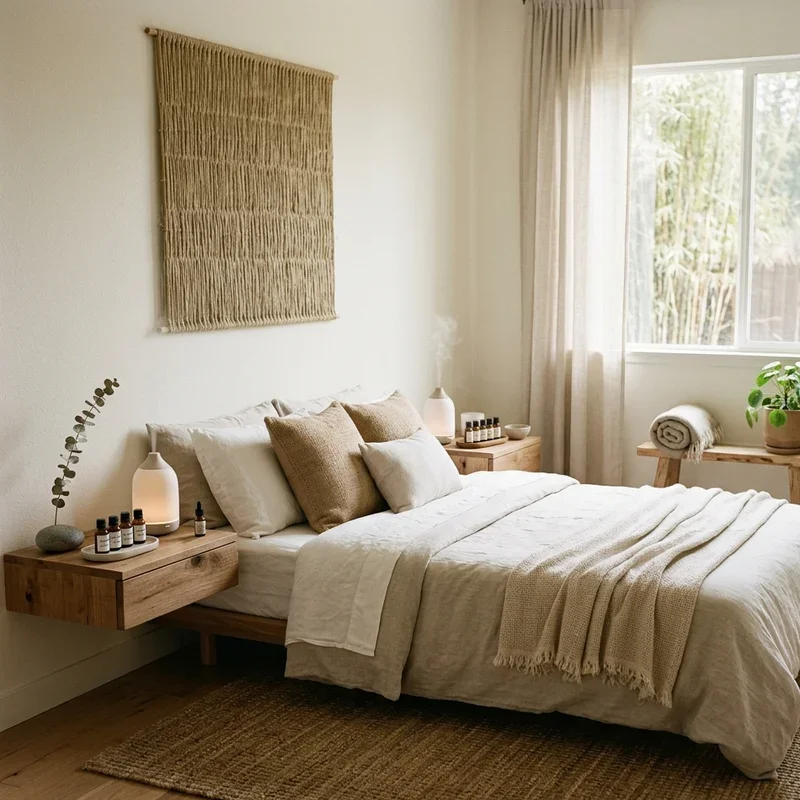
Imagine stepping into your bedroom and feeling stress melt away like morning frost under gentle sunlight. That sensation captures the essence of modern zen design, where every element serves a purpose and peace becomes the ultimate luxury. Our bedrooms should function as sanctuaries from chaotic modern life, yet too often they become cluttered extensions of our busy minds. Zen philosophy teaches us that simplicity creates space for clarity, and nowhere does this principle matter more than where we sleep and recharge. Modern zen bedrooms blend ancient Eastern wisdom with contemporary aesthetics, creating spaces that feel both timeless and refreshingly current. You don't need meditation experience or minimalist expertise to transform your sleeping quarters into a tranquil retreat. These sixteen ideas will guide you toward creating a bedroom that whispers calm the moment you cross its threshold.
1. Neutral Earth Tone Color Palette
Color sets the emotional foundation of any space, and zen bedrooms thrive on palettes drawn directly from nature's quietest moments. Think warm beiges reminiscent of sand, soft grays echoing morning mist, muted greens channeling forest floors, and creamy whites suggesting pure possibility. These neutral earth tones create visual calm that loud colors simply cannot achieve, allowing your mind to rest rather than react to stimulating hues. Layer different neutrals through walls, bedding, and accessories to prevent monotony while maintaining the serene atmosphere essential to zen design. Avoid stark white walls that feel clinical; instead, choose warm whites with subtle yellow or gray undertones that embrace rather than repel. Your color choices communicate peace before you even register individual elements consciously. This foundational decision influences every subsequent design choice throughout your zen transformation journey.
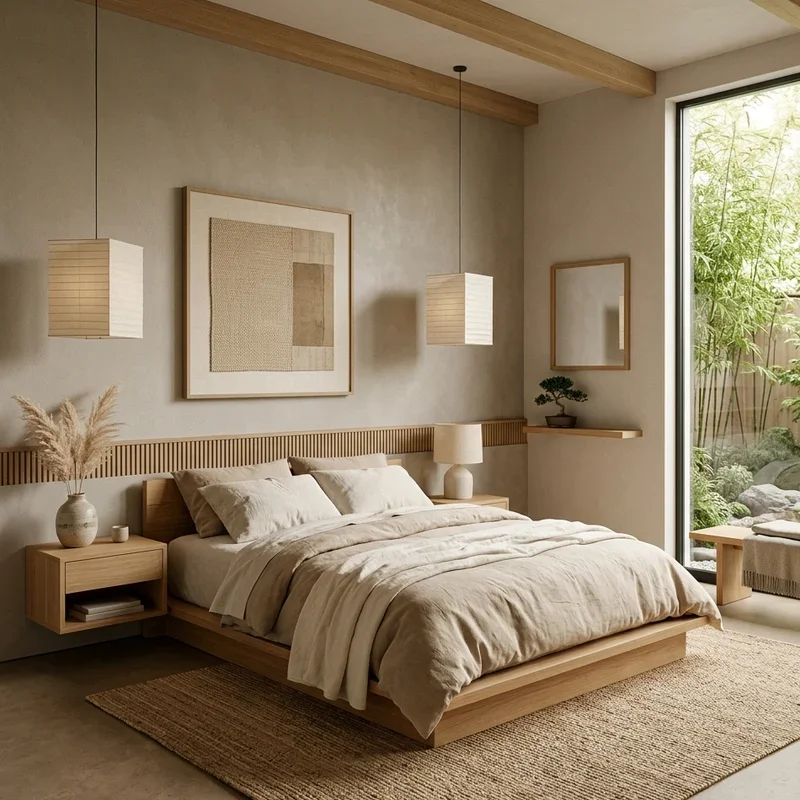
2. Low Profile Platform Bed Design
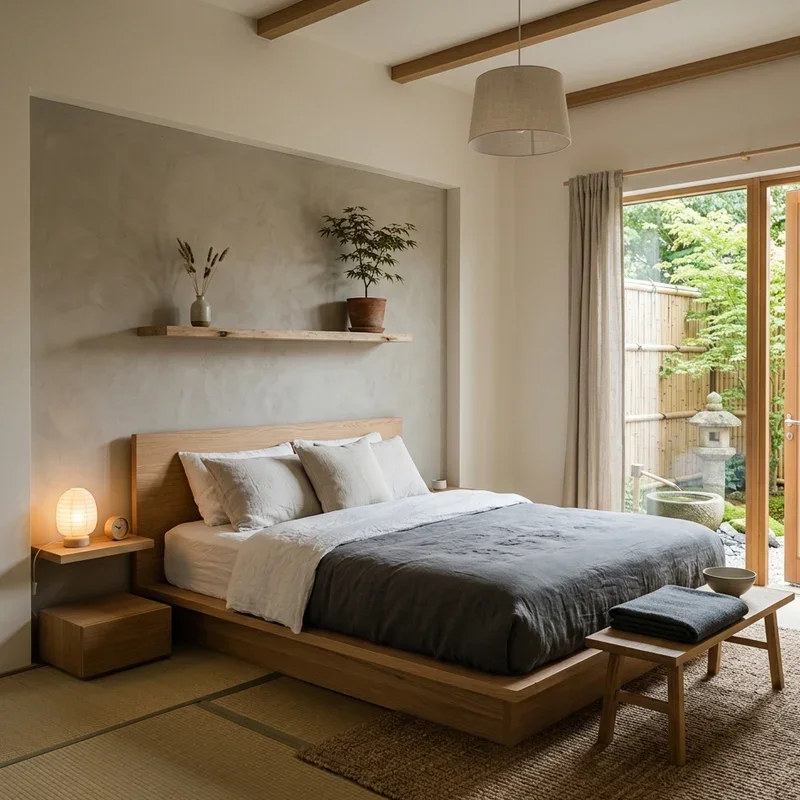
Ground yourself literally and figuratively with platform beds that sit close to the earth, embodying zen principles of humility and connection. Low profile beds originated in Japanese design traditions where sleeping closer to the ground promoted better energy flow and deeper rest. Modern platform beds eliminate bulky box springs and towering mattresses that create visual weight in otherwise serene spaces. The horizontal emphasis creates calm visual lines that guide eyes gently across rooms rather than jerking attention upward abruptly. Choose platform frames crafted from natural wood that showcases beautiful grain patterns adding organic texture to minimalist designs. The space beneath traditional beds often collects dust and forgotten items, while platform designs eliminate this hidden chaos entirely. Your bed becomes a grounded island of tranquility rather than an elevated fortress separating you from the earth below.
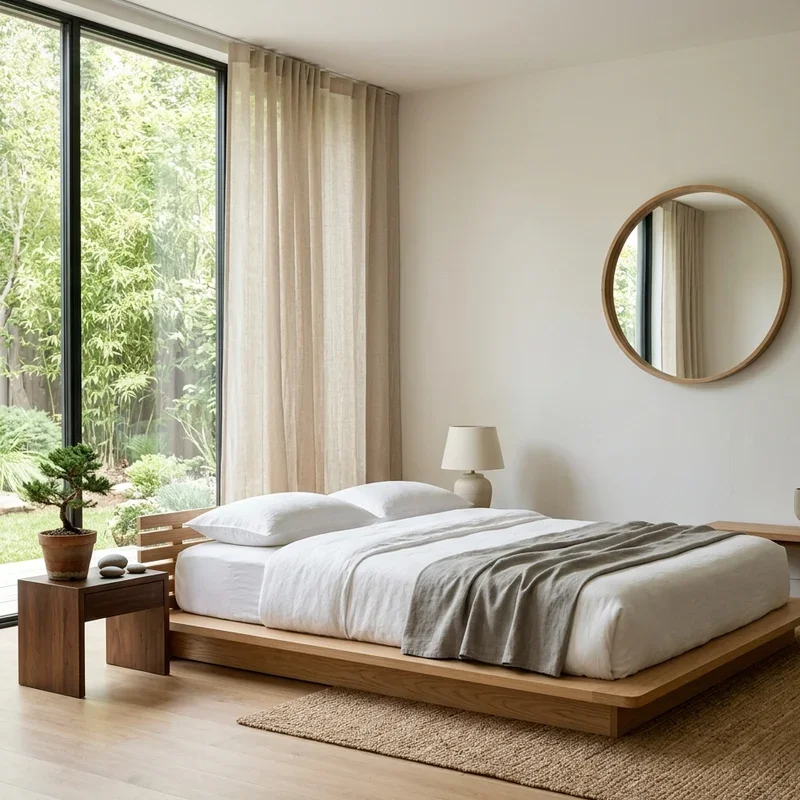
3. Natural Wood Element Integration
Wood brings warmth, texture, and living energy into zen bedrooms, connecting indoor spaces with outdoor natural worlds seamlessly. Choose wood species with visible grain patterns that tell stories: oak's strength, walnut's depth, or cedar's aromatic presence enhancing your sleeping environment. Incorporate wood through bed frames, nightstands, ceiling beams, or accent walls that become organic focal points within minimalist schemes. Raw or lightly finished wood feels more authentically zen than heavily lacquered surfaces that mask natural beauty beneath artificial shine. The imperfections in natural wood, the knots and variations in color, embody wabi-sabi philosophy celebrating beauty in impermanence and irregularity. Mix wood tones thoughtfully, keeping variations within similar warm or cool families to maintain visual harmony. Wood ages gracefully, developing patina over years that makes your zen bedroom more beautiful rather than dated with passing time.
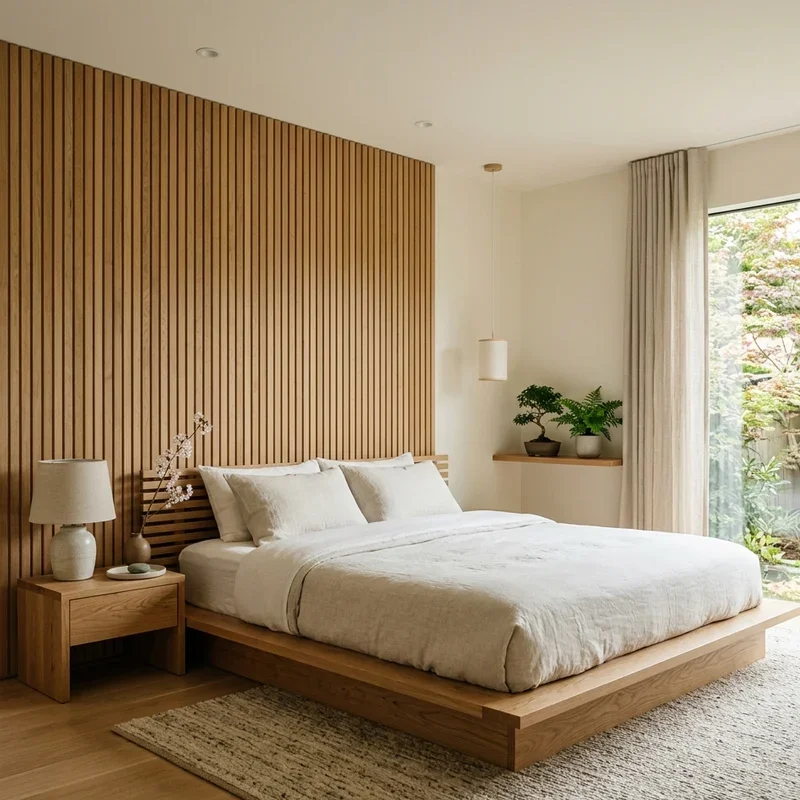
4. Minimalist Furniture Selection
Every piece of furniture in a zen bedroom must earn its place through function, beauty, or ideally both simultaneously. Adopt the minimalist mantra of keeping only what serves purpose, releasing attachment to furniture that merely fills space without meaningful contribution. Select pieces with clean lines, simple silhouettes, and honest construction that reveals how things are made without decorative disguise. Your bedroom needs a bed, perhaps nightstands, maybe a dresser, and little else to function beautifully as a sleeping sanctuary. Negative space between furniture pieces matters as much as the furniture itself, allowing energy to flow freely throughout the room. Resist the temptation to add accent chairs, excessive tables, or decorative furniture that clutters visual fields and minds simultaneously. Quality surpasses quantity in zen design: one beautiful handcrafted piece outweighs five mass-produced alternatives every time.
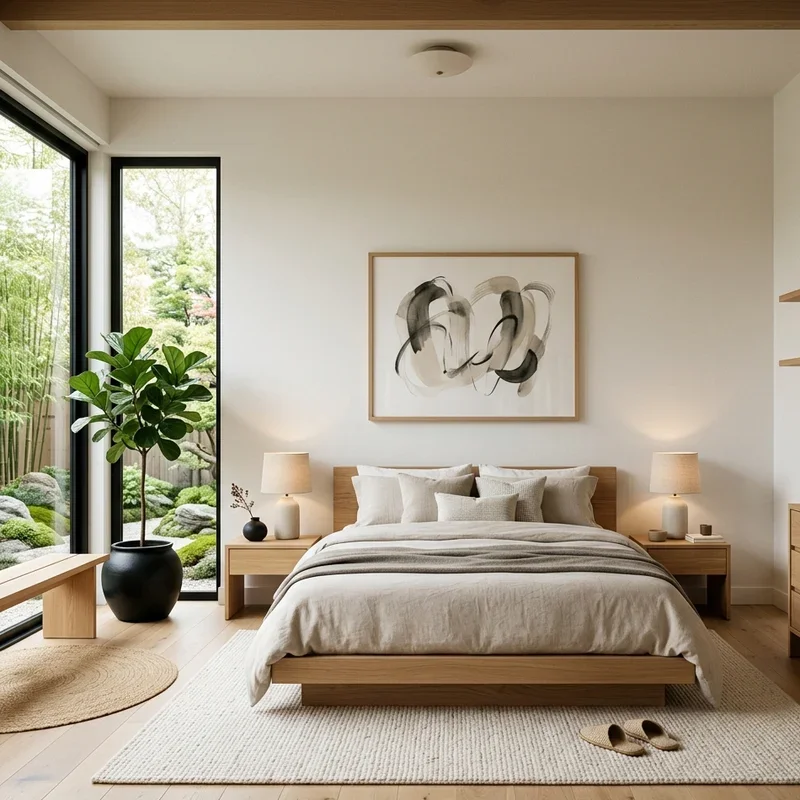
5. Soft Ambient Lighting Layers
Harsh overhead lighting destroys zen atmosphere instantly, while thoughtfully layered ambient light creates the gentle glow essential for peaceful spaces. Incorporate multiple light sources at varying heights: table lamps, floor lamps, wall sconces, and perhaps concealed strip lighting that washes walls softly. Dimmer switches become non-negotiable tools allowing you to adjust brightness according to time, mood, and activity occurring within your sanctuary. Warm light temperatures between 2700K and 3000K mimic candlelight and sunset, triggering relaxation responses that cooler lights actually inhibit physiologically. Consider paper lanterns that diffuse light beautifully while honoring Japanese design traditions influencing modern zen aesthetics profoundly. Natural light deserves attention too: sheer curtains filter harsh sunlight into gentle illumination that changes character throughout daily cycles. Your lighting design should transition smoothly from energizing morning brightness through relaxing evening dimness supporting natural sleep preparation.
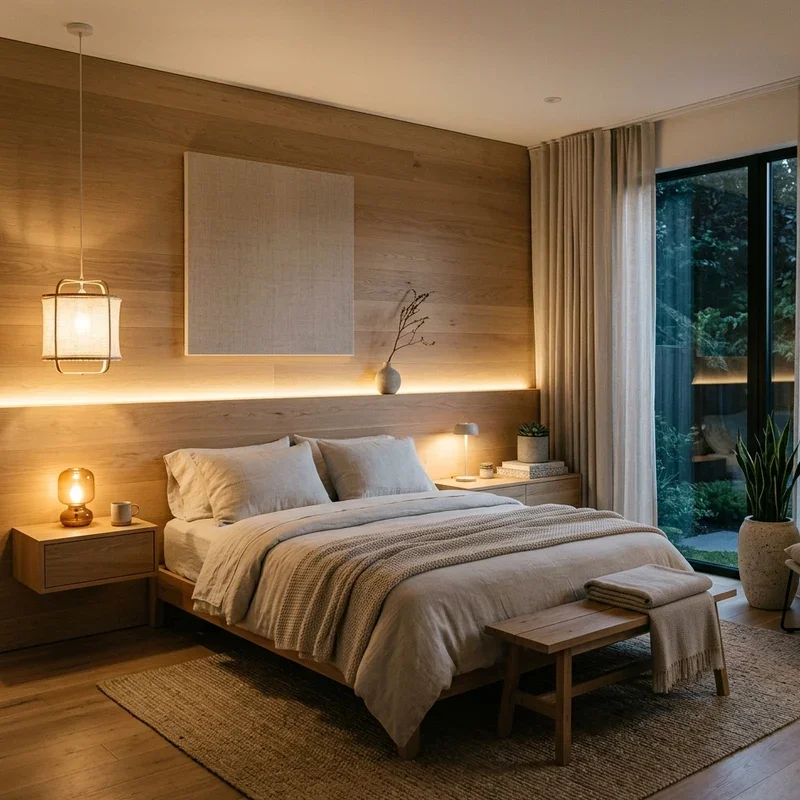
6. Indoor Plant Sanctuary Creation
Plants breathe life into zen bedrooms literally, producing oxygen while adding organic beauty that artificial decorations simply cannot replicate. Select low-maintenance species that thrive in bedroom conditions: snake plants purifying air silently, pothos trailing gracefully from shelves, or peace lilies blooming in low light corners. The presence of living things connects us to natural cycles of growth and rest that modern indoor living often severs completely. Arrange plants thoughtfully rather than randomly, grouping odd numbers in intentional compositions that feel collected rather than cluttered accidentally. Choose simple ceramic or woven planters that complement zen aesthetics rather than colorful pots competing for visual attention unnecessarily. Caring for plants introduces daily rituals of nurturing that align beautifully with mindfulness practices zen design supports overall. Your green companions remind you that patience and consistent care produce beautiful results over time gradually.
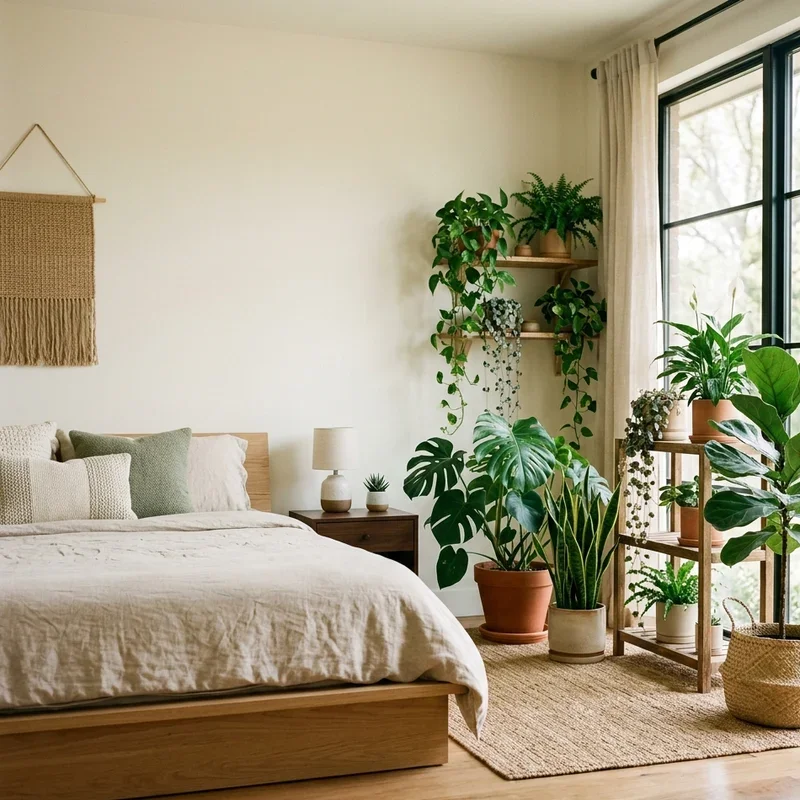
7. Uncluttered Floor Space Philosophy
Empty floor space creates breathing room for both your physical body and wandering mind within zen bedroom designs. Resist the western tendency to fill every square foot with furniture, rugs, or decorative objects that accumulate unconsciously over time. Visible floor expanse suggests possibility, freedom, and the intentional choice to own less rather than more constantly. This philosophy extends beyond aesthetics into practical benefits: clean floors make rooms easier to maintain and navigate during nighttime hours safely. Consider your floor covering carefully: natural fiber rugs like sisal or jute add warmth without visual busyness that patterned carpets create. Leave pathways clear around beds and toward doors, allowing smooth movement that sleeping bodies appreciate instinctively. The discipline of maintaining uncluttered floors requires ongoing attention, transforming daily tidying into mindfulness practice that reinforces zen principles continuously.
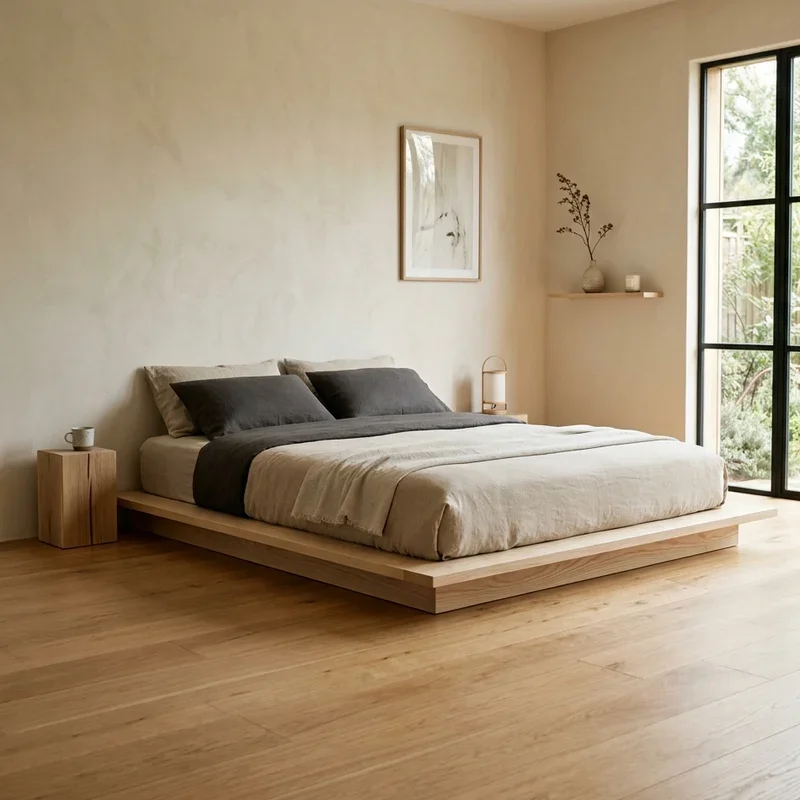
8. Natural Fiber Textile Choices
Surround yourself with textiles derived from plants and natural sources that feel gentle against skin and harmonious within zen aesthetics. Linen bedding breathes beautifully through warm nights while developing soft patina through washing cycles that synthetic fabrics never achieve. Cotton, hemp, wool, and silk all offer natural alternatives to polyester blends that dominate mass-market bedding options unfortunately. The slight irregularities in natural fibers, the subtle texture variations, add visual interest that perfectly smooth synthetics lack entirely. Choose undyed or naturally dyed textiles in muted earth tones that complement your neutral color palette seamlessly throughout. Layer different natural textures: perhaps linen sheets beneath cotton blankets with wool throws for cool weather coziness. Natural fibers regulate temperature better than synthetics, keeping sleepers comfortable through changing conditions without artificial climate control dependence.
9. Japanese Shoji Screen Dividers
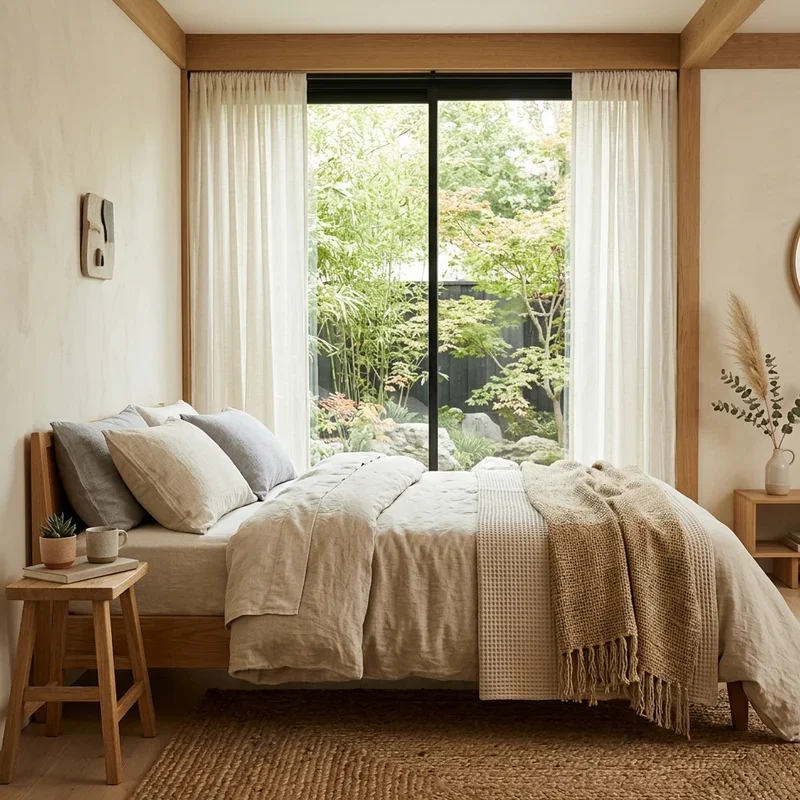
Introduce traditional Japanese architectural elements through shoji screens that divide spaces while allowing light to pass through gracefully. These translucent panels create privacy without solid barriers that interrupt visual flow and trap energy within confined areas. Use shoji screens to separate sleeping areas from dressing zones, create closet coverings, or simply add decorative elements referencing zen origins directly. The wooden frames and paper panels showcase honest construction that aligns with zen appreciation for craft and materiality. Modern interpretations substitute rice paper with synthetic alternatives offering durability while maintaining traditional appearances effectively. Shoji screens fold flat for storage or repositioning, offering flexible space division that permanent walls cannot provide adaptably. The soft light filtering through these screens creates beautiful shadow patterns that change throughout daily cycles poetically.
10. Stone and Pebble Accent Features
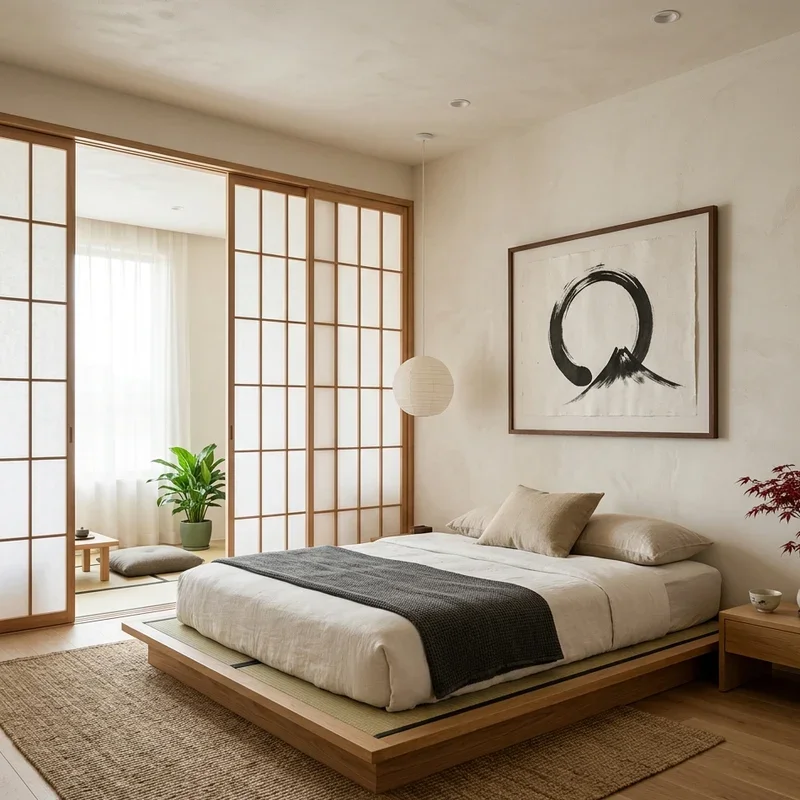
Ground your zen bedroom with stone elements that connect interior spaces to ancient earth energies and natural outdoor environments. Incorporate smooth river pebbles in glass vessels, slate coasters on nightstands, or stone accent walls that add textural weight to minimalist schemes appropriately. The coolness of stone provides temperature contrast against warm wood elements, creating sensory variety that enriches bedroom experiences subtly. Consider stone vessels for plants, stone lamp bases, or even stone trays organizing small items on dresser surfaces elegantly. Natural stone variations mean no two pieces look identical, embracing imperfection philosophy central to zen aesthetic appreciation thoroughly. Balance stone quantities carefully: too much creates cold, unwelcoming atmospheres while thoughtful placement adds grounding weight perfectly. Your stone elements connect sleeping spaces to geological time scales that dwarf human concerns, providing perspective that soothes anxious modern minds.
11. Water Element Incorporation
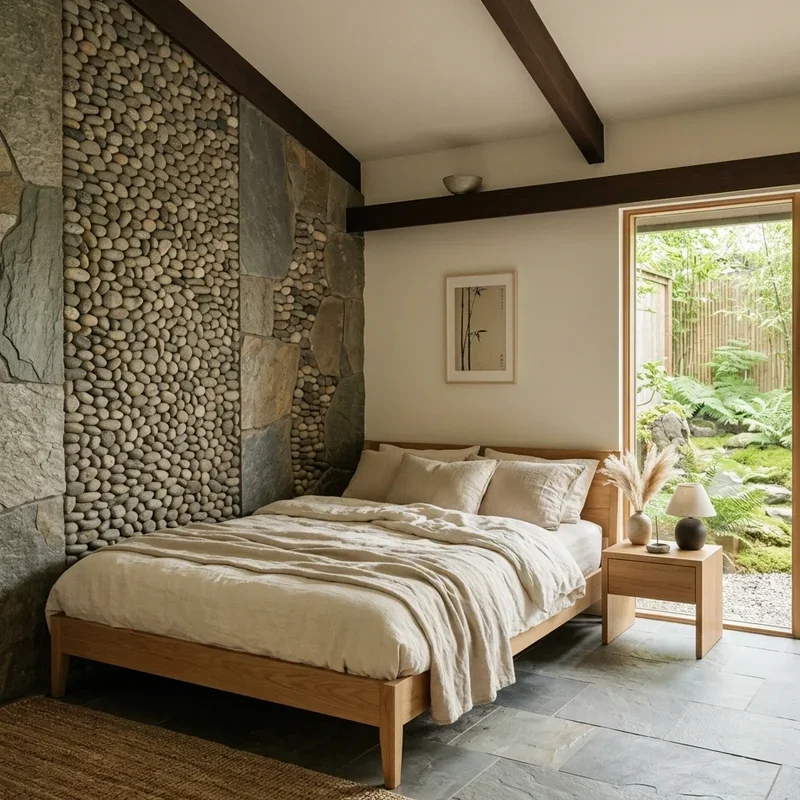
Water symbolizes flow, purification, and life itself within zen philosophy, and incorporating water features brings these qualities into bedroom spaces physically. Small tabletop fountains produce gentle trickling sounds that mask urban noise while creating meditative audio environments for sleeping. The movement of water captures attention softly, providing focal points for relaxation that static decorations cannot offer dynamically. Consider the placement carefully: water features should enhance rather than disturb sleep through sounds that relax without demanding conscious attention constantly. If flowing water seems excessive, represent the water element symbolically through blue accents, wave-pattern textiles, or artwork depicting peaceful water scenes. Maintaining water features requires regular attention, but this care ritual aligns with mindfulness practices supporting zen lifestyle choices. The presence of water connects bedrooms to rivers, oceans, and rain cycles that sustain all terrestrial life continuously.
12. Meditation Corner Setup
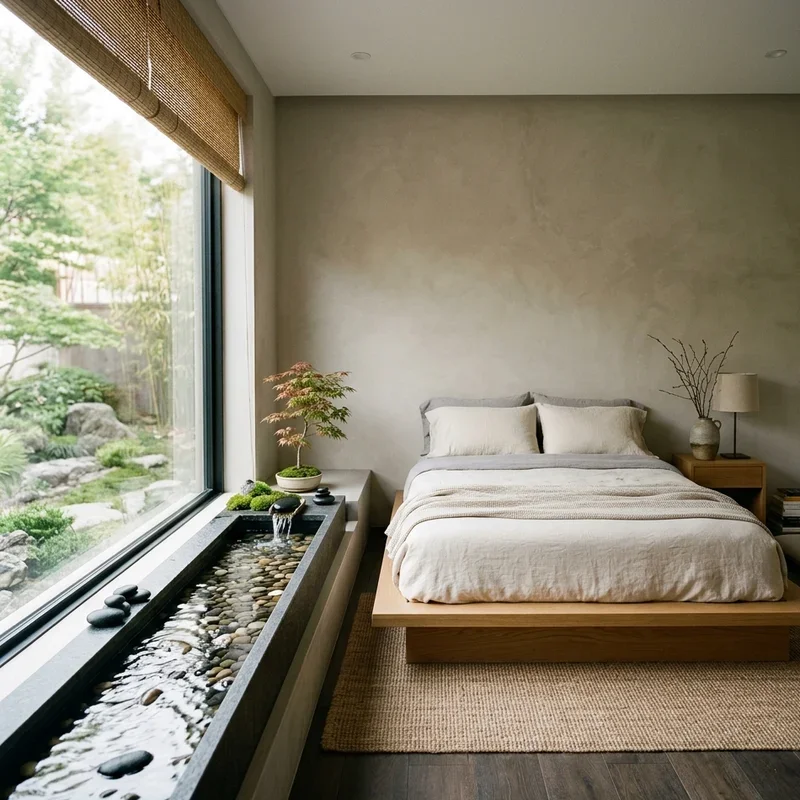
Dedicate bedroom space specifically for meditation practice, creating physical commitment to mindfulness that supports daily habit formation effectively. Your meditation corner needs minimal equipment: perhaps a cushion, a small altar holding meaningful objects, and adequate floor space for seated practice comfortably. Position this corner away from the bed itself, creating psychological separation between sleeping and waking spiritual practices appropriately. Natural light access enhances morning meditation while candles or soft lamps support evening practice sessions beautifully. Keep this space perpetually ready for practice, removing barriers that might discourage spontaneous meditation moments throughout daily routines. The visual presence of your meditation corner serves as constant reminder of intentions toward mindfulness and peace cultivation. Even non-meditators benefit from designated quiet corners suggesting stillness possibilities within otherwise active living spaces.
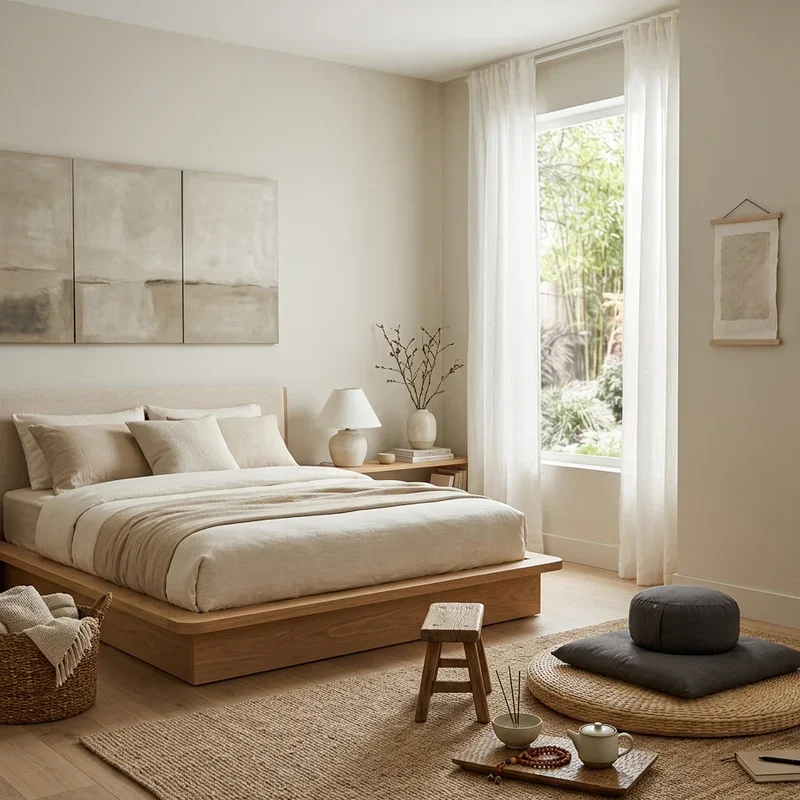
13. Organic Bedding Materials
Invest in organic bedding free from pesticides, synthetic chemicals, and harmful dyes that conventional textiles often contain invisibly. Organic cotton, bamboo, and linen sheets feel luxuriously soft while supporting sustainable agriculture practices benefiting environmental health broadly. Your skin absorbs what it contacts during eight-hour sleep cycles, making bedding material choices significant health decisions beyond aesthetic considerations alone. Organic certifications like GOTS ensure materials meet strict standards throughout production processes from farm to finished product completely. The slightly higher cost of organic bedding represents investment in personal wellbeing and environmental sustainability that aligns with zen values perfectly. Natural materials regulate moisture and temperature better than synthetics, improving sleep quality through physical comfort alongside psychological peace. Your organic bedding becomes part of self-care practice honoring body's needs for pure, gentle contact during vulnerable sleeping hours.
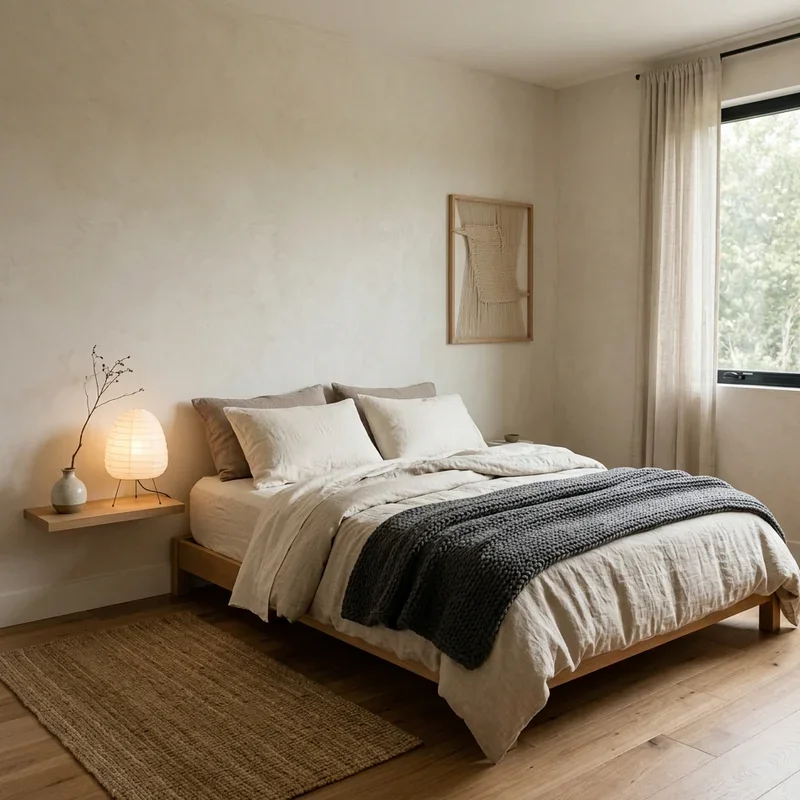
14. Hidden Storage Solutions
Maintain visual serenity through clever storage solutions that conceal necessary possessions behind clean surfaces and within furniture pieces. Built-in closets with solid doors eliminate clothing visibility that disrupts zen minimalism regardless of how neatly items are organized inside. Choose bed frames with integrated drawers that utilize under-bed space efficiently without creating visible clutter beneath sleeping surfaces. Floating nightstands with hidden compartments keep bedside necessities accessible while maintaining streamlined appearances that support peaceful atmospheres. The effort to maintain hidden storage systems reinforces mindfulness around possessions: what deserves keeping, what requires releasing, what genuinely serves your life. Invest in attractive boxes and baskets for items that cannot hide completely, creating visual order within open shelving situations. Your storage strategy becomes spiritual practice, continuously editing possessions down to essentials that truly matter to peaceful living.
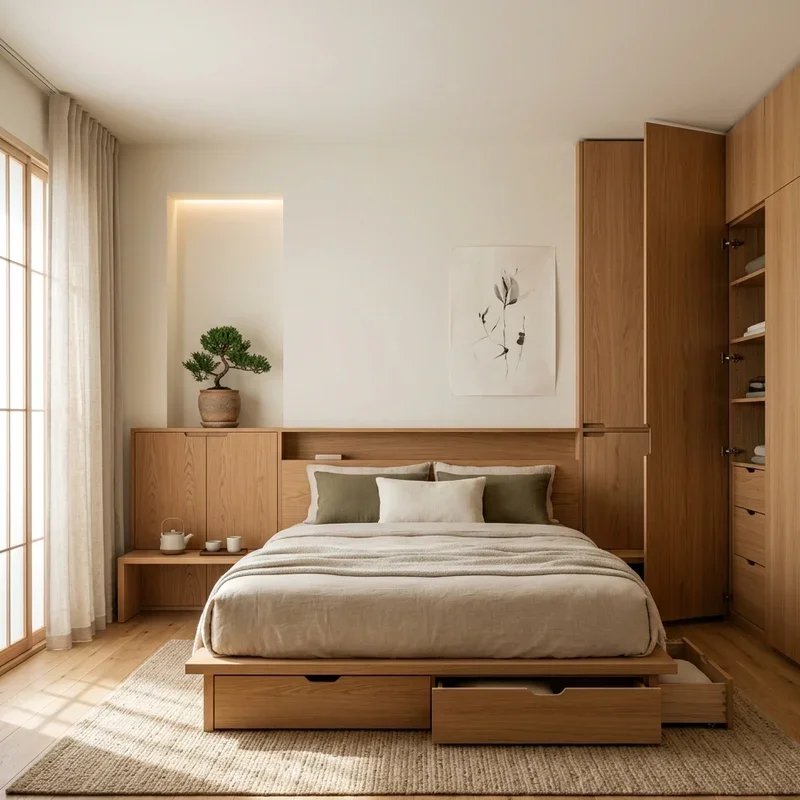
15. Bamboo Decorative Elements
Embrace bamboo's versatility through decorative elements that add texture, sustainability, and Asian aesthetic references to zen bedroom designs. Bamboo grows rapidly without pesticides, making it environmentally responsible choice that aligns with zen respect for natural systems. Incorporate bamboo through picture frames, plant stakes, window blinds, small furniture pieces, or decorative screens that reference traditional Asian design languages. The hollow structure of bamboo creates interesting visual texture while remaining lightweight and easy to manipulate decoratively. Bamboo's natural golden-green color complements earth tone palettes beautifully while adding warmth that synthetic materials cannot replicate authentically. Consider bamboo textiles for throw blankets or accent pillows that introduce this material's softness against skin pleasantly. Your bamboo elements connect bedroom spaces to Asian forests where zen philosophy originated centuries ago historically.
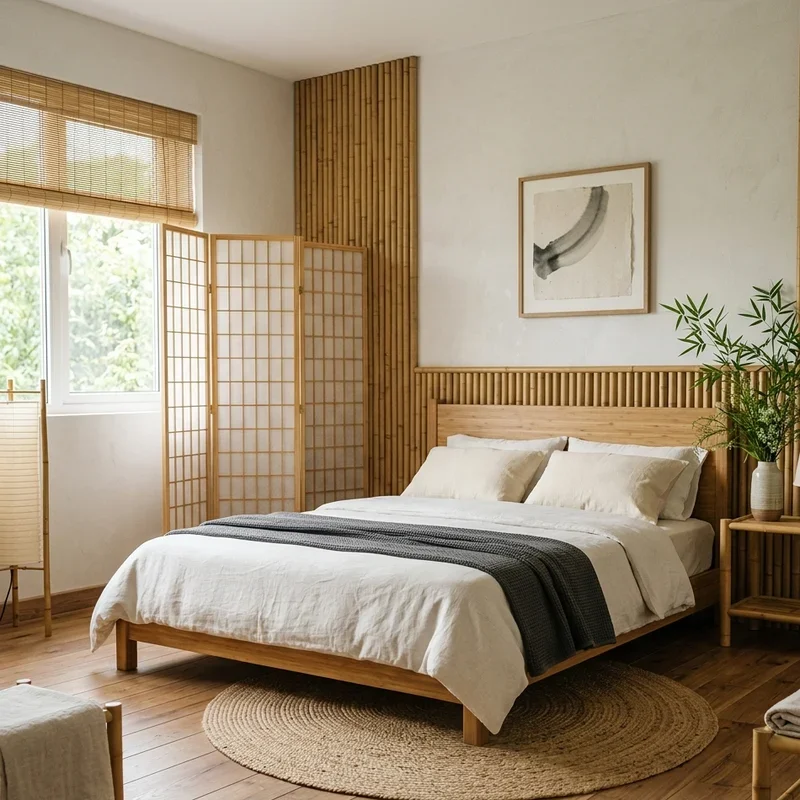
16. Essential Oil Diffuser Stations
Engage the sense of smell through essential oil diffusers that release calming aromatherapy throughout your zen bedroom continuously. Lavender promotes relaxation and sleep, eucalyptus clears respiratory passages, while sandalwood creates meditative atmospheres traditional to spiritual practices historically. Choose diffusers with simple designs that complement rather than compete with zen aesthetics throughout your carefully curated space. Ultrasonic diffusers produce fine mist without heat, preserving oil integrity while adding gentle humidity beneficial for skin and breathing. Position diffusers on nightstands where aromatherapy reaches sleeping faces directly during crucial rest hours nightly. Establish diffuser rituals tied to sleep preparation: turning on your diffuser signals brain and body that rest time approaches soon. Your aromatherapy practice engages senses beyond sight, creating multi-dimensional zen experiences that purely visual design cannot achieve alone.
Conclusion
Modern zen bedrooms offer refuge from chaotic contemporary life through intentional simplicity, natural materials, and thoughtful design choices honoring ancient wisdom. These sixteen ideas provide pathways toward creating sleeping spaces that actively support rest, reflection, and renewal rather than merely containing beds. The transformation requires editing possessions, choosing quality over quantity, and committing to maintenance practices that preserve peaceful atmospheres continuously. Remember that zen design emphasizes process alongside outcome: the journey toward creating your sanctuary matters as much as the destination itself ultimately. Start with foundational elements like color and furniture, then layer additional touches gradually as budget and time permit naturally. Your peaceful retreat awaits, requiring only your decision to begin creating spaces that nurture the tranquility every human deserves.
Read next: 16 Modern Eclectic Bedroom Ideas for a Stylish Home Look
Frequently Asked Questions
Q1: What colors work best for modern zen bedrooms?
A: Neutral earth tones like beige, soft gray, muted green, and warm white create zen tranquility.
Q2: Do zen bedrooms have to be completely minimalist?
A: Not necessarily, but every item should serve purpose and contribute positively to peaceful atmospheres.
Q3: What plants suit zen bedroom environments best?
A: Snake plants, pothos, peace lilies, and bamboo thrive in bedrooms while supporting zen aesthetics.
Q4: How can I create zen bedroom style on a budget?
A: Declutter first, then add natural elements like plants and simple textiles gradually over time.
Q5: Is a water feature appropriate for sleeping spaces?
A: Yes, gentle tabletop fountains create soothing sounds that actually improve sleep quality noticeably.
Stay up to date with our latest ideas!