16 Hickory Kitchen Ideas for Warm Rustic Charm
Discover 16 hickory kitchen ideas for warm rustic charm that celebrate natural wood grain, golden tones, and timeless country-style beauty.
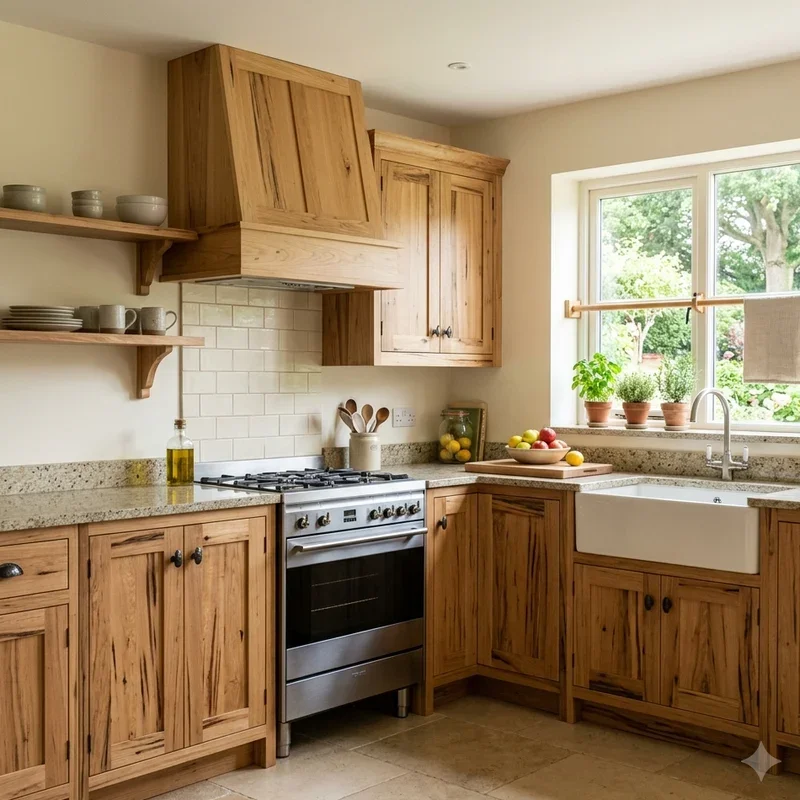
Hickory kitchens radiate warm, natural beauty that no manufactured material ever quite replicates, where dramatic grain variation and golden honey tones turn ordinary cooking spaces into genuinely inviting gathering rooms. Have you ever run your hand across a piece of hickory and noticed how the grain swirls, knots, and color shifts tell a story no two boards share identically? That organic unpredictability gives hickory its magnetic character, making every cabinet, countertop, and floor plank feel like a one-of-a-kind work of nature. Think of hickory like the wild child of hardwoods, refusing to look uniform while looking absolutely gorgeous doing it. Whether you crave full rustic immersion or a modern twist on country warmth, this versatile wood flexes beautifully. You control the stain, the style, and the story. Let's explore sixteen ideas.
1. Hickory Shaker Style Cabinets
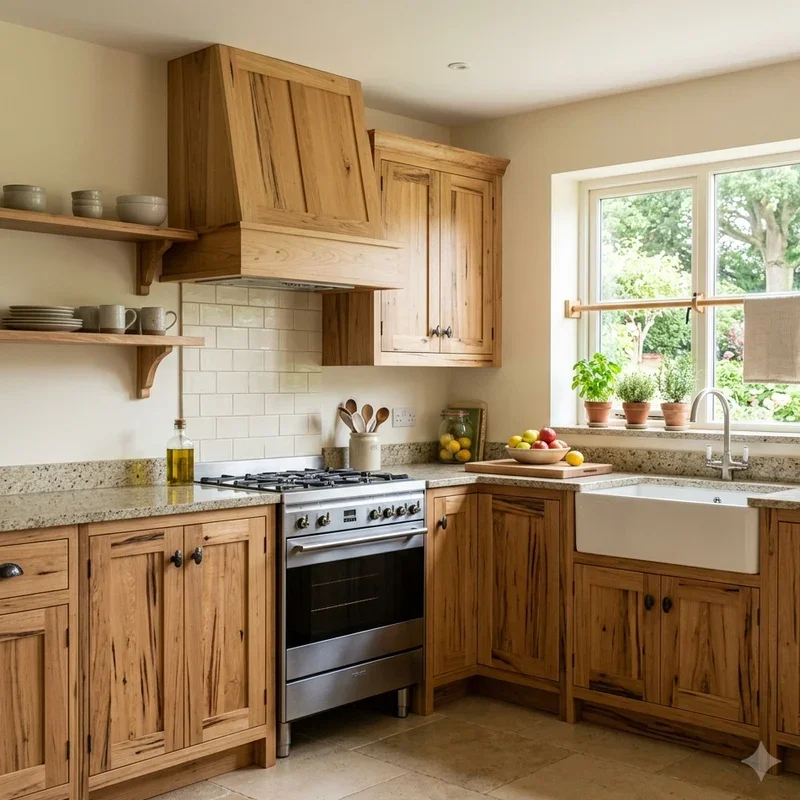
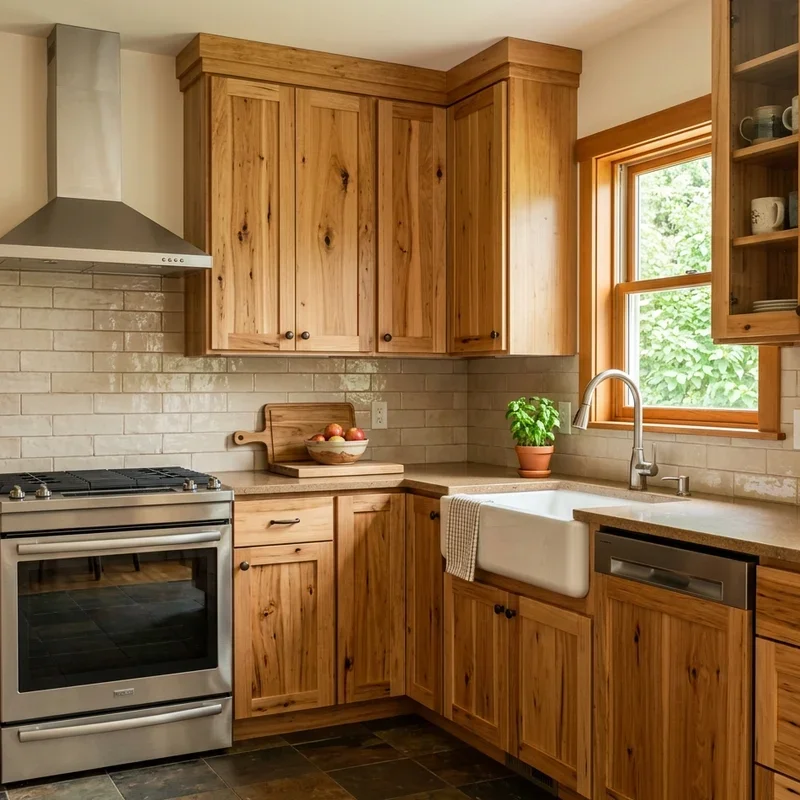
Hickory Shaker style cabinets combine the wood's dramatic grain with clean, simple door profiles that bridge rustic warmth and modern functionality beautifully. Choose Shaker-style doors with flat center panels and minimal framing, since the understated design lets hickory's natural color variation and knot patterns serve as the primary visual feature. Apply a clear or light amber stain, because transparent finishes preserve the grain's full beauty while protecting the wood from daily kitchen moisture. Pair hickory Shaker cabinets with simple brushed nickel or matte black hardware, since understated pulls complement the wood's natural character without competing for attention. Choose consistent hickory across upper and lower cabinets for cohesive warmth. Think of Shaker hickory like flannel shirts for your kitchen. Your room gains timeless rustic sophistication.
2. Natural Hickory Hardwood Flooring
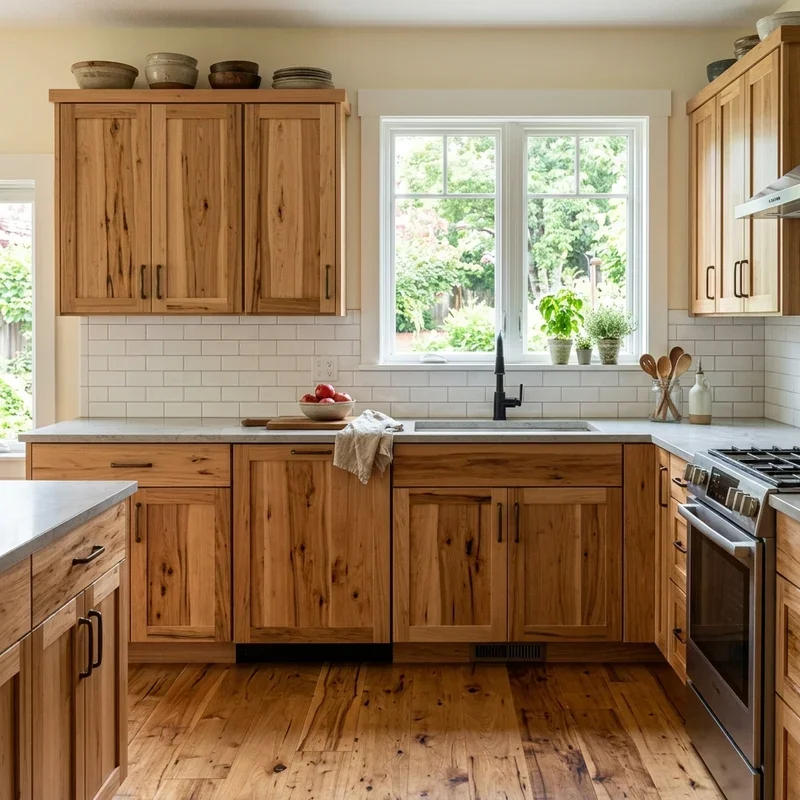
Natural hickory hardwood flooring grounds your kitchen in warm, durable wood that handles heavy foot traffic, dropped pots, and daily life without flinching. Choose wide planks to showcase hickory's dramatic grain variation, since broader boards display the full spectrum of blonde, honey, and brown tones running through each piece. Apply a matte or satin finish, because low-sheen surfaces highlight natural grain texture while hiding scratches better than high-gloss alternatives in busy kitchen environments. Install the planks running perpendicular to the longest wall, since this orientation visually expands the room while directing foot traffic naturally through the space. Choose engineered hickory for moisture-prone kitchens. Add rugs at high-traffic zones. Think of hickory floors like nature's mosaic underfoot. Your kitchen gains warm, indestructible beauty.
3. Hickory Butcher Block Countertop
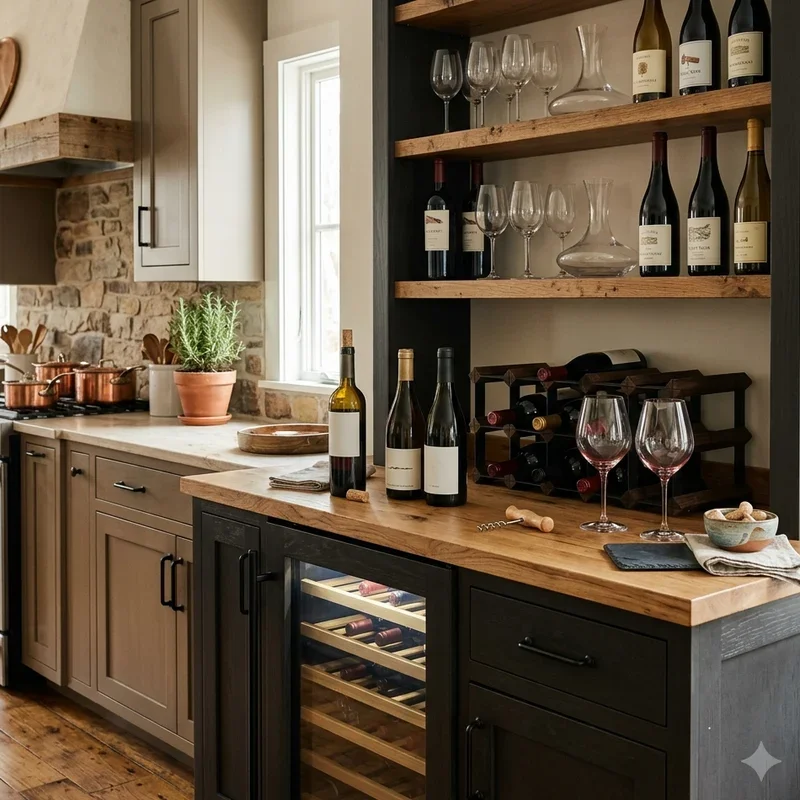
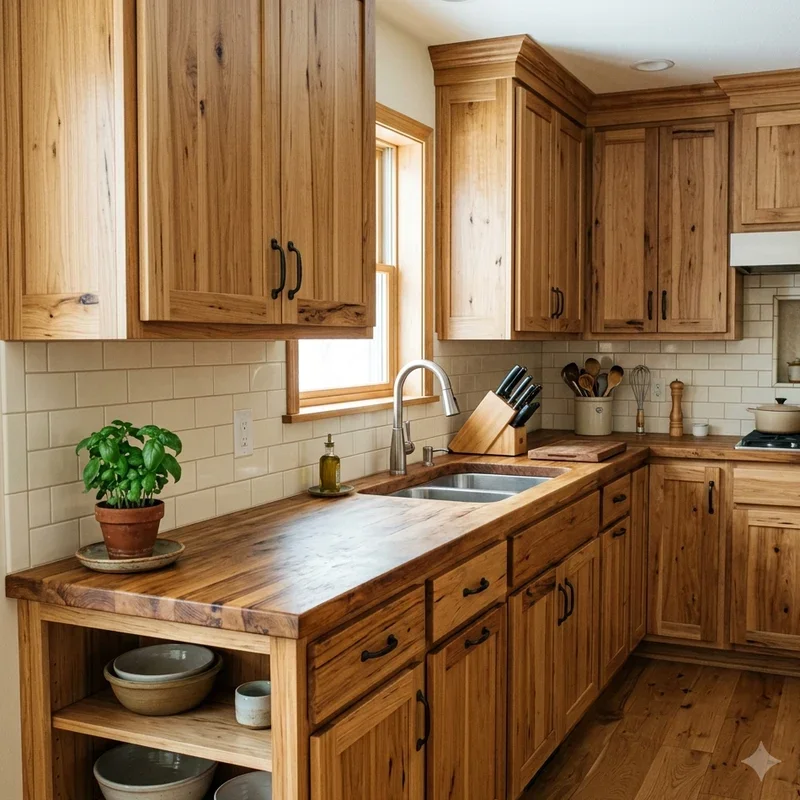
A hickory butcher block countertop adds warm, functional workspace where natural wood grain transforms everyday prep surfaces into beautiful, living kitchen features. Choose edge-grain or end-grain construction, since both deliver stunning grain pattern display while providing the durability cutting, chopping, and hot-pan placement demand. Oil the surface regularly with food-safe mineral oil, because consistent maintenance keeps hickory hydrated and protected against moisture absorption that causes warping over time. Install butcher block across the entire kitchen or limit it to a prep zone or island, since partial application balances warm wood against other countertop materials strategically. Sand and refinish occasionally for renewed beauty. Think of hickory countertops like kitchen workbenches that double as art. Your prep surface radiates handcrafted warmth.
4. Hickory Open Shelving Display
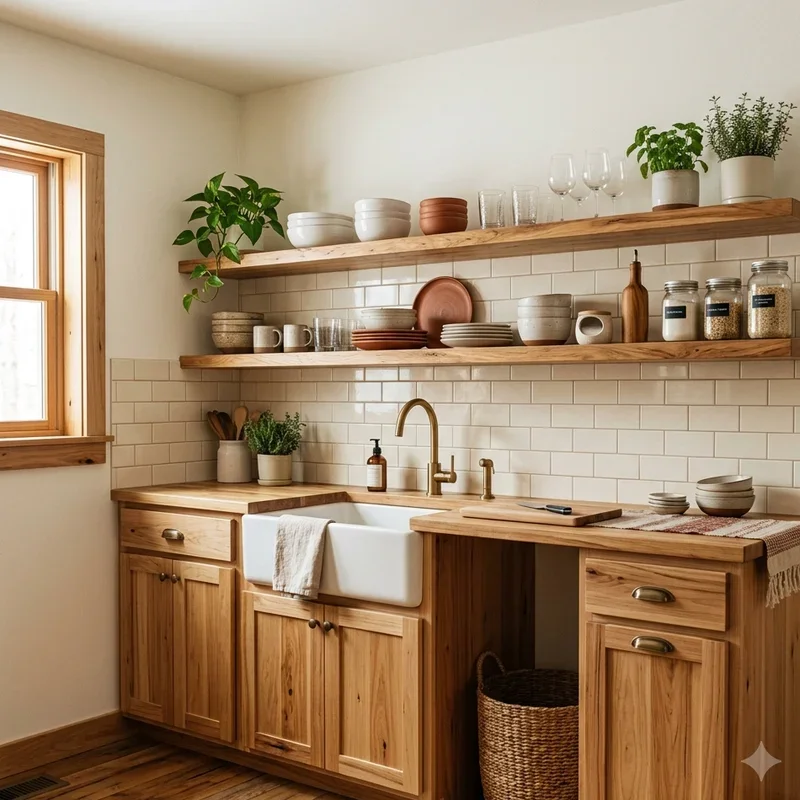
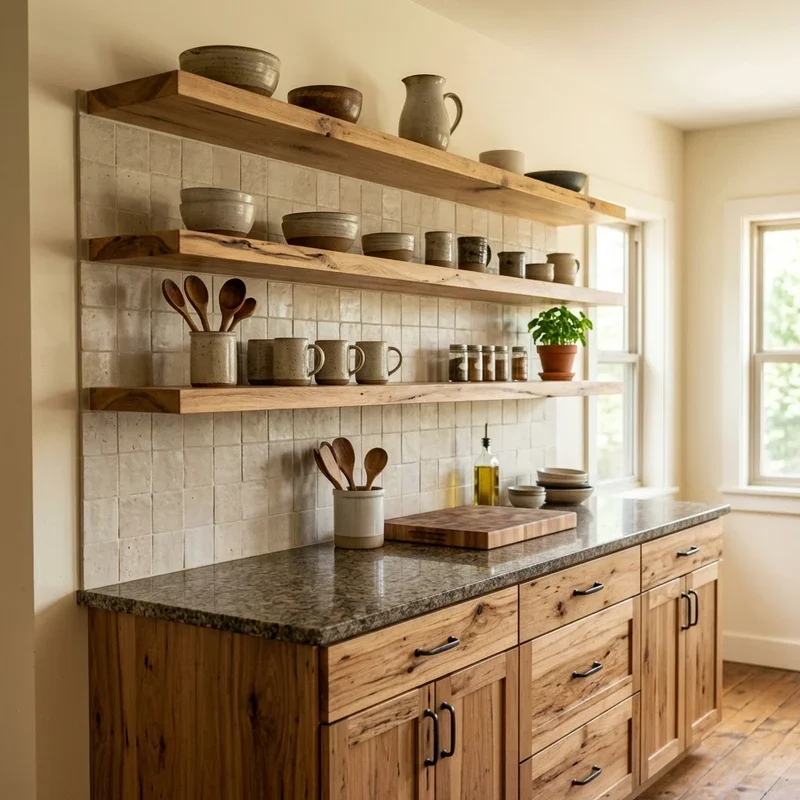
Hickory open shelving replaces upper cabinets with airy display space, showing off the wood's grain while creating a lighter, more accessible kitchen feel. Install thick hickory planks on iron brackets or concealed floating mounts, since sturdy hardware supports heavy dishes, cookbooks, and cast iron safely. Stain the shelves to match your lower cabinets, because visual continuity connects upper and lower zones cohesively rather than creating mismatched tonal clash. Style shelves with everyday dishes, ceramic pitchers, small plants, and wooden bowls, since curated displays make open hickory shelving feel intentionally rustic rather than simply unfinished. Limit shelving to one wall to prevent the kitchen from feeling cluttered. Wipe shelves regularly. Think of open shelving like window frames for your favorite kitchen pieces. Your room gains warmth and character.
5. Hickory Kitchen Island Centerpiece
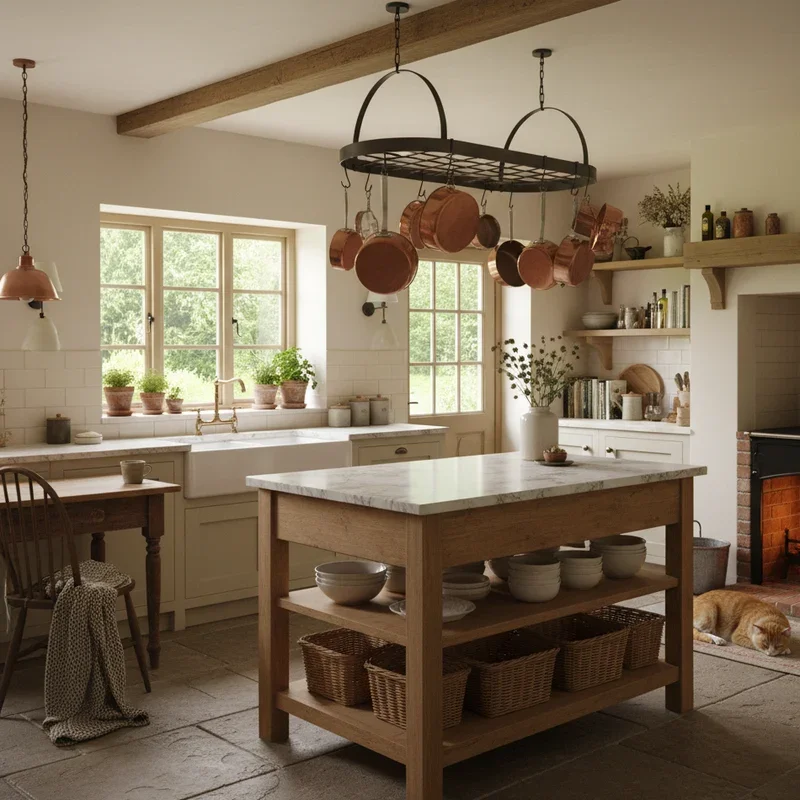
A hickory kitchen island anchors the room with a substantial wooden centerpiece that provides prep space, storage, seating, and stunning grain display all in one piece. Build the island from solid hickory or clad a basic frame in hickory panels, since the dramatic wood grain deserves a starring role on the kitchen's most prominent feature. Add a contrasting countertop in granite, marble, or butcher block, because varied materials create visual layering that prevents the kitchen from reading as monotonous single-wood throughout. Include drawers, cabinets, and open shelving beneath, since functional storage maximizes the island's contribution beyond surface prep alone. Add bar stool seating along one side. Think of hickory islands like grand wooden ships anchoring the kitchen. Your room gains functional rustic beauty.
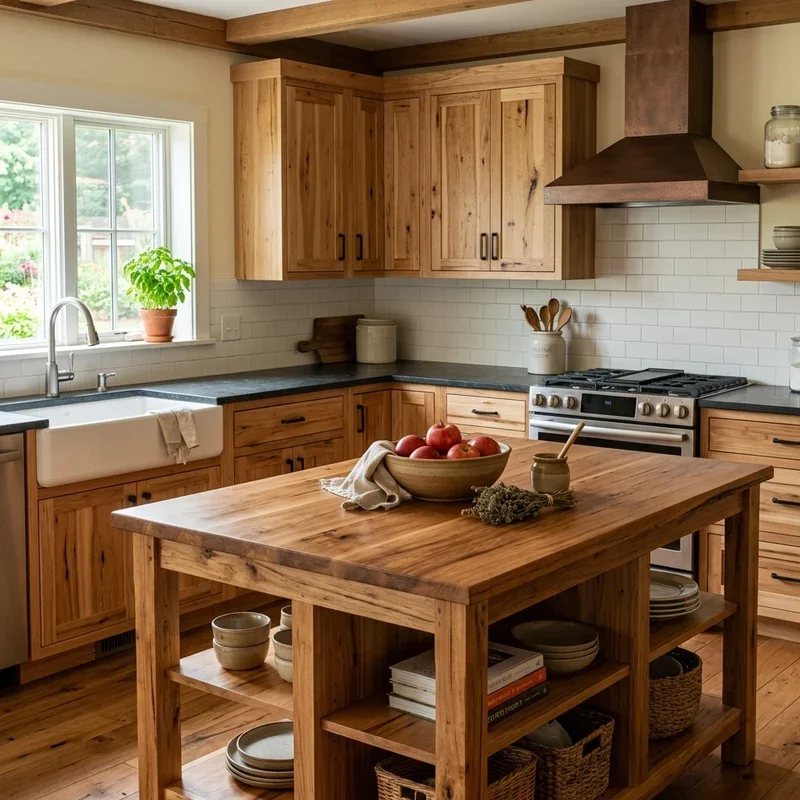
6. Hickory and White Two-Tone Cabinets
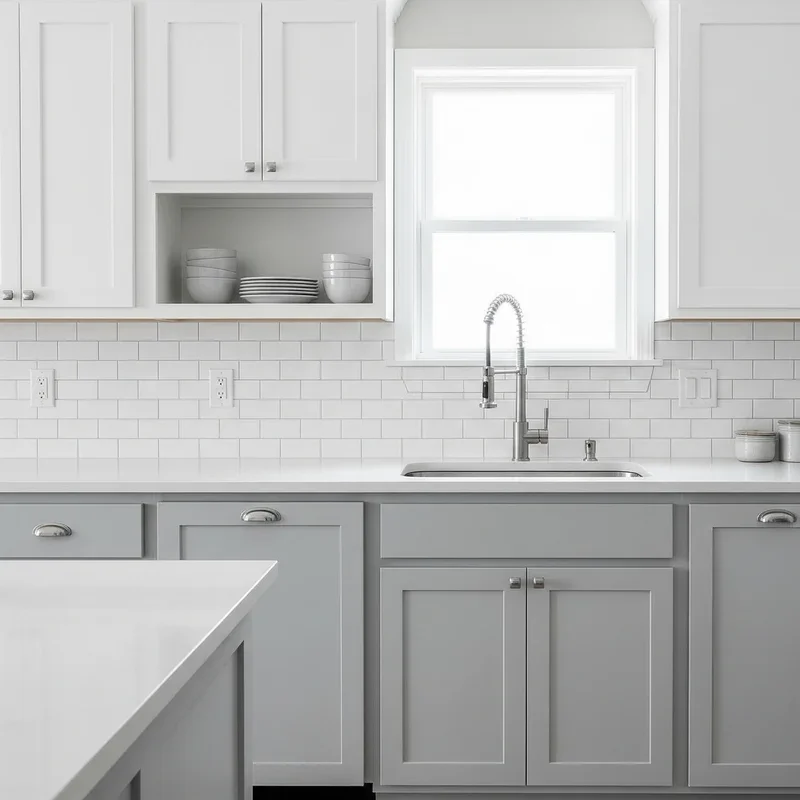
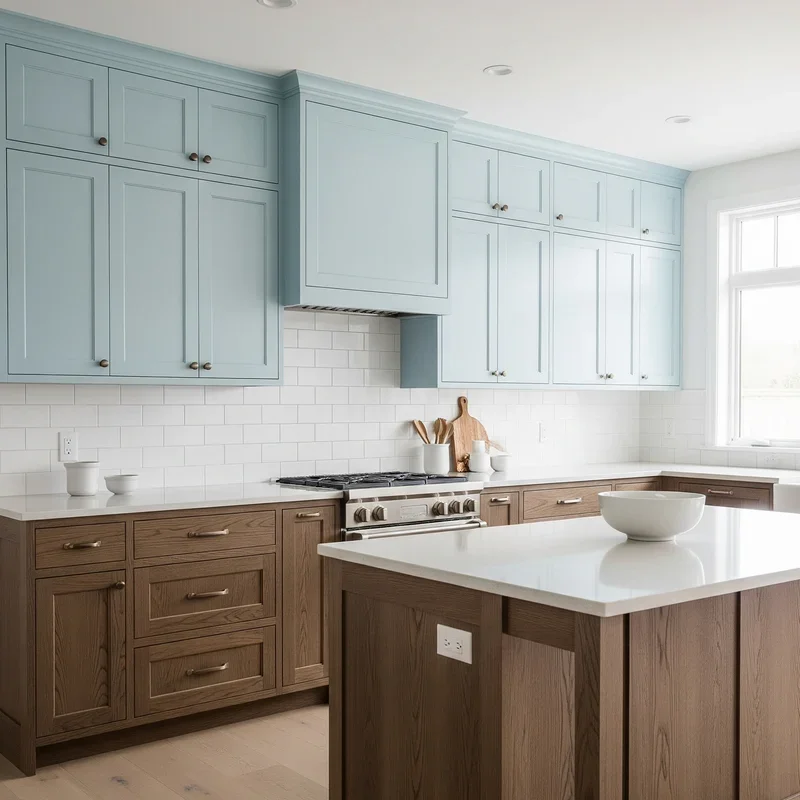
Hickory and white two-tone cabinets balance warm wood grain against bright painted surfaces, creating a kitchen that feels rustic yet refreshingly modern simultaneously. Install hickory cabinets along the lower section and paint upper cabinets crisp white, since the light-over-dark arrangement draws the eye upward while keeping heavier visual weight grounded below naturally. Choose warm white rather than blue-toned white, because warm undertones harmonize with hickory's golden, amber hues while cool whites create jarring contrast. Pair the two-tone combination with neutral countertops and hardware that bridges both finishes cohesively. Keep the hickory natural or lightly stained. Think of two-tone kitchens like wearing a crisp white shirt with worn leather boots. Your kitchen marries country warmth with clean contemporary style.
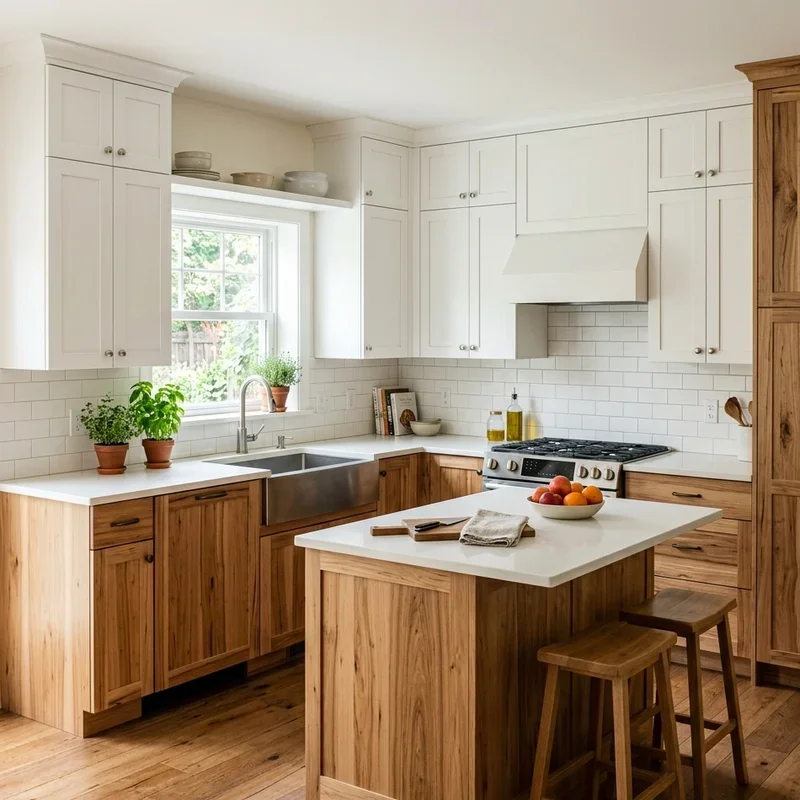
7. Rustic Hickory Ceiling Beams
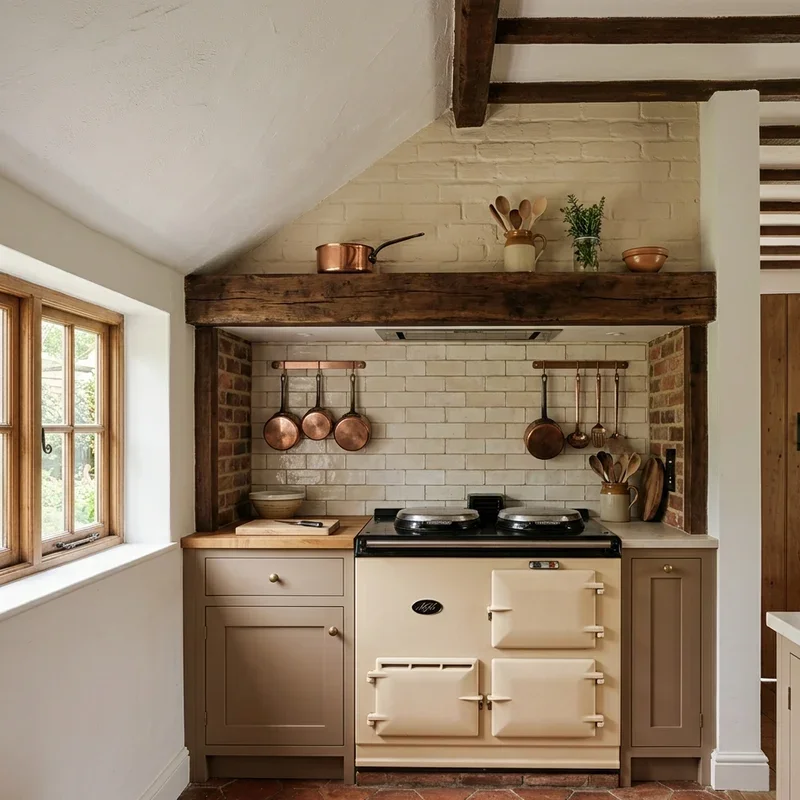
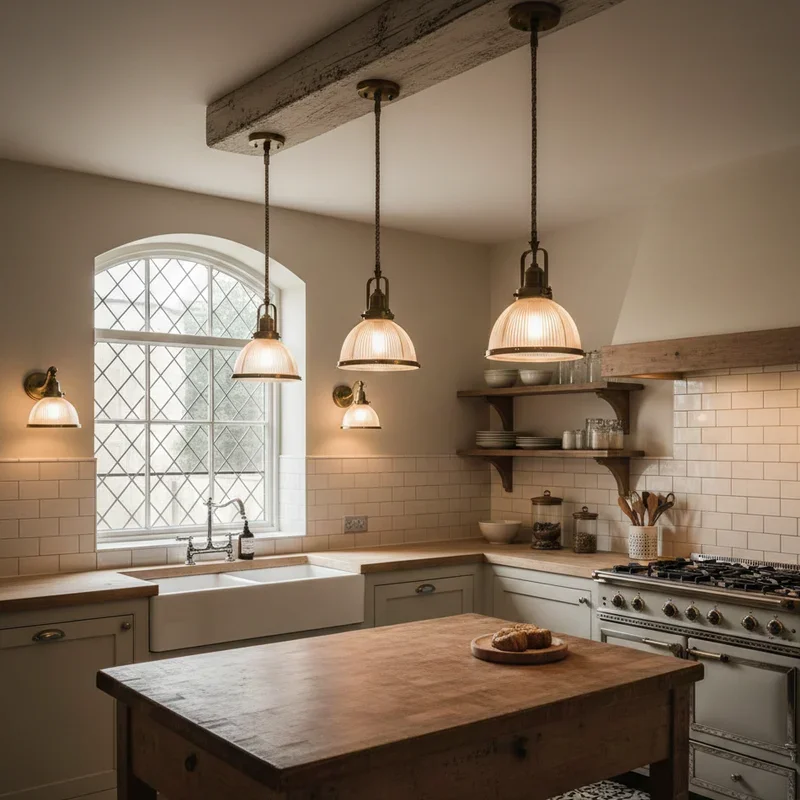
Rustic hickory ceiling beams add overhead architectural drama, drawing the eye upward while flooding the kitchen with warm, cabin-inspired character from above. Install genuine hickory beams or lightweight faux-beam covers, since both deliver dramatic grain display while the hollow alternatives significantly reduce structural load concerns. Choose beams with visible knots, bark edges, and natural color variation, because imperfect details define authentic rustic character that smooth, uniform wood simply cannot match. Space the beams evenly across the ceiling, since consistent rhythm creates visual order within the organic, varied grain pattern. Pair the overhead warmth with lighter walls and countertops. Add recessed or pendant lighting between beams. Think of ceiling beams like wooden ribs sheltering your kitchen. Your room gains towering rustic architectural presence.
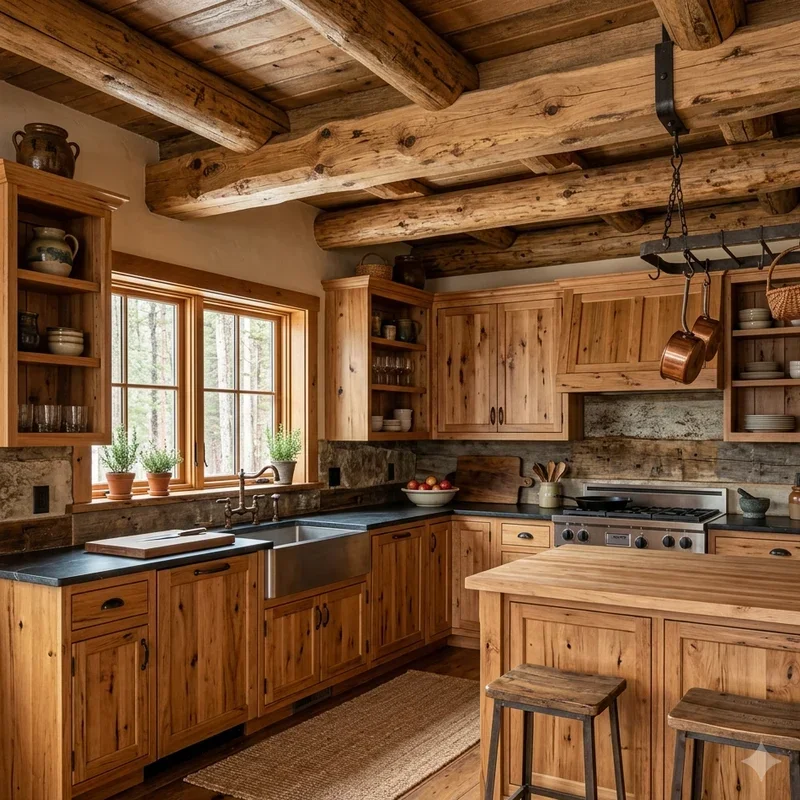
8. Hickory Range Hood Cover
A hickory range hood cover wraps utilitarian ventilation equipment in gorgeous natural wood, transforming a metal box into a rustic focal point above your stove. Build a custom wood surround from hickory planks, encasing the metal hood behind tongue-and-groove paneling or shiplap-style boards. Stain the cover to match your cabinetry, since cohesive wood tones make the hood feel integrated rather than added as an afterthought. Add decorative corbels, a bottom trim band, or iron strapping for layered detail that elevates the simple wood cover into genuine architectural statement. Choose a range hood with sufficient ventilation power, because beautiful covers still need to function properly above cooking heat and grease. Think of wood hoods like crowns for your stove. Your kitchen gains a stunning custom centerpiece.
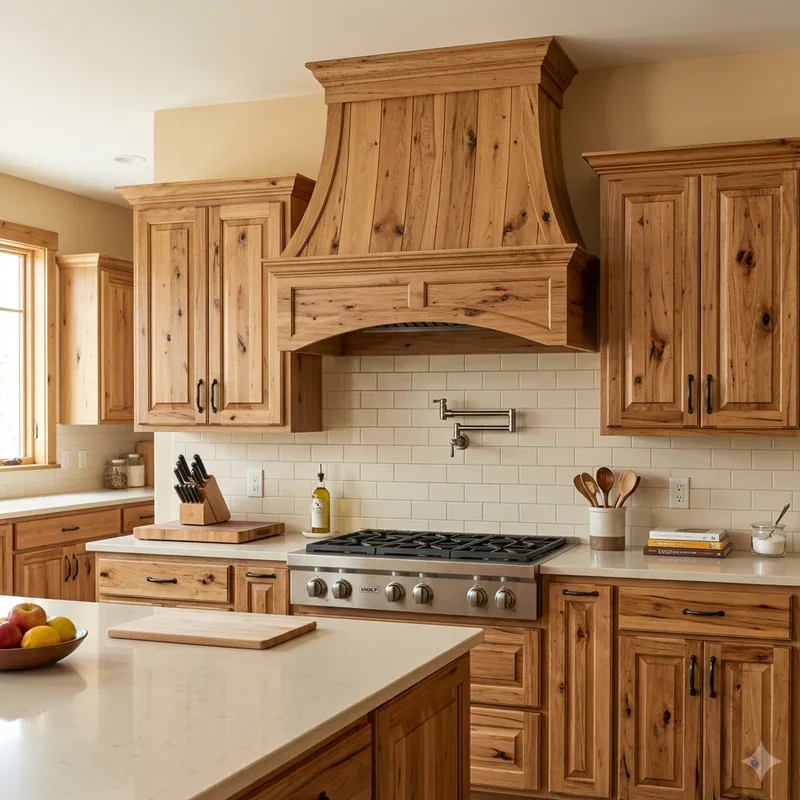
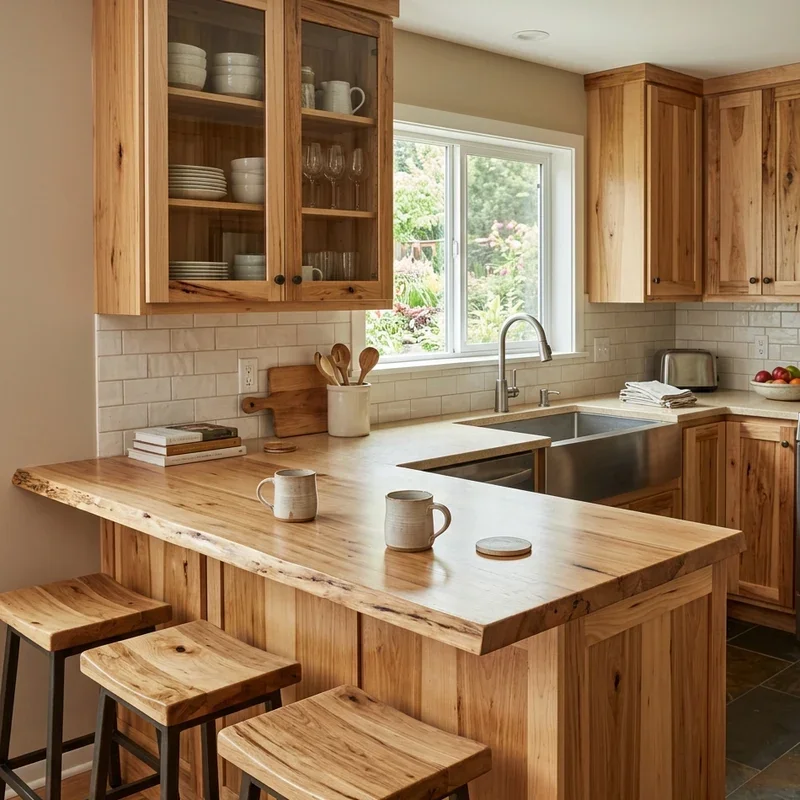
9. Hickory Breakfast Bar
A hickory breakfast bar extends casual dining directly from your kitchen counter or island, creating a warm spot where morning coffee and quick meals happen surrounded by beautiful natural wood grain. Cut a thick hickory slab or glue up planks into a bar-top overhang supported by decorative brackets or turned legs. Apply food-safe finish, since eating surfaces demand non-toxic protective coatings that withstand daily contact with plates and cups. Size the overhang deep enough for comfortable stool seating, typically twelve to fifteen inches, because shallow bars leave knees bumping the cabinetry beneath uncomfortably. Choose stools that complement hickory's warm tones. Think of breakfast bars like kitchen counters that invite you to sit and stay. Your mornings gain a warm, inviting gathering spot.
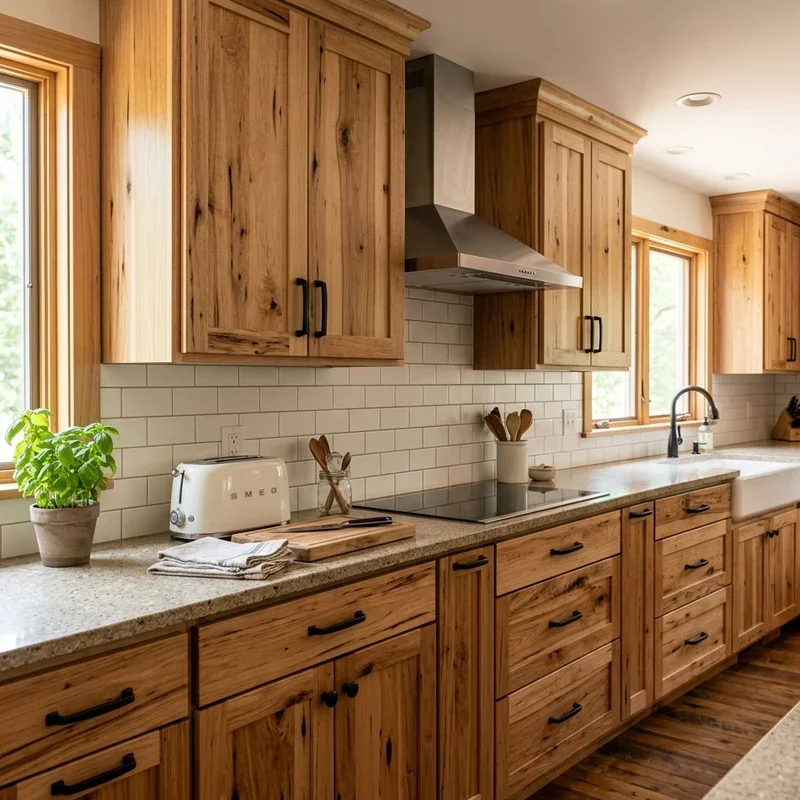
10. Hickory Cabinets with Black Hardware
Hickory cabinets paired with matte black hardware create striking contrast where warm golden wood meets bold dark metal for a rustic-industrial fusion that feels both timeless and modern. Choose cup pulls, bar handles, or knob designs in flat black iron or powder-coated steel, since dark hardware pops dramatically against hickory's lighter grain tones. Install consistent hardware across every door and drawer, because uniform metallic treatment pulls disparate grain patterns into one cohesive design language. Select slightly oversized hardware, since bold proportions match hickory's dramatic personality better than delicate, thin pulls do. Choose hinges in matching black. Think of black hardware like punctuation marks on a hickory sentence. Your cabinets gain sharp, defined character that balances warmth with edge.
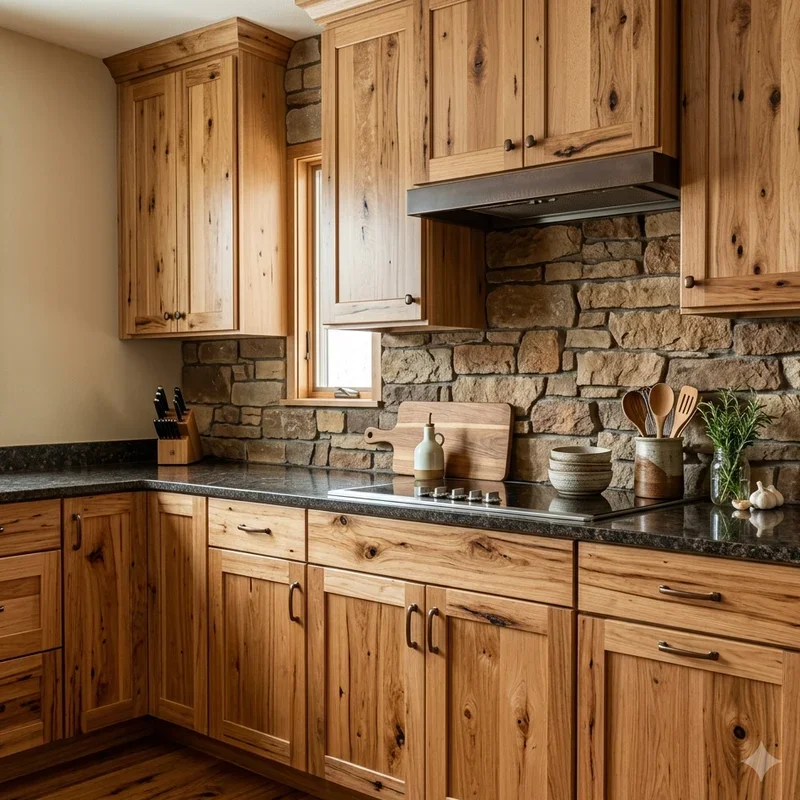
11. Hickory and Stone Backsplash Pairing
A hickory and stone backsplash pairing combines warm wood cabinetry with natural stone tile, layering two organic materials that complement each other like old friends sharing a kitchen wall. Choose stacked stone, slate, travertine, or river rock tile, since natural textures echo the rustic character of hickory without introducing manufactured materials that feel out of place. Pick stone colors echoing hickory's warm tones, because coordinated earth tones create cohesive visual flow from cabinet to wall seamlessly. Install the stone from countertop to upper cabinet line, since full-height coverage delivers more impact than narrow splash strips. Seal the stone properly. Think of hickory and stone like wood meeting mountain inside your kitchen. Your walls gain layered, organic beauty.
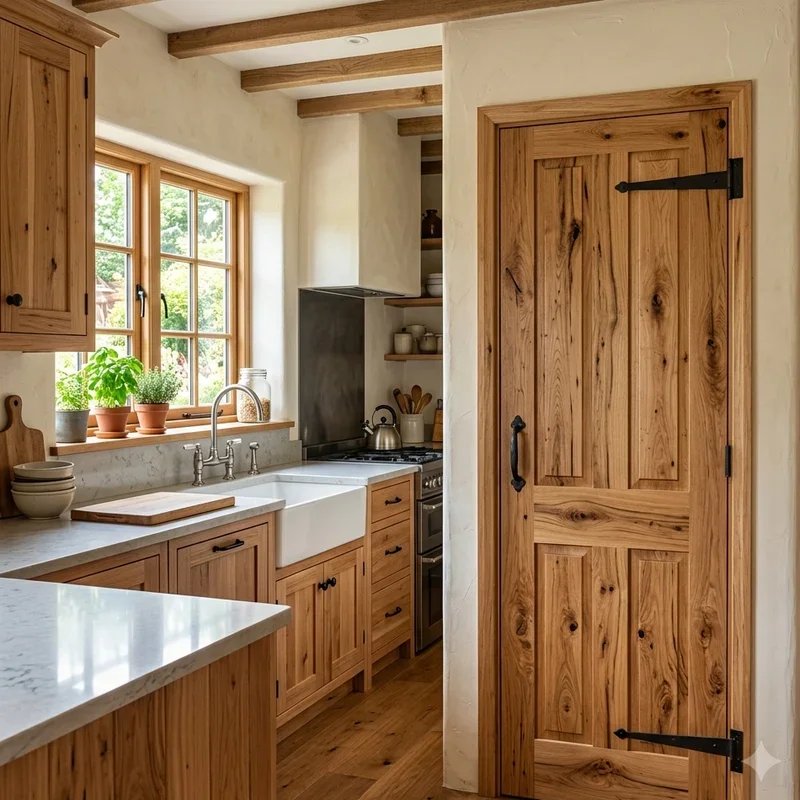
12. Hickory Pantry Door Statement
A hickory pantry door transforms a utilitarian entrance into a gorgeous focal point, introducing the wood's dramatic grain into one bold, noticeable feature. Choose a solid hickory slab door, rustic plank-style door, or a hickory-framed glass panel, since each style delivers different levels of grain visibility and visual weight. Add iron strap hinges or a barn door track, because rustic hardware amplifies the country character that hickory naturally carries. Stain the door to match surrounding cabinetry, or leave it naturally finished for maximum grain contrast against painted walls. Install the door where it is visible from the main kitchen area. Think of hickory pantry doors like wooden portals to hidden provisions. Your kitchen gains a beautiful, functional accent.
13. Hickory Floating Shelves
Hickory floating shelves add warm display space to empty walls, bringing the wood's signature grain into smaller, more accessible installations beyond full cabinetry commitments. Cut thick hickory planks to length, then mount them using concealed heavy-duty floating brackets, since invisible hardware lets the natural wood grain speak without visible metal distracting the eye. Sand and finish the shelves with a clear satin coat, because transparent finishes preserve the full color variation from blonde through dark chocolate that defines hickory's character. Position the shelves in functional locations, above the coffee station, beside the stove, or flanking a window, since purposeful placement makes the shelves feel designed rather than randomly placed. Think of floating shelves like natural wood picture ledges. Your walls gain warm, practical beauty.
14. Hickory and Granite Combination
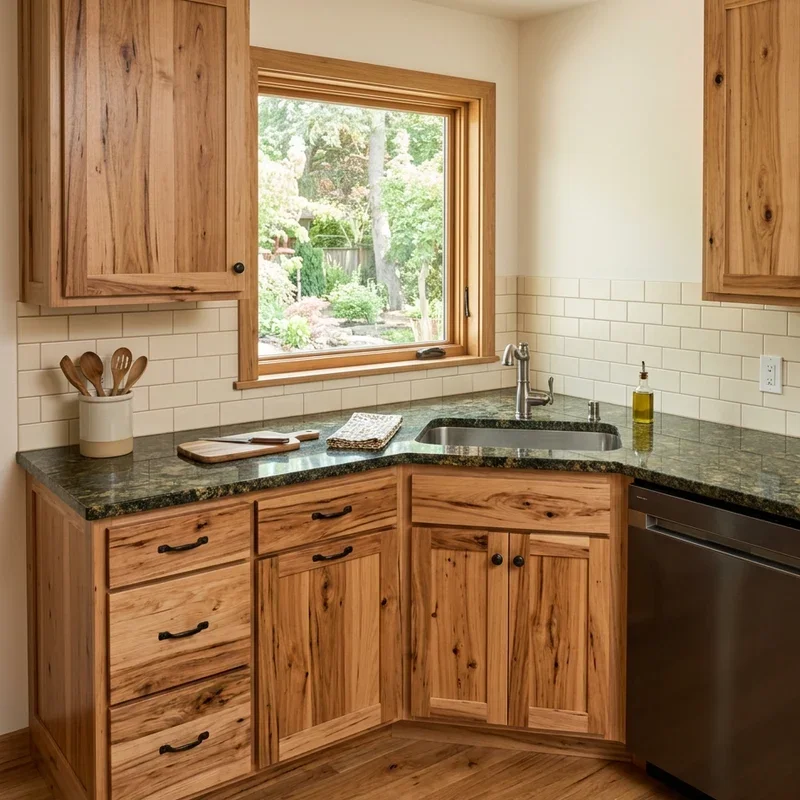
A hickory and granite combination pairs warm wood cabinetry with cool, polished stone countertops, creating balanced contrast that prevents either material from overwhelming the kitchen visually. Choose granite in warm tones like Santa Cecilia, Giallo Ornamentale, or Venetian Gold, since these varieties echo hickory's amber and honey hues while adding natural stone's dimensional sparkle. Alternatively, select dark granite like Ubatuba or Black Pearl for dramatic light-dark contrast that makes both materials pop independently. Pair the hickory and granite with a simple backsplash in neutral subway tile, because understated backgrounds let the two primary materials share the spotlight fairly. Think of hickory and granite like leather and denim. Your kitchen gains two rugged, beautiful materials complementing each other.
15. Hickory Window Trim and Frames
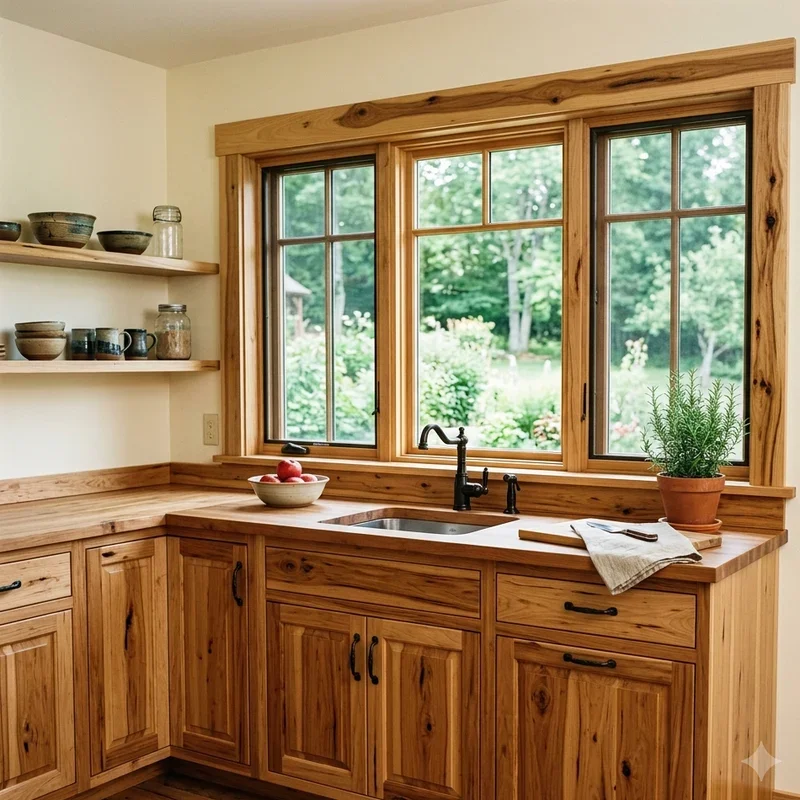
Hickory window trim and frames bring warm wood detail to the kitchen's natural light sources, framing views with organic beauty that painted trim simply cannot match. Mill hickory boards into trim profiles matching your cabinet style, since coordinated details connect windows to surrounding cabinetry through consistent wood species and finish. Apply the same stain used on cabinets, because matching tones create intentional visual continuity that separate wood colors would fracture. Install the trim with mitered corners for clean joins, since precise carpentry shows respect for the beautiful material. Add a hickory window sill deep enough for small herb pots, creating functional ledges beneath beautiful frames. Think of hickory trim like golden borders around your kitchen's natural paintings. Your windows gain warm, cohesive rustic framing.
16. Hickory Bench Seating Nook
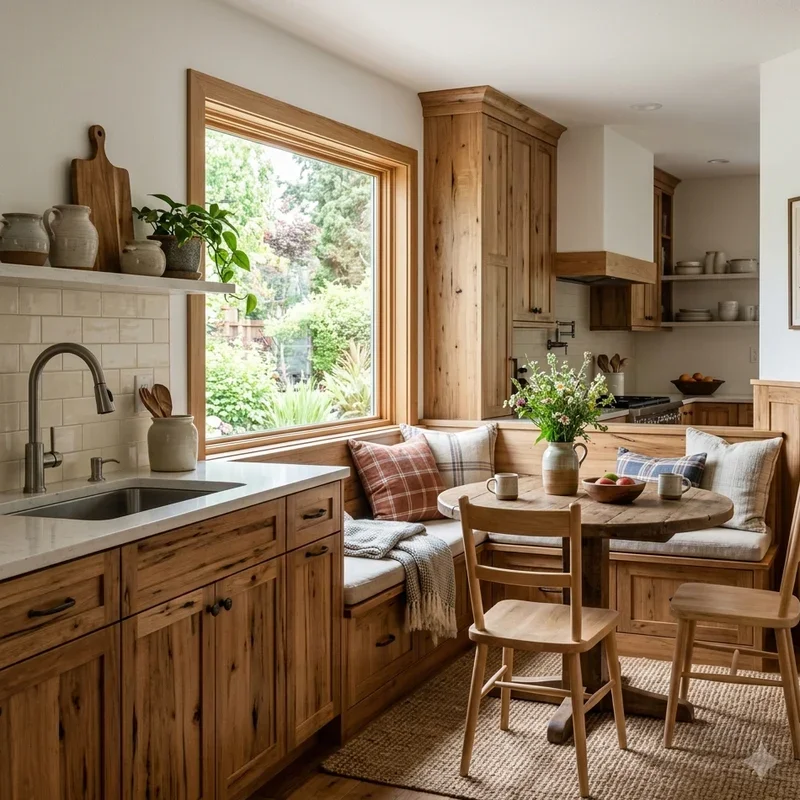
A hickory bench seating nook tucks a warm wooden dining perch into a kitchen corner, combining rustic beauty with space-saving efficiency that standalone chairs cannot match. Build a bench from solid hickory planks, sized to fit your nook's exact dimensions, since custom construction maximizes seating and eliminates gaps that collect crumbs. Add a hickory table matching the bench finish, because cohesive wood species throughout the nook creates an intentional, built-in furniture feel. Include hidden storage beneath the bench seat, since lift-top compartments swallow table linens, seasonal items, and children's supplies neatly out of sight. Add cushions in neutral tones. Think of hickory nooks like cozy wooden cocoons for family meals. Your kitchen gains beloved gathering space.
Conclusion
Hickory kitchens prove natural wood's dramatic grain variation, golden warmth, and rugged durability create spaces no manufactured material ever genuinely replicates. These sixteen ideas span Shaker cabinets to bench seating nooks, matching every kitchen size, budget, and style preference with authentic wood character. Whether you install hickory flooring or build a stunning range hood cover, this hardwood rewards every surface it touches with organic, one-of-a-kind beauty. The secret lies in letting hickory's natural personality lead the design rather than forcing it. Start building your warm rustic kitchen today.
Read next: 16 Natural Wood Kitchen Cabinets Ideas for Warm Interiors
Frequently Asked Questions
Q1: Is hickory a good choice for kitchen cabinets?
A: Yes, hickory's extreme hardness and durability make it one of the strongest domestic woods for cabinetry.
Q2: How do I maintain hickory kitchen surfaces?
A: Apply periodic oil or sealant, wipe spills promptly, and avoid harsh chemicals that strip natural wood finishes.
Q3: Does hickory darken over time?
A: Yes, hickory gradually deepens to richer amber tones with age, especially when exposed to natural sunlight.
Q4: What colors pair best with hickory cabinets?
A: Warm whites, sage greens, soft grays, and earthy neutrals complement hickory's golden and brown grain tones.
Q5: Is hickory more expensive than other kitchen woods?
A: Hickory costs moderately, sitting between budget oak and premium cherry or walnut in typical kitchen applications.
Stay up to date with our latest ideas!