16 Inexpensive Basement Floor Ideas for Budget Makeovers
Discover 16 inexpensive basement floor ideas for budget makeovers that transform cold concrete into stylish, comfortable surfaces without overspending.
Basement floors sit beneath some of the most ambitious home improvement dreams in the house, where cold, grey concrete waits for a budget-friendly makeover that transforms uninviting underground slabs into genuinely comfortable, attractive surfaces without draining the savings account that the upstairs renovation already threatened to empty. Have you ever walked barefoot across your basement concrete and immediately understood why nobody voluntarily spends time down there when every step sends a cold shock through your soles? That discomfort disappears when you choose the right affordable flooring solution, where smart material selection stretches small budgets into impressive results that look and feel dramatically better than the bare concrete they cover. Think of budget basement flooring like giving your underground level a warm, welcoming handshake. Let's explore sixteen ideas.
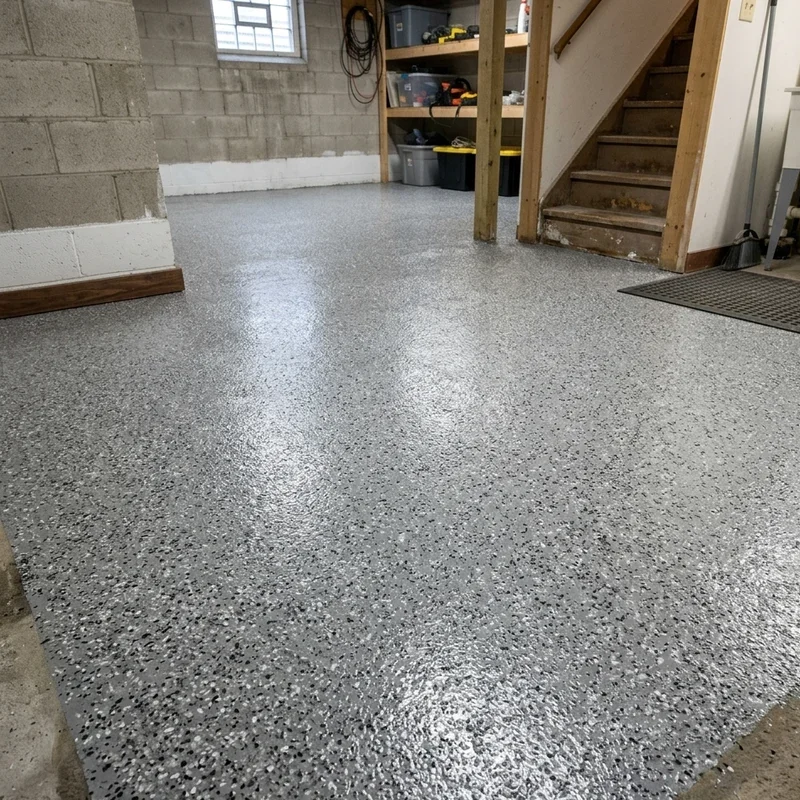
1. Epoxy Concrete Coating
Epoxy concrete coating transforms your bare basement slab into a glossy, durable, easy-to-clean surface that resists moisture, stains, and wear while delivering a polished showroom finish at a fraction of the cost that genuine flooring installation demands through its material, labor, and subfloor preparation expenses. Apply a two-part epoxy kit directly over clean, prepped concrete, since the chemical bond creates a seamless, waterproof membrane that protects the slab while adding genuine visual appeal through its high-gloss, reflective surface. Choose from solid colors, metallic swirls, or decorative flake patterns, because varied finish options let you customize the aesthetic from industrial workshop through upscale living space depending on your basement's intended purpose. Prep the concrete thoroughly. Allow full cure time. Think of epoxy like liquid armor for your basement floor. Your concrete gains gorgeous protection.
2. Peel-and-Stick Vinyl Tiles
Peel-and-stick vinyl tiles deliver the easiest, fastest basement floor makeover imaginable, where self-adhesive squares stick directly onto clean concrete without glue, grout, or specialized tools, transforming cold, grey slabs into styled surfaces during one focused afternoon of weekend work. Choose tiles mimicking wood plank, stone, or geometric patterns, since the printing technology on modern vinyl tiles produces convincingly realistic textures that casual observers genuinely mistake for real hardwood or natural stone flooring. Peel the backing, press firmly, and move to the next tile, because the straightforward installation demands nothing beyond clean concrete, a utility knife, and basic measuring accuracy for straight, professional-looking results. Replace individual damaged tiles easily. Choose moisture-resistant vinyl specifically. Think of peel-and-stick like flooring stickers for your basement. Your makeover completes in hours.
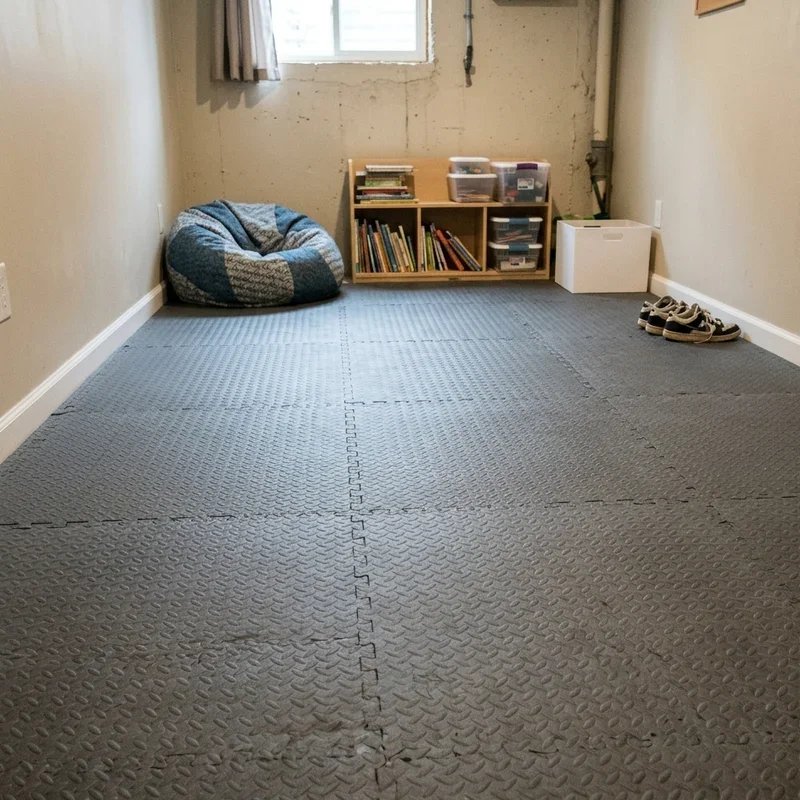
3. Interlocking Foam Tiles
Interlocking foam tiles snap together across your basement floor like oversized puzzle pieces, creating a soft, warm, cushioned surface that eliminates the cold, hard discomfort of bare concrete while providing the impact-absorbing padding that play areas, home gyms, and craft rooms benefit from during active, floor-level use. Choose closed-cell EVA foam tiles in varied thicknesses, since denser, thicker options provide better insulation and cushioning while thinner versions suit lighter-use areas where maximum padding matters less than basic comfort improvement above bare concrete. Lay the tiles without adhesive, because the interlocking edges hold each tile securely in position while the adhesive-free installation allows easy removal, rearrangement, and replacement whenever needs change. Choose moisture-resistant, washable foam. Think of foam tiles like cushioned puzzle floors. Your basement gains instant softness.
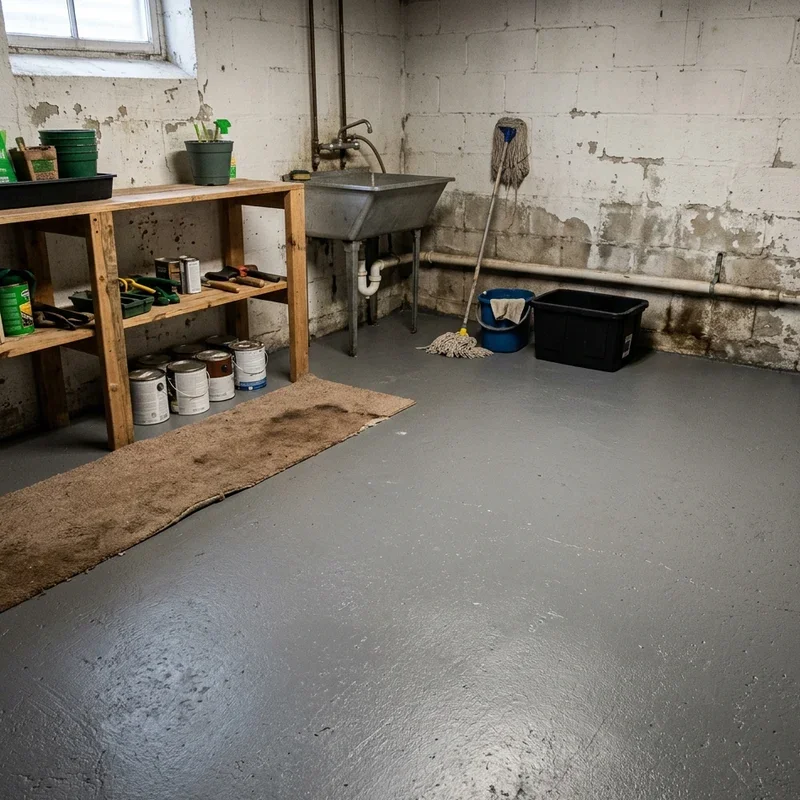
4. Painted Concrete Floor
A painted concrete floor delivers the absolute cheapest basement makeover, where a few gallons of concrete floor paint transform cold grey slabs into colored, sealed surfaces that look dramatically better than bare concrete for a total investment often landing below one hundred dollars for an entire basement. Choose concrete-specific floor paint or porch and floor enamel, since formulations designed for concrete adhesion withstand the foot traffic, moisture, and temperature fluctuations that standard wall paint fails surviving on horizontal, walked-upon surfaces. Clean and etch the concrete before painting, because proper preparation ensures the paint bonds permanently rather than peeling within months of application. Apply two coats minimum. Choose light colors to brighten the space. Add a clear topcoat for durability. Think of painted floors like budget magic in a can. Your concrete gets a fresh start.
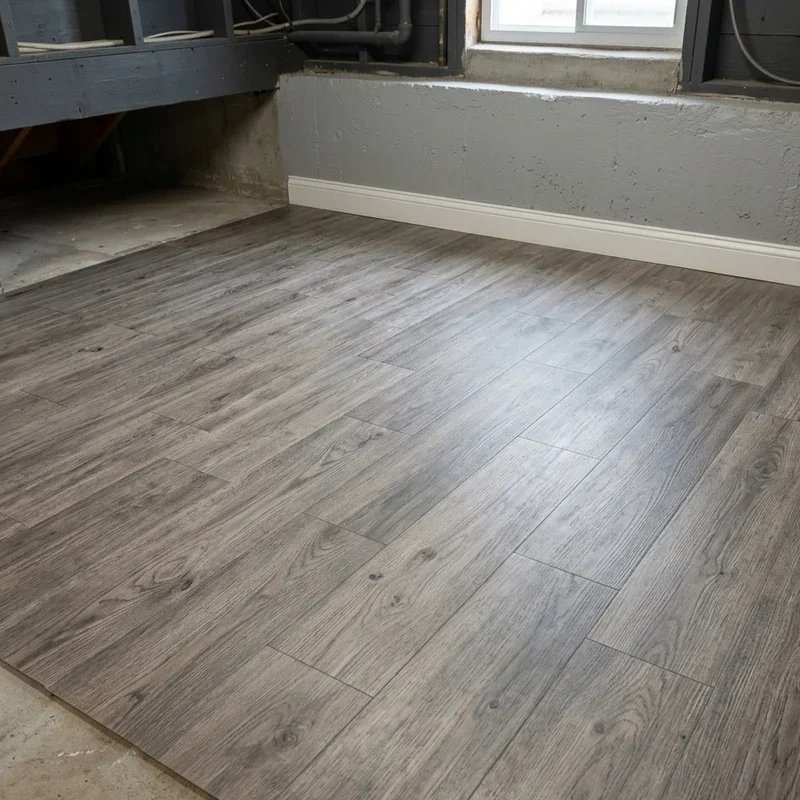
5. Luxury Vinyl Plank Flooring
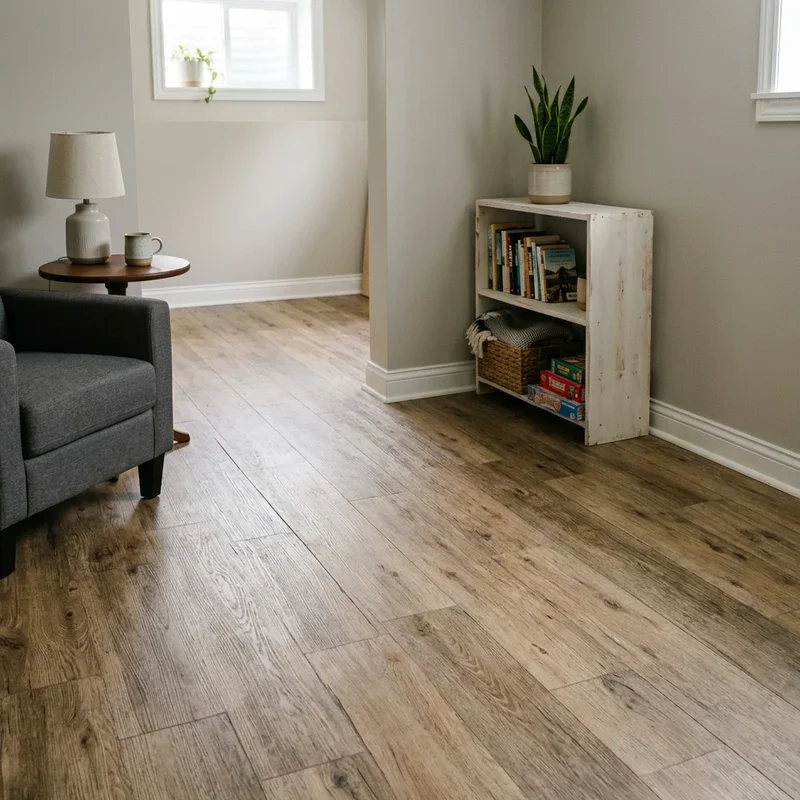
Luxury vinyl plank flooring clicks together over your basement concrete without glue or nails, creating the convincing hardwood appearance that real wood flooring cannot provide in moisture-prone basements where humidity and occasional water infiltration would warp, buckle, and destroy genuine timber within seasons of underground installation. Choose waterproof LVP with an attached underlayment pad, since the built-in cushion layer adds warmth and sound absorption while the rigid core resists the moisture that below-grade environments expose flooring to constantly through concrete slab vapor transmission. Click the planks together in staggered rows, because the floating installation method requires no adhesive while the locking mechanism holds planks tightly throughout years of walked-upon, furniture-weighted daily use. Choose realistic wood-grain printing. Think of LVP like waterproof hardwood impersonators. Your basement gains beautiful, durable style.
6. Rubber Roll Flooring
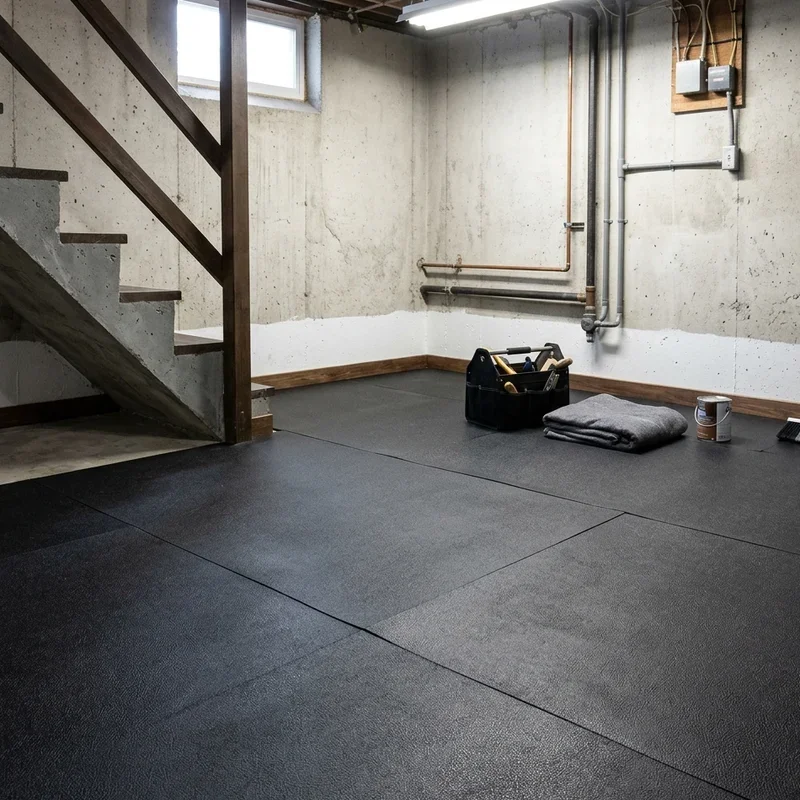
Rubber roll flooring unrolls across your basement concrete in large, seamless sheets, creating a durable, cushioned, moisture-resistant surface that handles everything from home gym equipment through kid's play areas through workshop traffic without the seam-heavy, gap-prone weaknesses that tile-based alternatives develop between individual pieces over time. Choose recycled rubber rolls in black, grey, or speckled patterns, since the dense material provides excellent shock absorption, sound dampening, and thermal insulation that transforms cold, hard concrete into a genuinely comfortable surface beneath bare or socked feet. Cut the rolls to fit using a utility knife, because the flexible material trims easily around corners, posts, and irregular room shapes. Secure edges with double-sided tape. Think of rubber rolls like gym floor mats sized for your entire basement. Your concrete gains cushioned durability.
7. Modular Carpet Tiles
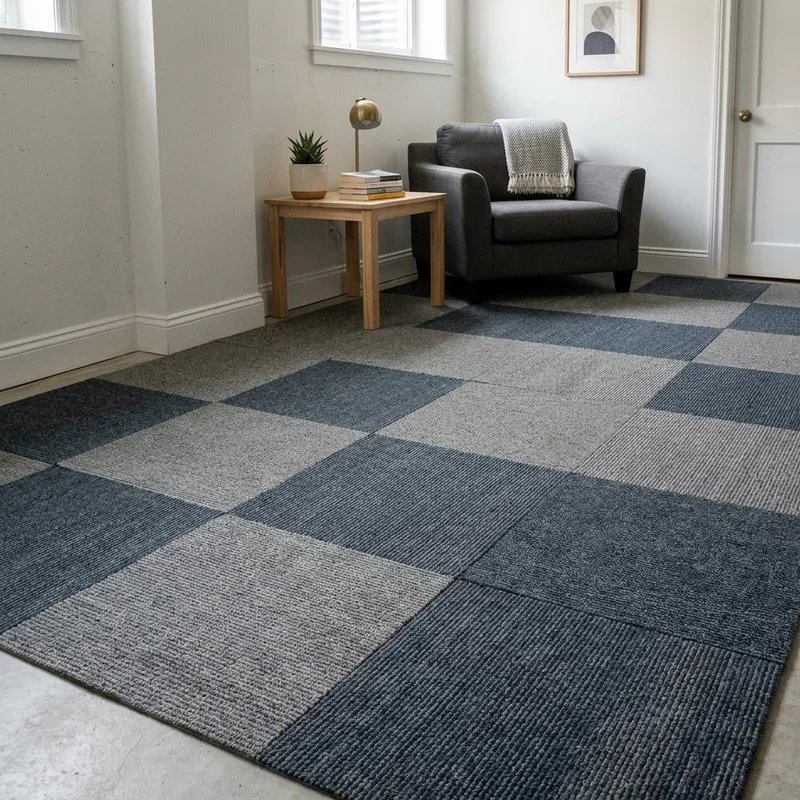
Modular carpet tiles lay individual soft squares across your basement floor, creating wall-to-wall carpet coverage with the enormous advantage that damaged, stained, or moisture-affected individual tiles lift out and replace independently without tearing up the entire floor the way broadloom carpet replacement demands when one section suffers damage while the rest remains perfectly fine. Choose carpet tiles with moisture-resistant backing, since below-grade humidity and occasional water intrusion require backing materials that resist mold and mildew growth beneath the carpet surface where hidden moisture problems develop undetected in basements using standard carpet padding. Lay the tiles in alternating directions for a professional, checkerboard-texture appearance. Peel-and-stick or loose-lay depending on the product. Think of carpet tiles like replaceable soft squares. Your basement gains warm, repairable carpet.
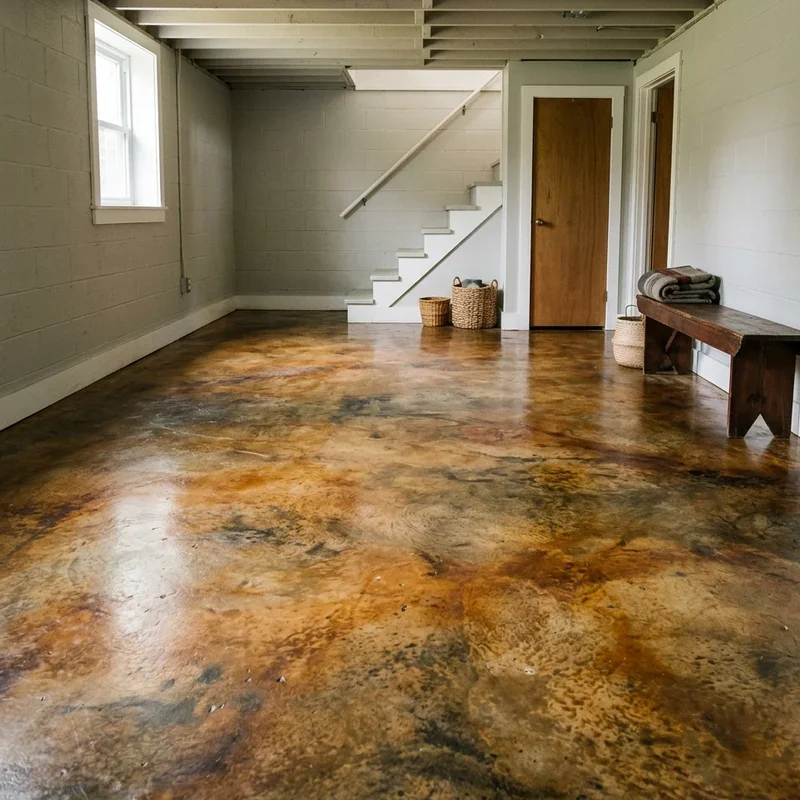
8. Acid Stained Concrete
Acid stained concrete transforms your existing slab into a richly colored, marbled surface where chemical reactions between metallic salts and concrete minerals produce unique, translucent color patterns that no two floors ever replicate identically through the unpredictable, organic nature of the staining chemistry. Apply acid stain using a pump sprayer or brush, since the controlled application lets you layer colors and direct the stain's spread across the surface for semi-controlled artistic effects. Choose warm browns, amber, or blue-green tones, because the metallic acid reacts with concrete's natural minerals to produce earthy, stone-like coloring that looks genuinely expensive despite costing remarkably little per square foot. Neutralize and seal the stained surface thoroughly. Wear protective equipment. Think of acid stain like watercolor painting on concrete. Your floor gains unique, marbled beauty.
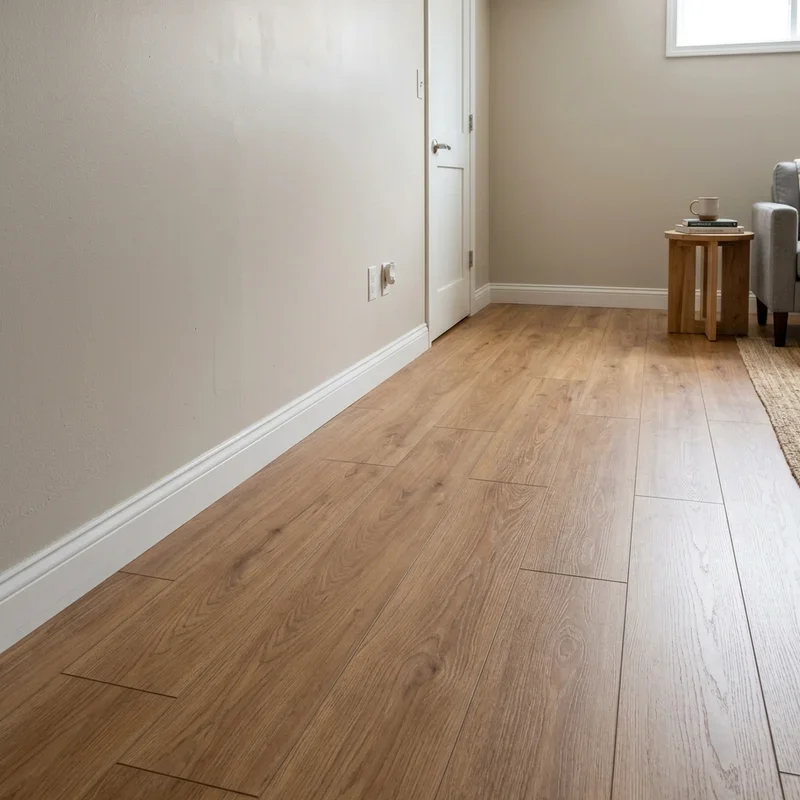
9. Laminate Floating Floor
A laminate floating floor clicks together above your basement concrete on a moisture-barrier underlayment, creating the wood-look or stone-look surface that solid hardwood cannot deliver in moisture-prone below-grade environments where humidity and vapor transmission destroy genuine timber flooring from beneath. Choose water-resistant laminate specifically rated for below-grade installation, since standard laminate swells and warps under the moisture exposure that basement environments present more aggressively than above-grade rooms through their concrete slab contact. Install a vapor barrier underlayment before laying the laminate, because the protective membrane blocks the moisture migration that concrete slabs transmit upward through capillary action into any flooring material sitting directly on the surface without barrier protection. Click planks together in staggered rows. Think of laminate like budget hardwood lookalikes. Your basement gains wood-look affordably.
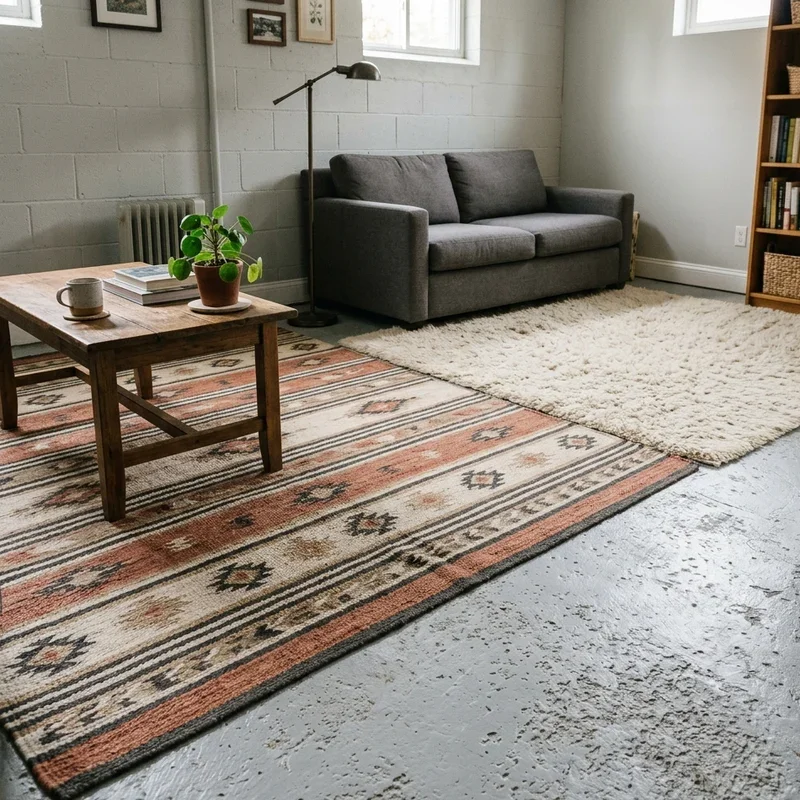
10. Area Rugs Over Concrete
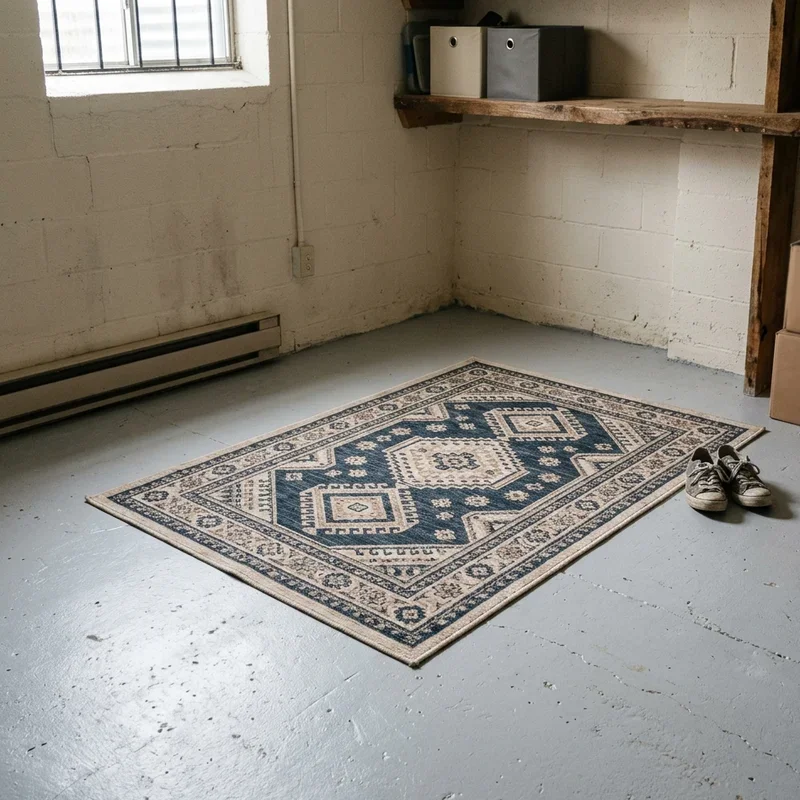
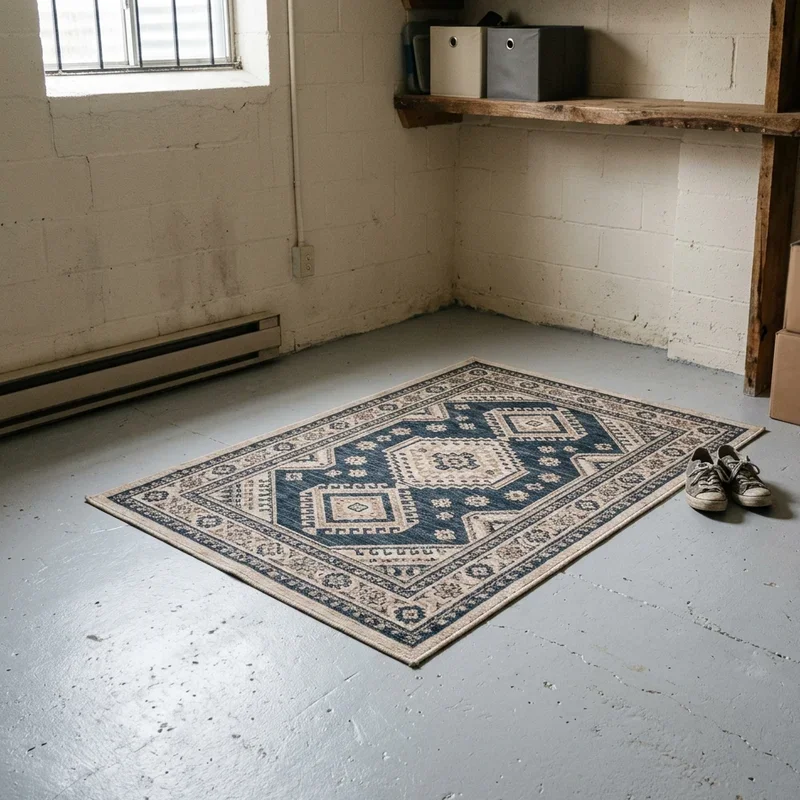
Area rugs laid over sealed concrete deliver the fastest, most commitment-free basement floor transformation, where large, layered rugs cover cold, grey slabs with warmth, color, and softness that you can change, move, or remove whenever your style preferences shift without leaving any permanent alterations to the concrete beneath. Choose large, affordable area rugs from discount retailers, since budget rugs covering specific zones cost far less than wall-to-wall flooring installation while the targeted placement focuses comfort exactly where your feet actually land most frequently. Layer multiple rugs for varied texture and color, because the overlapping placement creates visual richness while covering more concrete surface area. Add rug pads beneath, since grippy padding prevents dangerous sliding on smooth concrete. Think of area rugs like portable comfort islands. Your basement gains instant, changeable warmth.
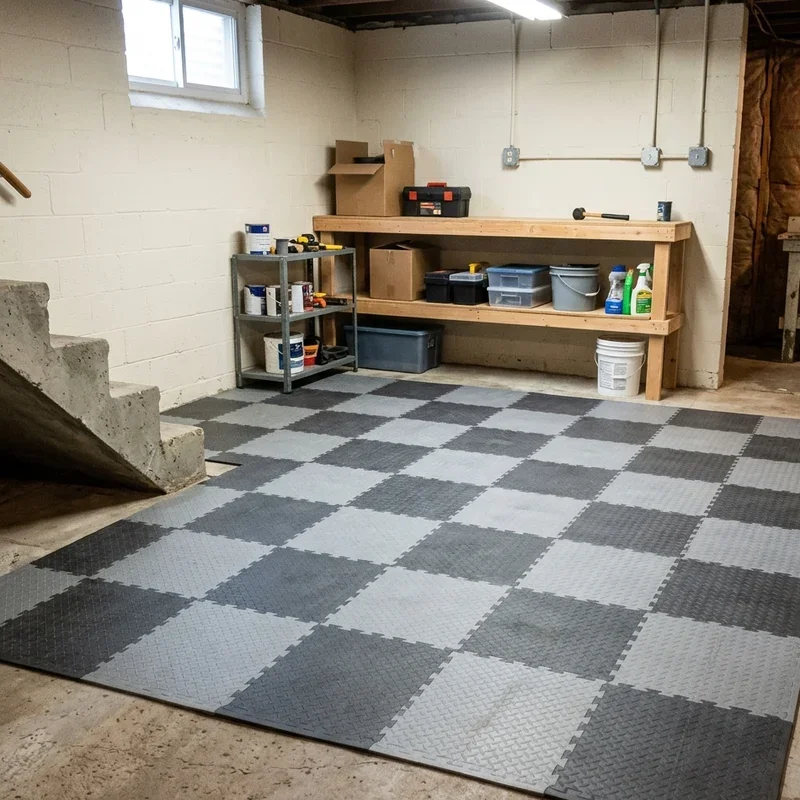
11. Snap-Together Garage Tiles
Snap-together garage tiles interlock across your basement floor in rigid, durable plastic squares that handle heavy loads, resist moisture, and provide a finished, professional appearance that bare concrete lacks while installing faster than almost any other flooring option through their simple, tool-free, snap-and-walk connection system. Choose polypropylene interlocking tiles with drainage channels, since the elevated design lifts the walking surface slightly above the concrete, allowing airflow and moisture evaporation beneath the tiles that direct-contact flooring traps against the slab destructively. Snap tiles together without adhesive, because the mechanical connection holds firmly under foot traffic while allowing easy removal for cleaning or replacement whenever individual tiles suffer damage. Choose from varied colors and patterns. Think of garage tiles like Lego floors for your basement. Your concrete gains durable, elevated coverage.
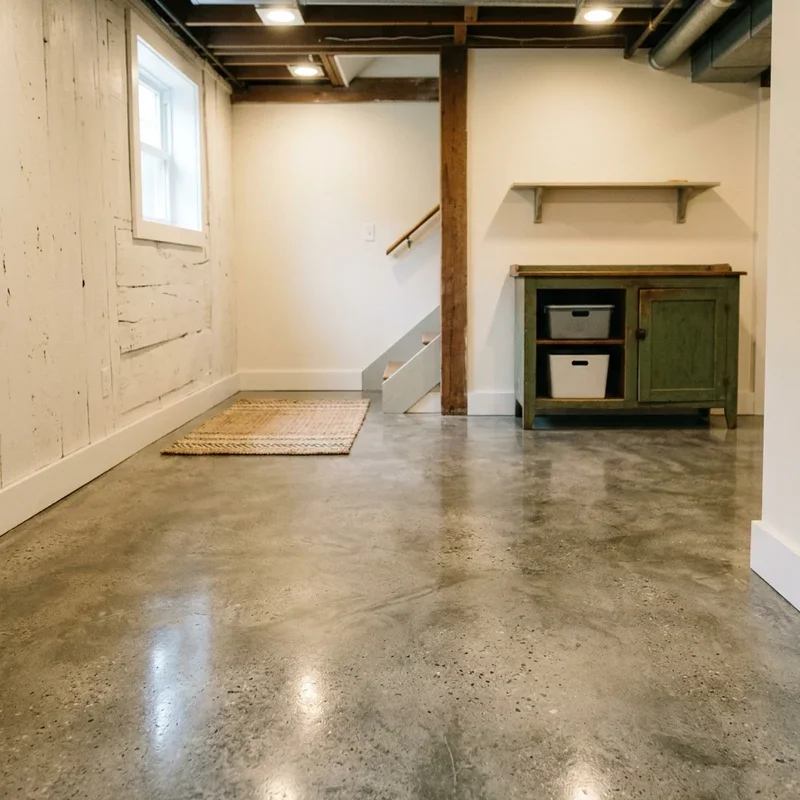
12. Polished Concrete Sealer
A polished concrete sealer transforms your existing slab into a sleek, modern surface by simply cleaning, polishing, and sealing the bare concrete you already own, skipping new flooring materials entirely while achieving the industrial-chic aesthetic that loft apartments and contemporary homes display proudly through their intentionally exposed, finished concrete floors. Grind the concrete surface with a concrete polisher, progressively using finer grits until the surface reaches your desired sheen level, since the mechanical polishing reveals aggregate patterns and creates reflective smoothness that untreated concrete hides beneath its rough, dusty exterior. Apply a penetrating concrete sealer, because the protective treatment hardens the surface against wear while preventing dust, staining, and moisture absorption. Add area rugs for warmth zones. Think of polished concrete like finishing what the builders started. Your existing floor becomes the actual flooring.
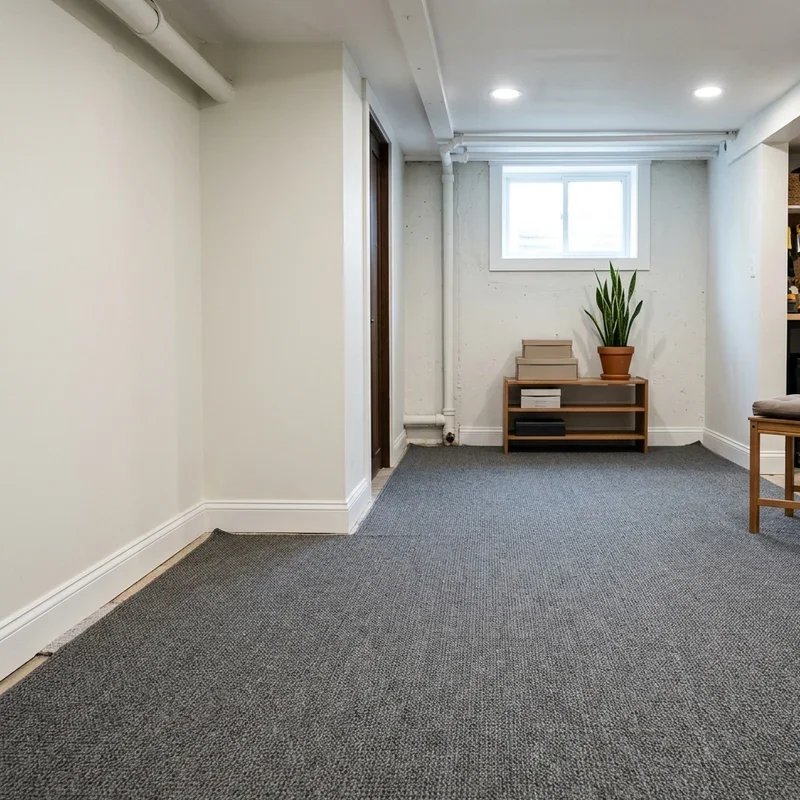
13. Indoor Outdoor Carpet
Indoor outdoor carpet rolls across your basement floor in moisture-resistant, mold-proof material designed specifically for environments where conventional carpet padding would trap water, breed mold, and create the musty, unhealthy underground atmosphere that improperly carpeted basements develop within months of installation. Choose low-pile, solution-dyed olefin or polypropylene carpet, since these synthetic fibers resist moisture absorption, mildew growth, and fading while providing the soft, warm surface that bare concrete desperately needs for comfortable below-grade living. Install directly over clean concrete using double-sided carpet tape, because the adhesive-free mounting allows future removal without damaging the slab beneath. Choose neutral tones for versatile style. Vacuum regularly, since flat-weave carpets collect visible debris. Think of outdoor carpet like weatherproof softness for your basement. Your floor gains mold-resistant comfort.
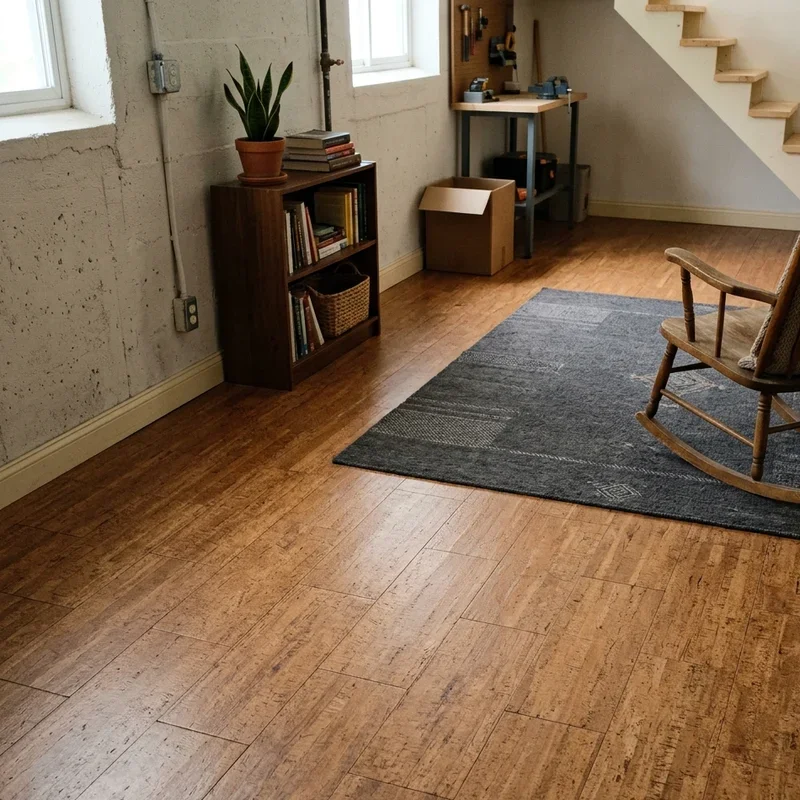
14. Cork Floating Tiles
Cork floating tiles click together above your basement concrete, creating a naturally warm, sound-absorbing, comfortable surface where the cellular structure of cork material provides built-in thermal insulation and cushioning that cold, hard concrete completely lacks beneath bare or socked feet. Choose cork tiles with waterproof composite cores, since traditional solid cork absorbs moisture that below-grade humidity levels present dangerously, while composite-backed versions resist the swelling and mold that unprotected cork develops under constant moisture exposure. Install over a vapor barrier underlayment, because the protective layer blocks concrete moisture from reaching the cork surface through upward capillary migration. Float the tiles without adhesive. Choose sealed, pre-finished cork for maximum moisture resistance. Think of cork tiles like natural insulation you walk on. Your basement gains warm, eco-friendly comfort.
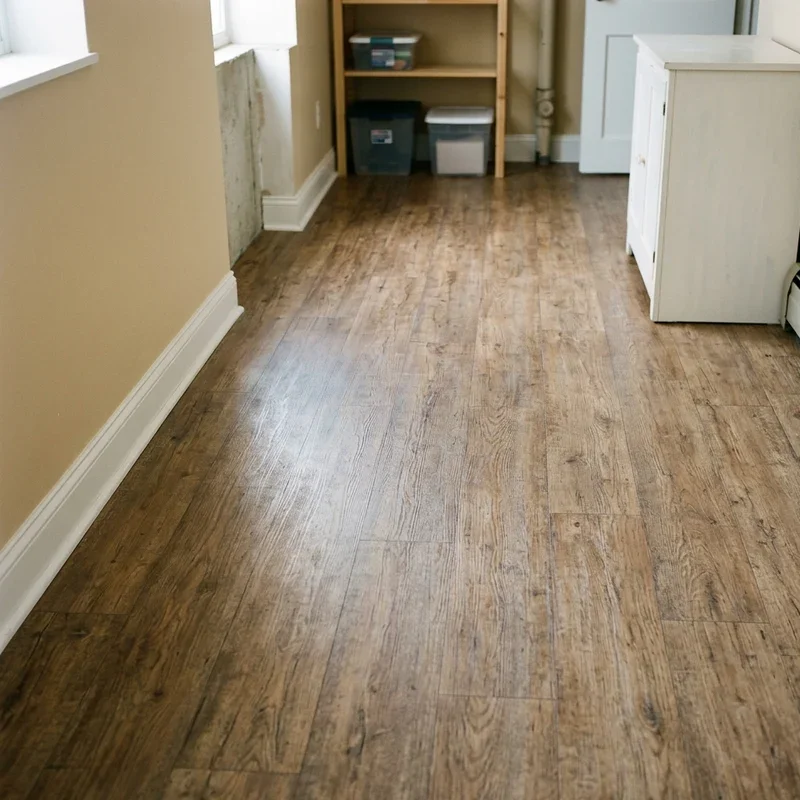
15. Sheet Vinyl Roll
Sheet vinyl roll covers your entire basement floor in one seamless, waterproof membrane that eliminates the seams, gaps, and edges where moisture infiltrates between individual tiles or planks, creating the most water-resistant budget flooring option available for below-grade spaces prone to occasional dampness or minor flooding events. Choose a thick, cushioned sheet vinyl in wood, stone, or tile pattern printing, since modern vinyl printing produces remarkably convincing surface reproductions that casual observation struggles distinguishing from genuine material at normal viewing distance. Roll the vinyl across the floor and trim to fit using a utility knife, because the single-sheet installation creates fewer seams than any tile or plank alternative while the continuous moisture barrier protects against water intrusion. Secure edges with adhesive. Think of sheet vinyl like waterproof blankets for your floor. Your basement stays protected.
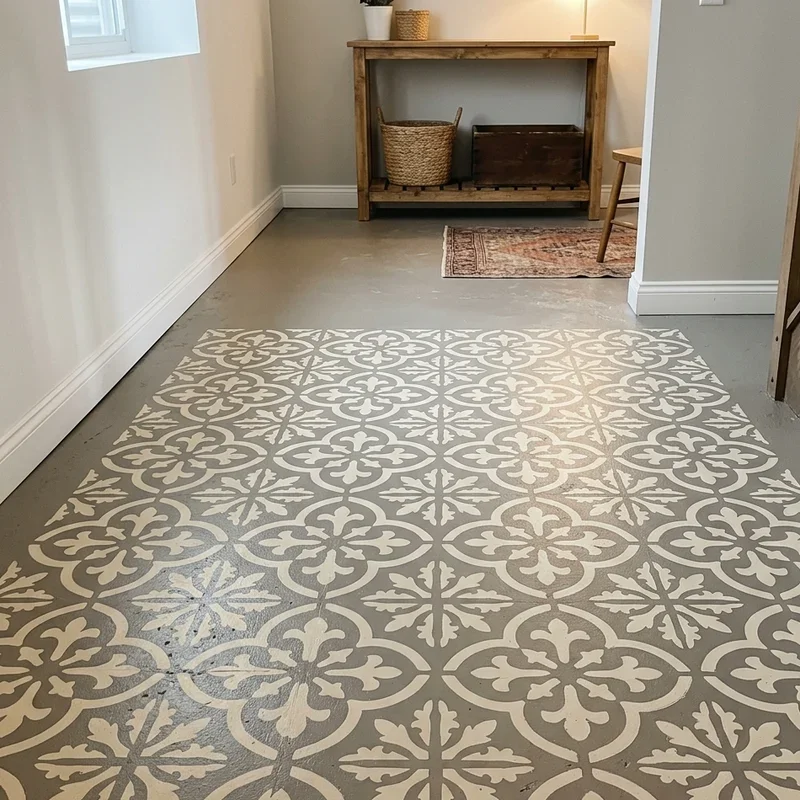
16. Concrete Stencil Pattern
A concrete stencil pattern transforms your bare basement slab into a decorative, patterned surface where painted designs mimic expensive tile, stone, or geometric flooring through careful stencil work that costs almost nothing beyond paint, stencils, and a focused weekend of patient, creative floor-painting effort. Choose large-format stencils in tile, Moroccan, or geometric patterns, since repeating designs cover large floor areas efficiently while the structured pattern creates the intentional, designed appearance that freehand painting rarely achieves with the same clean, professional consistency. Paint the base color first, let it cure, then position and paint through the stencil systematically across the entire floor. Seal with multiple coats of polyurethane. Think of stenciled floors like painted rugs permanently applied to concrete. Your basement gains artistic, handcrafted pattern.
Conclusion
Inexpensive basement floor ideas prove that cold, grey concrete transforms into comfortable, attractive living surfaces when budget-conscious material choices replace expensive flooring installations with smart, affordable alternatives delivering genuine visual and functional improvement underground. These sixteen ideas span epoxy coatings to stenciled patterns, matching every basement use, moisture condition, and spending limit with real solutions that work below grade reliably. Whether you click luxury vinyl planks or roll rubber sheeting, affordable flooring turns neglected basements into genuinely livable spaces. The secret lies in choosing moisture-appropriate materials matching your basement's conditions. Start your budget floor makeover today.
Read next: 16 Basement Master Suite Ideas for Luxurious Living
Frequently Asked Questions
Q1: What's the cheapest basement flooring option available?
A: Painted concrete and peel-and-stick vinyl tiles deliver the lowest per-square-foot cost for basement floor makeovers.
Q2: Can I install flooring over a damp basement floor?
A: Use moisture-resistant options like epoxy, rubber, or snap-together tiles with drainage channels over damp concrete surfaces.
Q3: Do I need underlayment for basement flooring?
A: Yes, floating floors like laminate and LVP require vapor barrier underlayment protecting against concrete moisture migration upward.
Q4: What basement flooring resists flooding best?
A: Epoxy coatings, rubber rolls, and snap-together tiles handle occasional water exposure better than any absorbent alternatives.
Q5: How much does budget basement flooring typically cost?
A: Most affordable options range from fifty cents to three dollars per square foot for materials excluding installation labor.
Stay up to date with our latest ideas!