16 Kitchen Drop Zone Ideas for Organized Entryways
Discover 16 kitchen drop zone ideas for organized entryways that tame daily clutter with stylish storage keeping keys, mail, and bags in order.
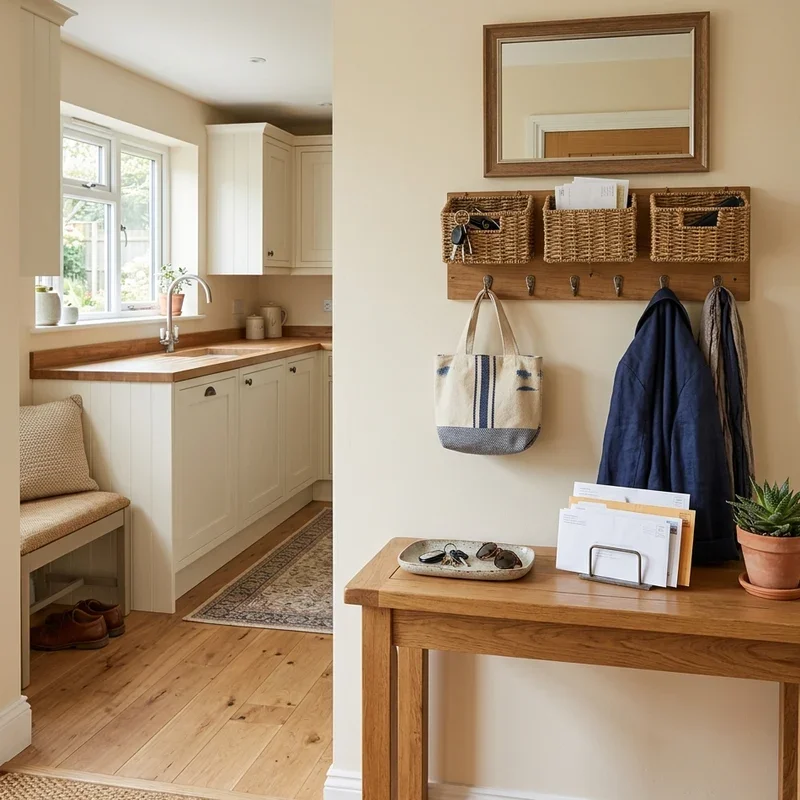
A kitchen drop zone catches the daily avalanche of keys, mail, backpacks, and jackets that every family member dumps onto the nearest flat surface the moment they walk through the door, channeling that chaos into one organized station designed specifically to handle the relentless inflow of stuff that arrives with every homecoming. Have you ever watched your kitchen counter disappear beneath layers of unopened mail, tangled chargers, random receipts, and forgotten permission slips, wondering how a clean surface turns into a clutter disaster within hours of morning tidying? A dedicated drop zone solves that permanently. Think of it like a landing strip for your daily life, where everything touching down has an assigned spot instead of crash-landing wherever gravity chooses. Whether you carve space from a cabinet, corner, or blank wall, organizational solutions exist for every kitchen layout. Let's explore sixteen ideas.
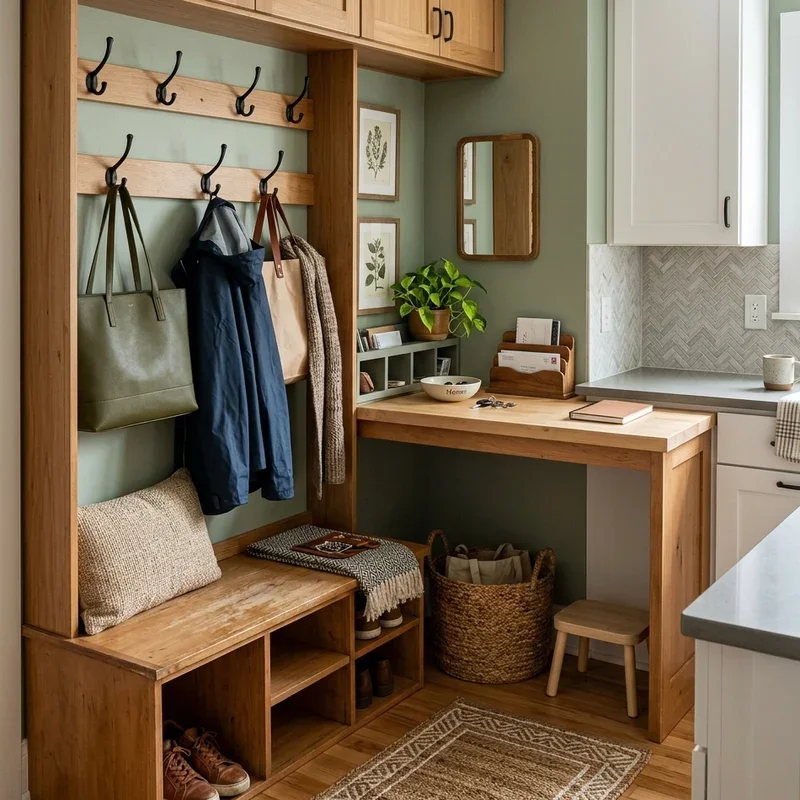
1. Built-In Cubbies with Hooks
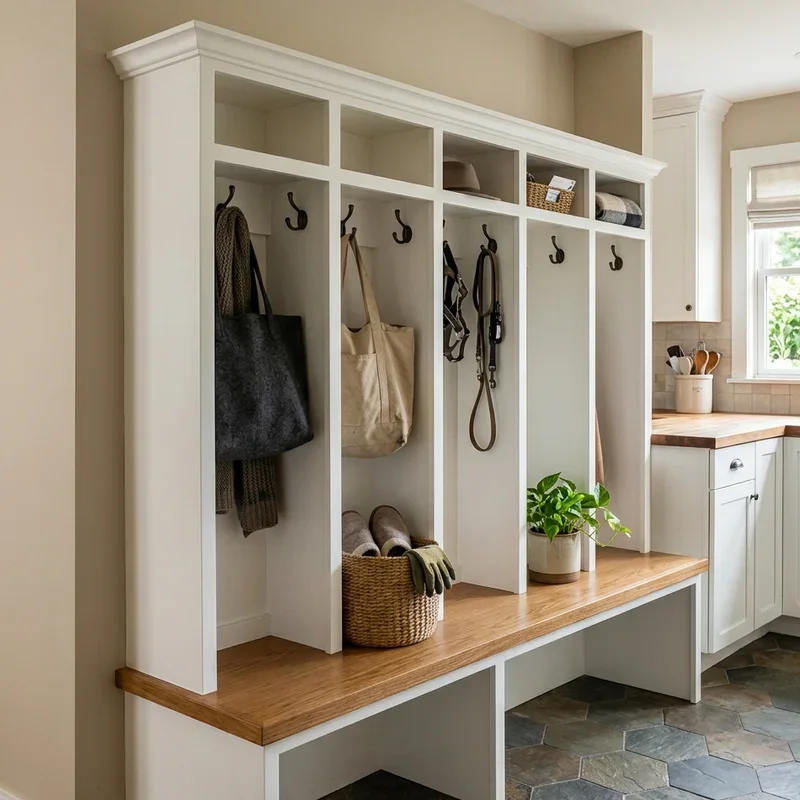
Built-in cubbies with hooks assign every family member their own dedicated compartment for bags, coats, and daily essentials, creating personalized storage that eliminates the communal pile-up that shared, unassigned drop zones inevitably produce when multiple people dump belongings into the same undivided space. Install a row of open cubbies along the wall near your kitchen entry, since individual compartments train each family member to deposit their items in one assigned spot rather than scattering them across the counter. Add hooks inside or below each cubby for jackets and bags, because vertical hanging prevents the floor-pile habit that hookless entryways enable by default. Label each cubby with names. Add a bench below. Think of cubbies like personal mailboxes for daily belongings. Your entryway organizes by person.
2. Wall-Mounted Key and Mail Organizer
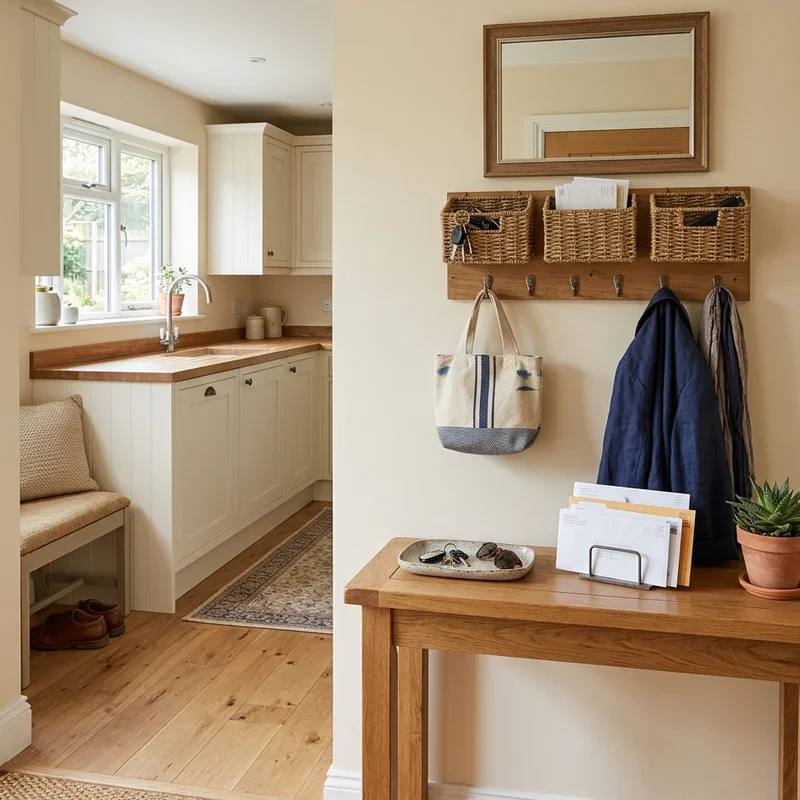
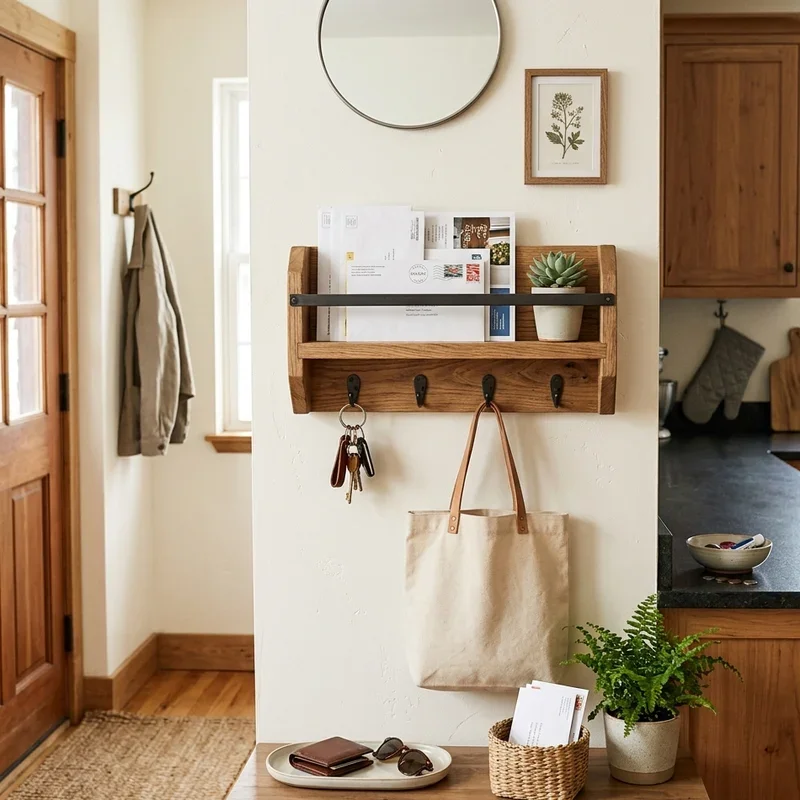
A wall-mounted key and mail organizer catches the two items that cause the most frantic morning searches, hanging keys on visible hooks and sorting incoming mail into dedicated slots before either item disappears into the kitchen counter's black hole of clutter. Mount a small wooden or metal organizer featuring key hooks, a mail slot, and a small shelf near the entry door, since the visible, wall-level position catches items at the exact moment they arrive rather than after they scatter across random surfaces. Choose a design matching your kitchen decor, because attractive organizers encourage consistent use while ugly, utilitarian versions get ignored and bypassed within weeks. Add a small tray for loose change and receipts. Think of key organizers like valet stations for your front door. Your keys and mail stay found.
3. Bench with Hidden Storage
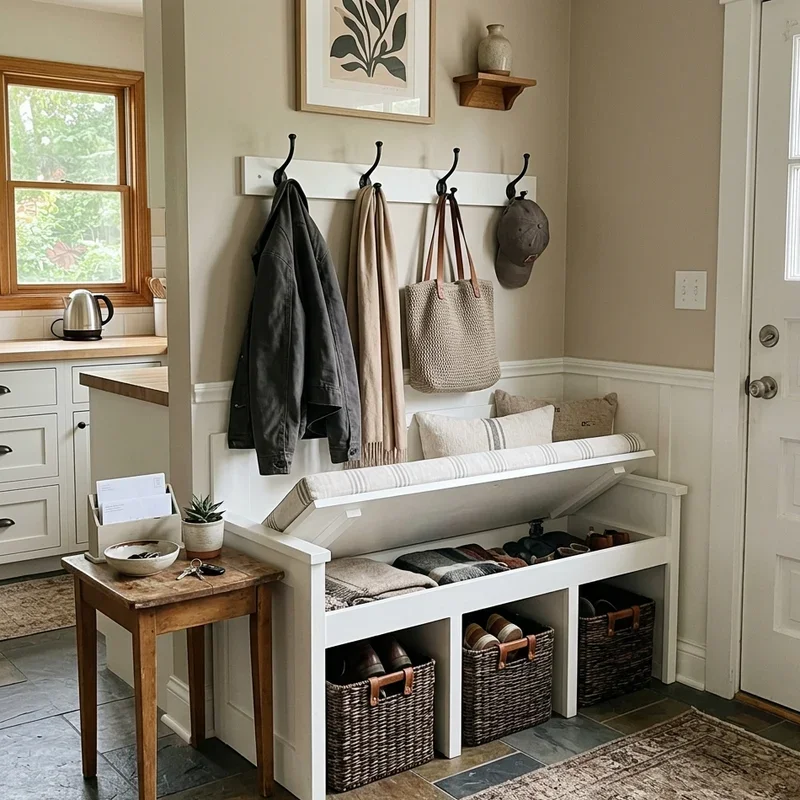
A bench with hidden storage provides a comfortable seat for removing shoes while concealing bags, seasonal gear, and daily overflow inside a lift-top or drawer-equipped compartment that keeps the entryway looking clean despite holding significant volume beneath its cushioned surface. Choose a bench fitting your kitchen entry's exact width, since properly sized seating fills the space intentionally rather than looking undersized or obstructing walkways through oversized proportions. Add a cushion in a durable, washable fabric, because entryway seating endures dirty shoes, wet jackets, and daily heavy use that delicate upholstery fails surviving without showing stains within weeks. Include hooks above the bench. Add a shoe tray beneath. Think of storage benches like furniture that swallows clutter whole. Your entryway stays seated and organized.
4. Pegboard Command Center
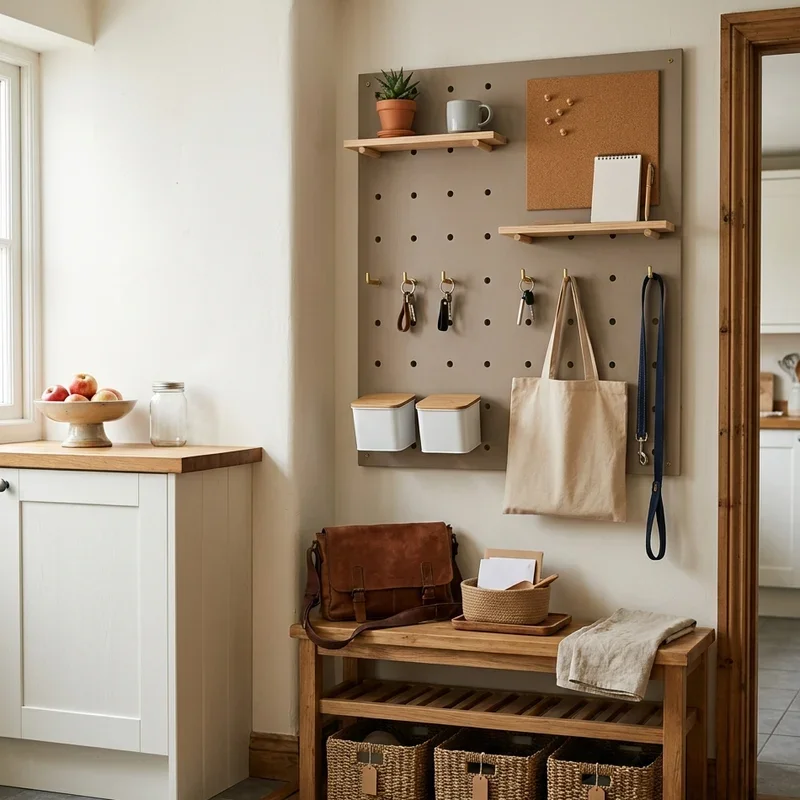
A pegboard command center mounts a customizable organization grid to your kitchen wall, where hooks, baskets, shelves, and clips arrange endlessly to match your family's specific daily clutter patterns rather than forcing your routine into a rigid, one-size-fits-all organizational system. Install a painted pegboard panel near the entry, since the perforated surface accepts rearrangeable accessories that adapt whenever your needs change throughout the school year, sports seasons, and shifting family schedules. Hang keys from hooks, store mail in mounted baskets, clip permission slips and coupons to board clips, and mount small shelves for sunglasses and wallets, because the varied attachment options accommodate every item type your family drops daily. Rearrange monthly. Think of pegboards like customizable clutter catchers. Your drop zone adapts continuously.
5. Floating Shelf Landing Strip
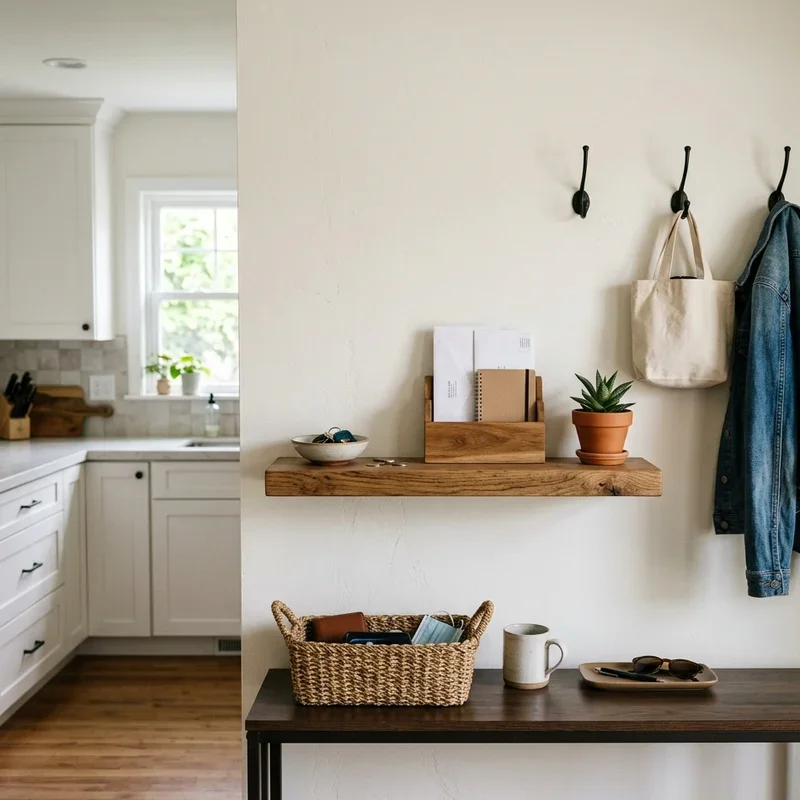
A floating shelf landing strip mounts a narrow shelf at waist height near your entry, creating a minimal, space-efficient surface where keys, wallets, phones, and sunglasses land the moment you walk through the door without consuming floor space that furniture-based solutions require through their larger, footprint-heavy installations. Install a shelf twelve to eighteen inches deep with hooks screwed into the underside, since the combined surface-and-hook design handles both flat items above and hanging items below within one compact, vertically efficient station. Choose a shelf matching your kitchen cabinetry, because coordinated finishes make the drop zone feel intentionally designed rather than randomly mounted. Add a small tray to contain loose items. Keep the surface edited. Think of floating shelves like minimalist landing pads. Your entryway stays clean and compact.
6. Locker-Style Individual Cubbies
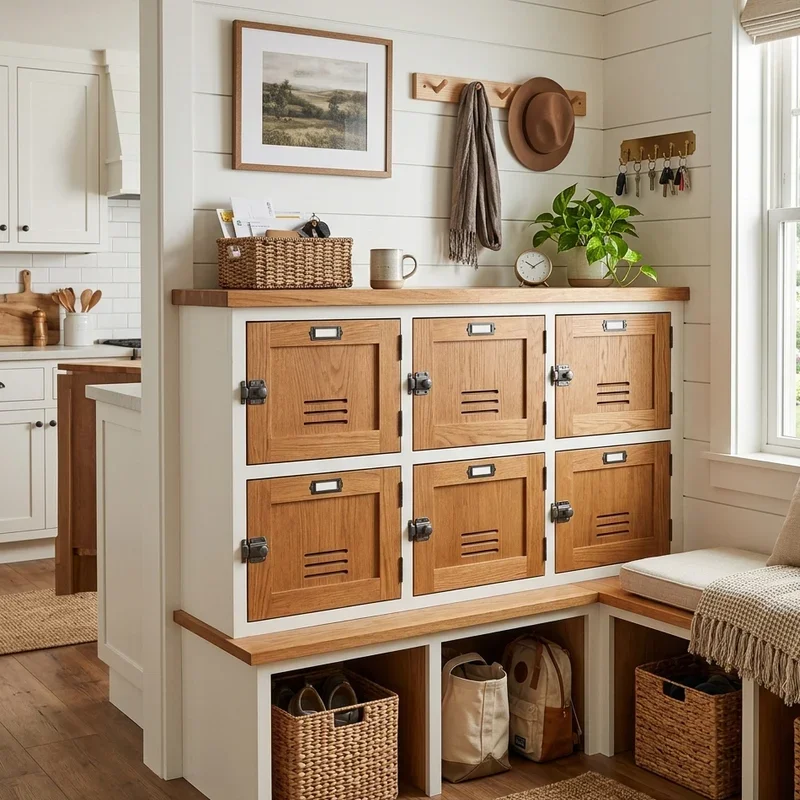
Locker-style individual cubbies assign each family member a tall, narrow compartment that holds everything from backpacks through jackets through sports equipment, creating personal storage towers that contain an entire person's daily gear within one vertical, enclosed column. Build or buy narrow locker units standing floor to ceiling, since the tall proportions accommodate hanging coats above, shelved items at middle height, and shoes on the floor within one unified personal column. Add hooks, shelves, and a labeled nameplate to each locker, because the structured interior prevents the jumbled, everything-on-one-hook pile-up that basic coat hooks produce when overloaded with multiple items daily. Position near the kitchen entry. Think of lockers like personal closets stationed at the front door. Your family organizes individually.
7. Chalkboard Message Wall
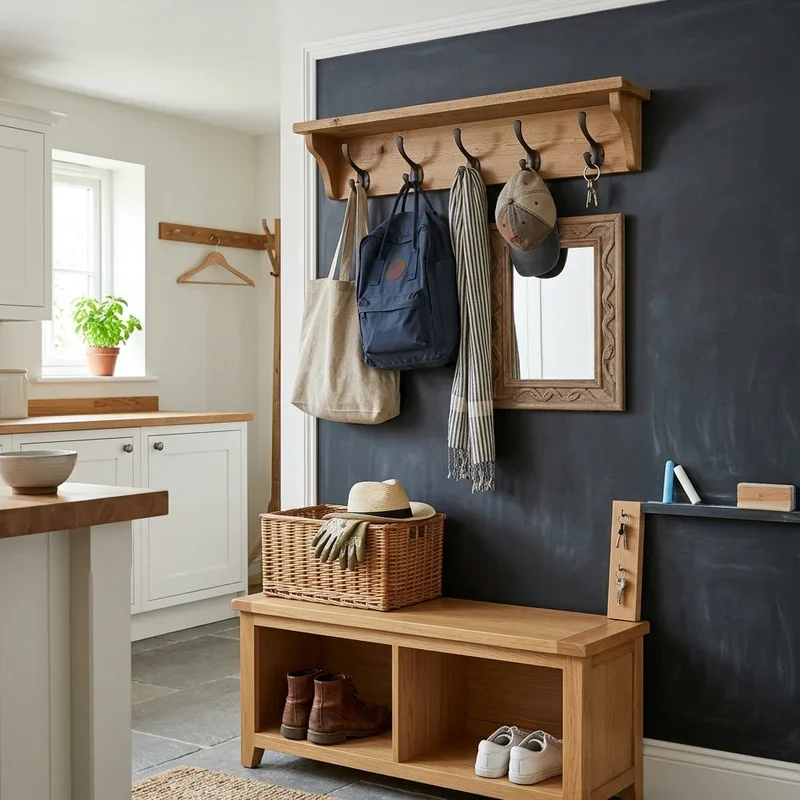
A chalkboard message wall adds communication capability to your drop zone, creating a writable surface where family members leave reminders, grocery lists, daily schedules, and love notes that everyone reads while grabbing their keys on the way out each morning. Paint a section of wall near your drop zone with chalkboard paint, since the matte black surface accepts chalk beautifully while wiping clean for updated messages daily. Write the week's schedule, sports practice times, dinner plans, and quick reminders, because centralized information prevents the "I didn't know" excuses that scattered, phone-based family communication sometimes produces through missed texts and ignored group messages. Add a small chalk ledge below. Frame the chalkboard with trim. Think of message walls like family newspapers updated daily in chalk. Your household communicates visually.
8. Basket and Bin Sorting Station
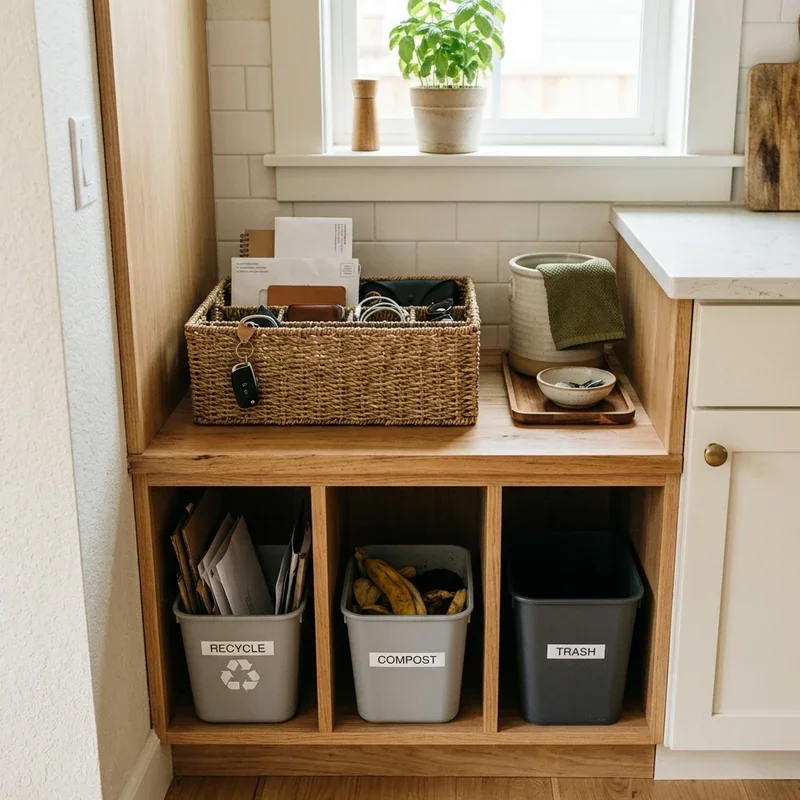
A basket and bin sorting station groups categorized containers across your drop zone, where labeled baskets handle mail, school papers, charging cables, and miscellaneous daily items through separate, organized compartments that prevent the single-pile chaos uncontained drop zones accumulate throughout every active family weekday. Choose matching woven, wire, or fabric baskets in varied sizes, since coordinated containers create visual unity while the different dimensions accommodate varied item types from flat mail through bulky gloves and scarves. Label each basket clearly, because identified categories train family members to sort items immediately upon arrival rather than dumping everything into one undifferentiated overflow pile. Mount baskets on shelves or inside cubbies. Edit contents weekly. Think of basket stations like sorted mailrooms for your household. Your clutter stays categorized.
9. Cabinet Concealed Drop Zone
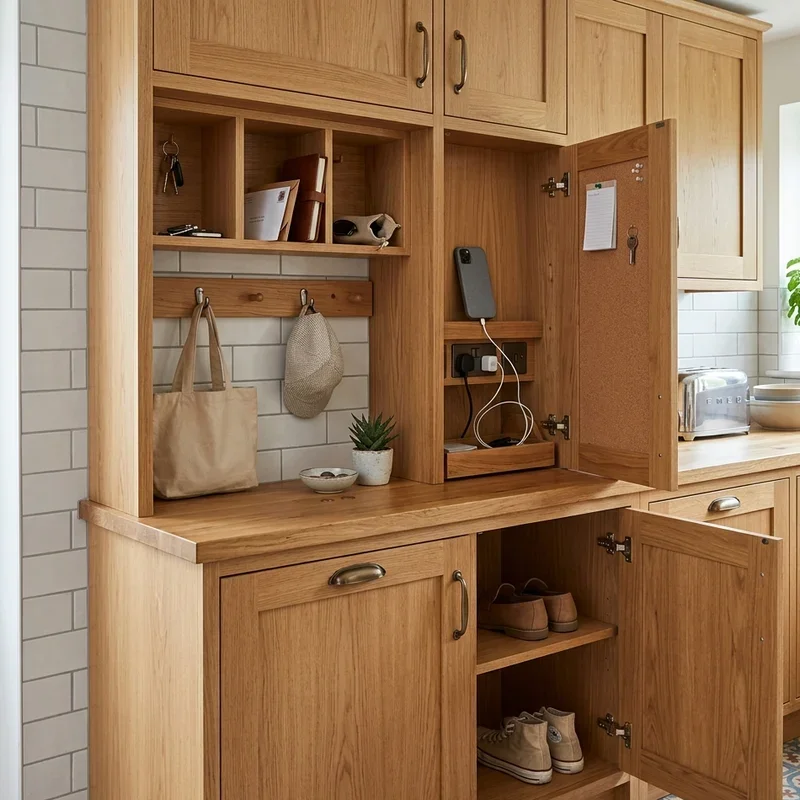
A cabinet concealed drop zone hides your entire organizational system behind closed doors, maintaining clean kitchen aesthetics while the chaotic reality of daily clutter lives invisibly inside a dedicated cabinet you close between arrivals and departures. Dedicate one kitchen cabinet near the entry exclusively to drop zone function, since repurposed cabinetry provides built-in shelving, door-mounted organizers, and concealed interior space that open-shelf solutions expose to permanent visual scrutiny. Add interior hooks for keys, small bins for mail, and a charging shelf for devices, because the organized interior handles daily items efficiently while the closed exterior reveals nothing to guests viewing your kitchen. Open only when depositing or retrieving items. Think of cabinet drop zones like organized secrets hiding behind kitchen doors. Your clutter disappears completely.
10. Coat Rack and Shoe Tray Combo
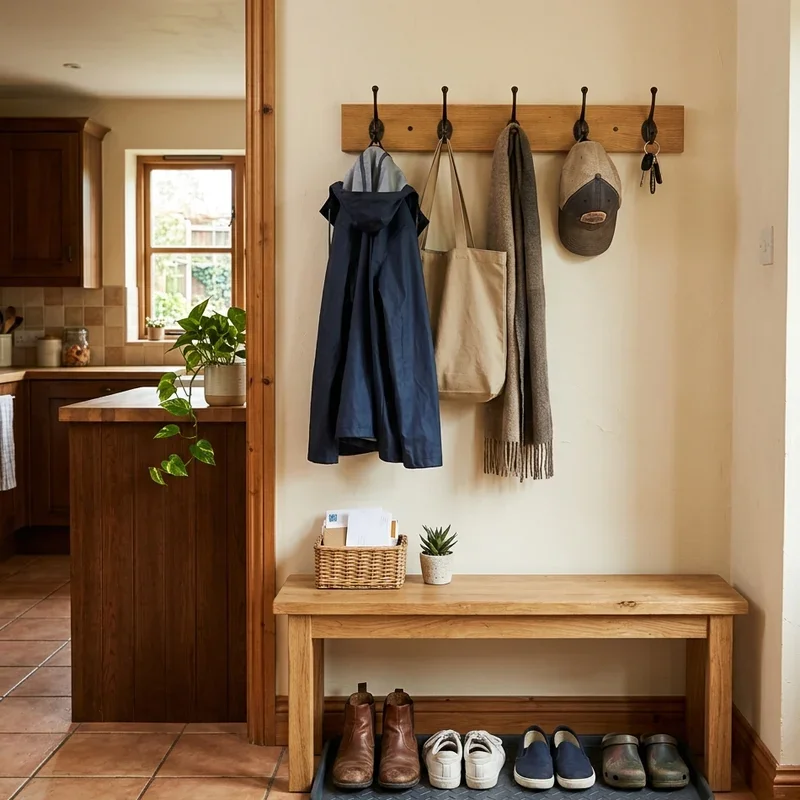
A coat rack and shoe tray combo handles the two messiest entryway items, where hanging coats drip dry above while a contained tray catches muddy, wet shoes below, preventing both from spreading their respective messes across your kitchen floor and countertops. Mount a wall rack with multiple hooks at varied heights, since staggered positioning accommodates both adult jackets and children's smaller coats without overlap that single-height arrangements create through crowded, tangled hanging. Place a shallow boot tray directly beneath, because the contained tray catches mud, snow, and rain drippings that shoeless entry policies alone cannot prevent when wet footwear sits on bare flooring. Choose a rack matching kitchen hardware. Think of coat and shoe combos like weather stations catching outdoor mess at the door. Your floors stay protected.
11. Magnetic Strip Organizer Wall
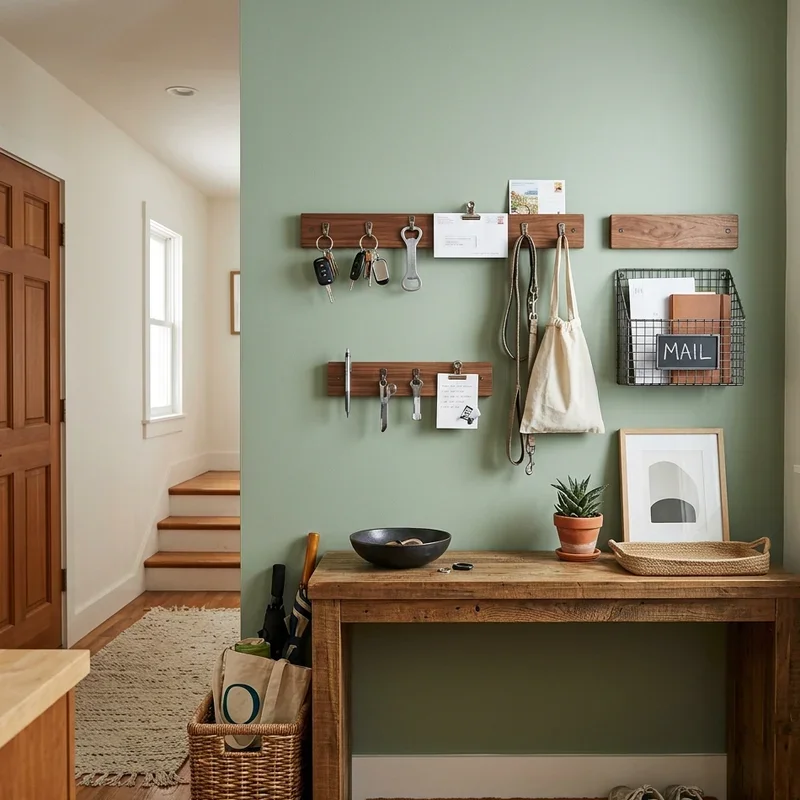
A magnetic strip organizer wall mounts strong magnetic bars to your kitchen wall, creating a sleek, modern system where metal keys, scissors, clips, and small tools attach directly to the strip surface without hooks, baskets, or containers cluttering the visual profile of your streamlined drop zone. Install two or three magnetic strips at convenient heights near your entry, since multiple bars provide separated zones for different item categories that one single strip crowds together too tightly for organized, grab-and-go retrieval. Add magnetic containers for small items like coins, lip balm, and earbuds, because enclosed magnetic cups prevent tiny objects from rolling off flat strip surfaces during the slight vibrations that door-closing produces daily. Think of magnetic walls like invisible shelves holding metal items. Your drop zone stays sleek.
12. Pull-Out Drawer Station
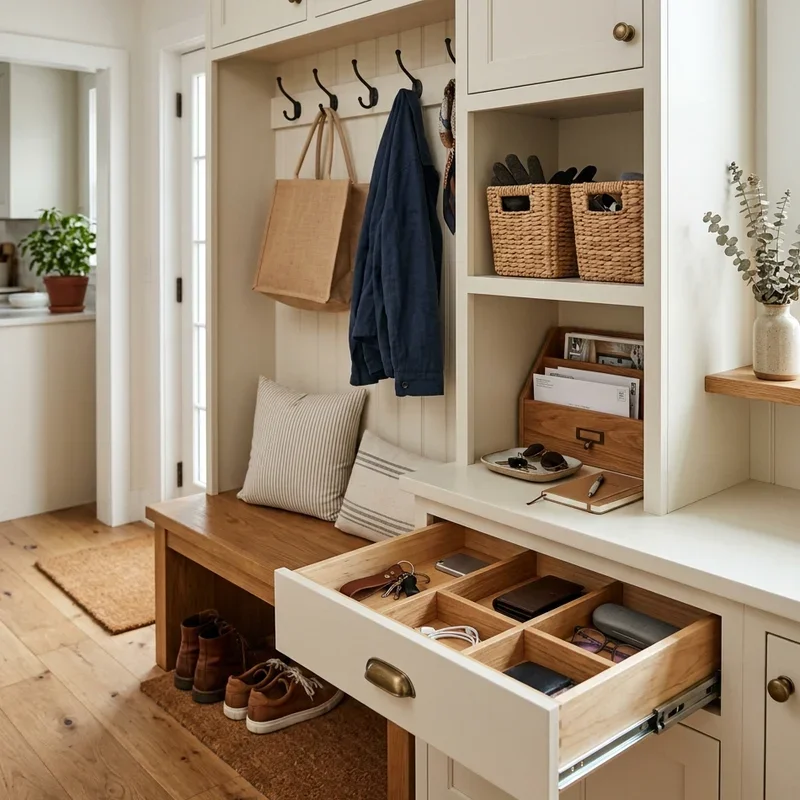
A pull-out drawer station hides your drop zone inside a sliding cabinet organizer that extends forward when needed then retracts completely into the cabinetry when the depositing and retrieving moments pass, keeping the organizational system accessible yet invisible between daily use cycles throughout ordinary kitchen hours. Install a pull-out drawer or tray inside a base cabinet near your kitchen entry, since the sliding mechanism brings the organized interior forward without bending into deep cabinet cavities that fixed interior shelving demands awkwardly. Add compartment dividers for keys, mail, chargers, and small accessories, because structured internal organization prevents the single-drawer dumping ground effect that undivided drawers inevitably become within days. Choose soft-close slides. Think of pull-out stations like hidden command centers sliding from cabinetry. Your organization extends and retracts seamlessly.
13. Corner Nook Drop Zone
A corner nook drop zone fills an underused kitchen corner with hooks, a small shelf, and a narrow bench, converting dead angular space into a functional entry station that most homeowners overlook completely while searching for drop zone real estate along their already-crowded flat walls. Build a triangular corner shelf unit with hooks below, since the angular design fits the exact geometry that rectangular furniture wastes through its straight-edged incompatibility with ninety-degree wall junctions. Add a small corner bench beneath, because seated shoe removal in tight corners prevents the hallway-blocking standing wobble that open-floor shoe changes produce during rushed morning departures. Mount a key hook beside the shelf. Think of corner nooks like hidden organizational pockets discovered between walls. Your dead corner earns functional purpose.
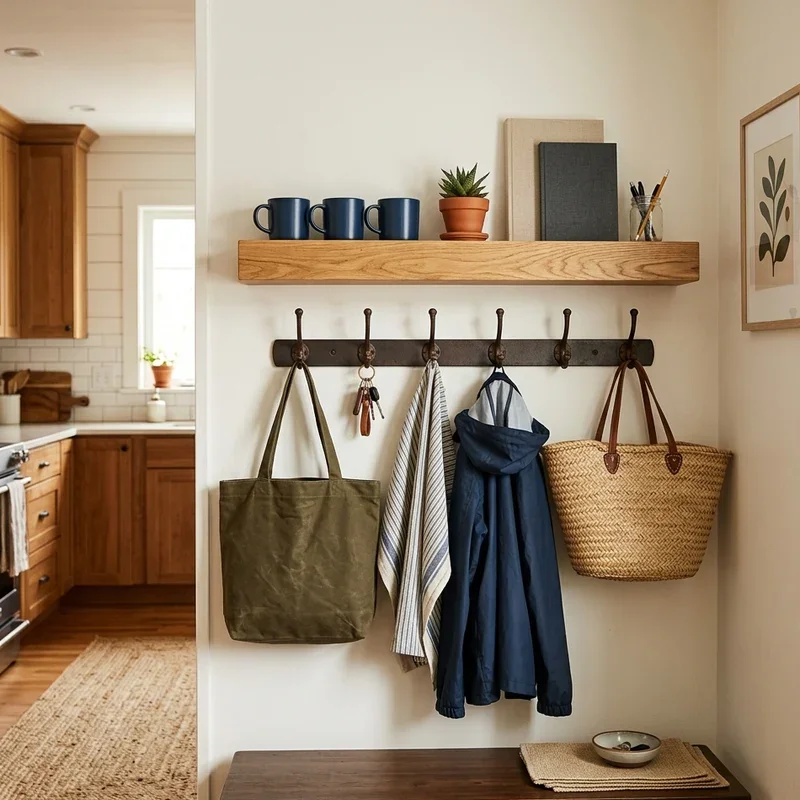
14. Open Shelf and Hook Rail
An open shelf and hook rail mounts a simple board with protruding hooks below a narrow shelf, creating the most basic, affordable, and space-efficient drop zone solution that any kitchen entry accommodates regardless of available wall space, budget limitations, or rental restrictions preventing permanent cabinetry modifications. Install a single shelf at eye level with four to six hooks screwed into the underside or into a separate rail below, since the dual-function design handles flat items above and hanging items below within one compact, vertically stacked installation. Choose a shelf matching your kitchen trim, because coordinated woodwork integrates the drop zone into the room's existing design language. Add small labeled baskets on the shelf. Think of shelf-and-hook combos like the simplest effective drop zones. Your entryway organizes affordably.
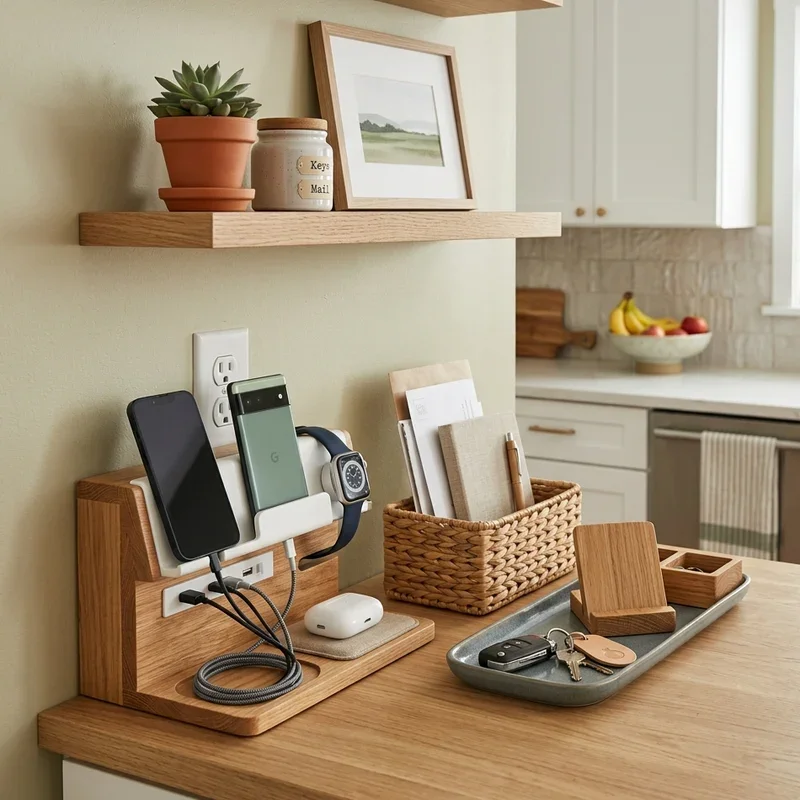
15. Charging Station Tech Hub
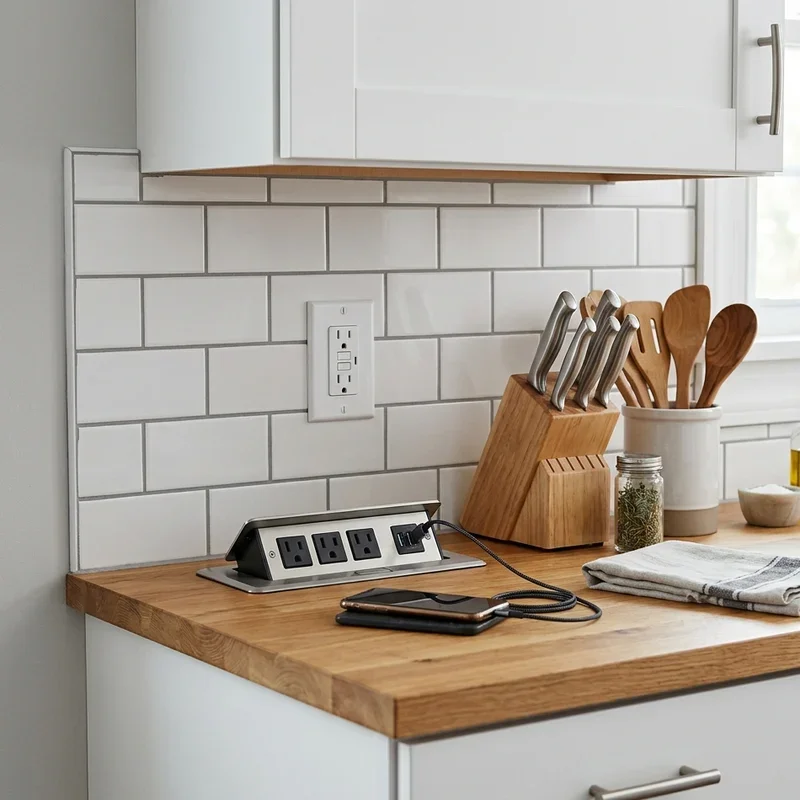
A charging station tech hub dedicates one organized section of your drop zone to device charging, where phones, tablets, watches, and earbuds plug into managed cables that eliminate the tangled, multi-outlet chaos that unsystematic charging produces across kitchen counters throughout every device-dependent modern household. Install a small shelf or drawer with built-in USB ports and cable management channels, since integrated power eliminates the loose charger tangles that surface-level multi-plug strips create visibly across otherwise organized drop zones. Add individual labeled slots for each family member's devices, because designated charging positions prevent the "who took my charger" conflicts that shared, unassigned power stations guarantee among tech-dependent household members. Hide cables behind the wall. Think of charging hubs like organized parking garages for devices. Your tech charges tidily.
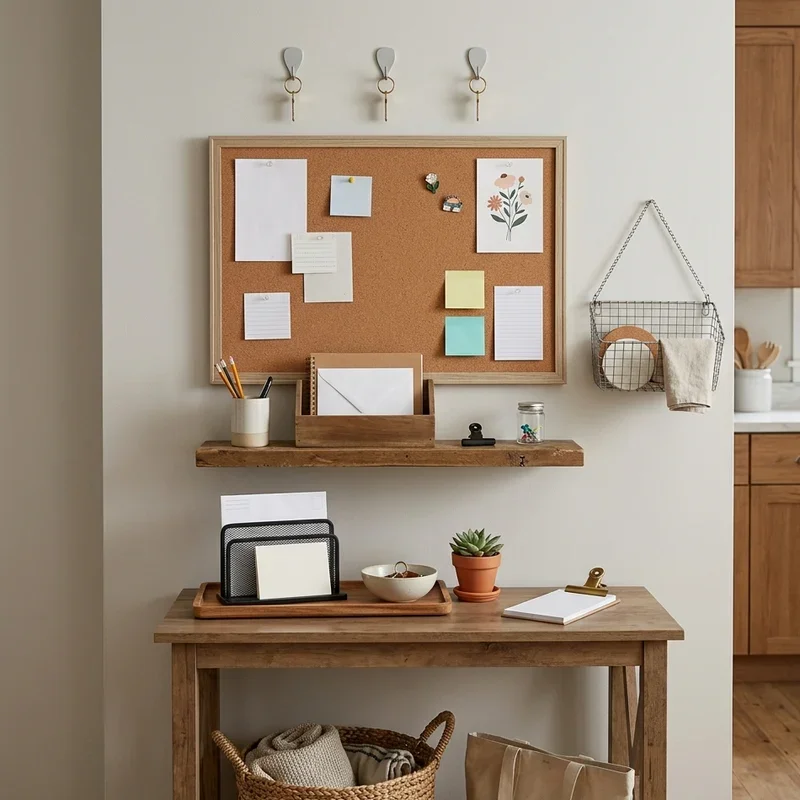
16. Bulletin Board Command Center
A bulletin board command center pins calendars, schedules, permission slips, invitations, and important reminders to a framed cork or fabric board, creating a visible family information hub positioned exactly where everyone passes during daily arrivals and departures through the kitchen entry. Mount a large framed bulletin board near your drop zone, since the centralized display catches every family member's attention during the natural traffic flow that entry and exit patterns produce through the kitchen doorway daily. Pin the monthly family calendar, school schedules, sports practice times, and upcoming event invitations, because the visible, physical display prevents the digital information overload that phone-based scheduling sometimes buries beneath notification fatigue. Add pushpins in coordinating colors. Update weekly. Think of bulletin boards like family newspapers pinned to the wall. Your household stays informed visually.
Conclusion
Kitchen drop zone ideas prove that organized entryways prevent the daily clutter avalanche that buries counters, floors, and sanity beneath the relentless inflow of keys, mail, bags, and belongings every family member carries through the door. These sixteen ideas span built-in cubbies to bulletin board command centers, matching every kitchen layout, family size, and organizational ambition with genuine clutter-taming solutions. Whether you mount a simple hook rail or build locker-style cubbies, dedicated drop zones keep daily chaos contained within designed, intentional stations. The secret lies in assigning every item a permanent home near the door. Start building your drop zone today.
Read next: 16 Kitchen Wine Bar Ideas for Stylish Home Entertaining
Frequently Asked Questions
Q1: Where should a kitchen drop zone be located?
A: Position it near the door your family uses most, typically the garage or side kitchen entry.
Q2: How much space does a drop zone need?
A: Even two to three feet of wall space accommodates hooks, a shelf, and a small organizational system.
Q3: Can I create a drop zone in a rental apartment?
A: Yes, removable hooks, freestanding benches, and leaning organizers create effective drop zones without wall damage.
Q4: How do I keep a drop zone from becoming cluttered?
A: Edit contents weekly, assign every item a specific spot, and enforce the rule that nothing stays without purpose.
Q5: What items belong in a kitchen drop zone?
A: Keys, mail, wallets, phones, sunglasses, bags, jackets, and frequently needed items deserve dedicated drop zone spots.
Stay up to date with our latest ideas!