How to Protect Your Home's Beauty From Unwanted Pests: A Practical Guide for Homeowners
Learn how to protect your home's beauty from unwanted pests with practical tips for prevention, sealing entry points, moisture control, cleaning, and maintenance.

Picture this: you have spent months perfecting your living room palette, hunting down the right woven baskets for storage, and finally hanging that gallery wall you pinned two years ago. Then you notice small piles of sawdust near the baseboards, or a faint trail of ants marching along your freshly painted windowsill. Suddenly the styling you obsessed over feels irrelevant, because the bones of your home are under attack. For GlowyDecor readers who pour real thought into how a home looks and functions, pests are not just gross, they are a direct threat to the aesthetic investment you have made.
The truth is that beautiful decor and structural pest problems are more connected than most homeowners realize. Wood-boring insects can hollow out the trim you just refinished, moisture-loving pests can warp the flooring beneath your rug collection, and rodents can chew through the cables powering your carefully placed lighting. Understanding why pests show up, and what to do before they cause damage, is just as important to your home's beauty as any paint color or furniture layout.
This is especially true in warmer, humid regions where pest pressure is constant. Homeowners searching for Smyrna pest control are often reacting to a problem they already see, but the smarter approach is understanding local risk factors before an infestation takes hold. Georgia's climate, with its mild winters and humid summers, creates near-ideal breeding conditions for termites, ants, and spiders throughout most of the year, which means prevention has to be a year-round habit rather than a seasonal chore.
The Hidden Cost: How Pests Silently Damage Your Home's Beauty and Value
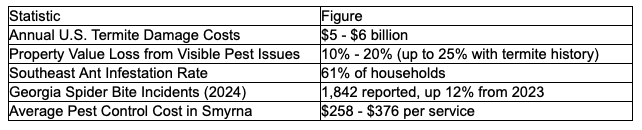
Pest damage rarely announces itself loudly at first. Termites work behind walls for months or years before visible sagging or hollow-sounding wood appears, and by then repairs can be extensive. Nationally, termite damage costs American homeowners an estimated $5 to $6 billion annually, according to the National Pest Management Association, and that figure does not include the cosmetic repairs needed to restore trim, flooring, and cabinetry once the structural issue is resolved. It is a sobering reminder that what starts as an invisible problem can quickly become a visible, expensive one.
Beyond repair bills, pest problems chip away at something homeowners care about deeply: property value. According to Pest Control Genesee County, MI | First Choice Pest Control, properties with visible pest issues typically sell for 10 to 20 percent below market value, while homes with a documented termite damage history can see reductions of 20 to 25 percent, translating into tens of thousands of dollars in lost equity for many sellers. That is a steep price for a problem that often starts with something as small as an unsealed gap around a utility pipe or a stack of firewood left too close to the foundation.
Why Smyrna Homes Are Vulnerable: Common Pests and Local Risk Factors
Smyrna's mix of older tree-lined neighborhoods and newer construction creates a wide range of entry points for pests, from mature landscaping that touches siding to crawl spaces with lingering moisture. Ants are a particularly common nuisance across the region, with industry data showing that 61 percent of households in the Southeast report ant infestations, a rate significantly higher than many other parts of the country. Combine that with Georgia's humid summers, and you get consistent conditions for termite swarms, carpenter ant colonies, and moisture pests like silverfish to thrive inside walls and crawl spaces.
Spiders deserve mention too, not just for the aesthetic disruption of webs across your carefully arranged porch furniture, but for genuine health concerns. Georgia recorded 1,842 reported spider bite incidents in 2024, a 12 percent increase from the previous year according to CDC data, which suggests that spider populations and human encounters with them are both trending upward. For homeowners investing in outdoor living spaces, patios, and garden nooks, that statistic is a good reason to treat spider prevention as part of routine home care rather than an afterthought.
Actionable Prevention: Seal, Inspect, and Maintain Your Way to a Pest-Free Home
The good news is that most pest prevention overlaps neatly with the kind of home maintenance that keeps a house looking sharp. Sealing gaps around windows, doors, and utility penetrations not only blocks insect entry points but also improves energy efficiency and gives your trim a cleaner finished look. Trimming back shrubs and tree limbs so they do not touch the exterior walls reduces bridge points for ants and spiders while also keeping your landscaping looking tidy and intentional rather than overgrown.
Inside the home, decluttering damp basements, garages, and storage closets removes the hiding spots pests love, and it happens to be one of the easiest ways to make a space feel more organized and visually calm. If you are looking for structured ideas on keeping these zones tidy and pest-resistant at the same time, the tips shared in this folder offer practical strategies that pull double duty for both style and prevention. Routine gutter cleaning, moisture control with dehumidifiers in crawl spaces, and prompt repair of leaky pipes round out a maintenance routine that protects both your home's bones and its finishes.
When to Call the Professionals: Professional Pest Control for Long-Term Protection
Even the most diligent DIY prevention has limits, especially with pests like termites that operate out of sight until damage is already underway. A licensed pest control provider can perform thorough inspections, identify conducive conditions around your foundation, and apply targeted treatments that homeowners simply cannot replicate with store-bought products. In Smyrna, average professional service costs range from $258 to $376 per visit based on recent completed projects, a modest investment compared to the thousands it can cost to repair termite or moisture damage after the fact.
Scheduling regular inspections, ideally annually or twice a year depending on your home's age and history, gives you an early warning system rather than a reactive scramble. Professionals can also advise on seasonal risk periods, such as spring termite swarms or fall rodent activity as temperatures drop, so you can time preventive treatments effectively. Protecting your home's beauty ultimately means protecting the structure underneath it, and that partnership between good design habits and proactive pest management is what keeps a house looking, and functioning, its best for years to come.
Stay up to date with our latest ideas!