How to Create a Touchscreen Hall of Fame That Engages Visitors
Learn how to create a touchscreen Hall of Fame that engages visitors with interactive content, intuitive navigation, and memorable experiences.
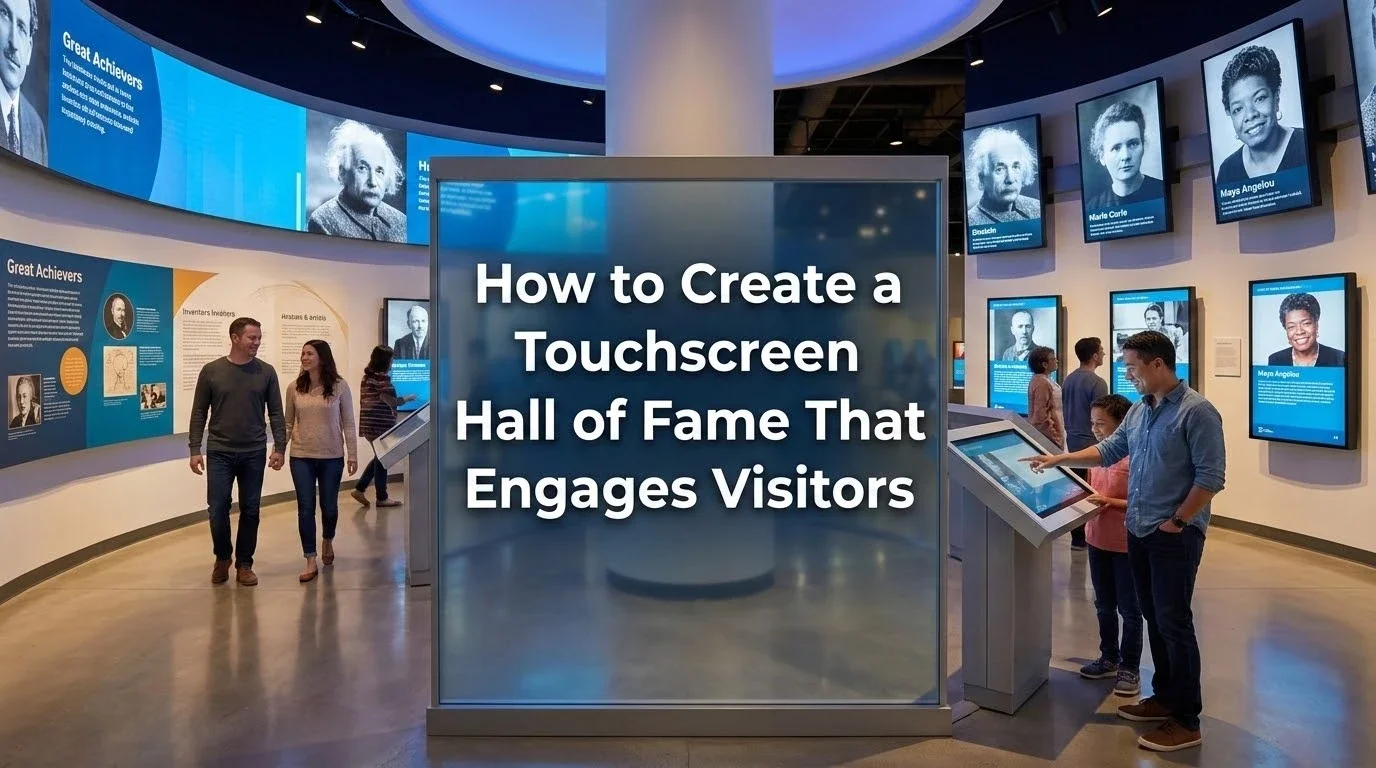
Walk into most high schools or universities today and you will likely see the exact same thing. Brass plaques from 1985 fading in the hallway. Trophies crammed into glass cases where nobody actually reads the names. We've always recognized achievement by taking up physical space. The problem is that eventually, you run out of wall.
Schools often invest thousands in elaborate displays that become obsolete or run out of room just a few years later. That approach simply doesn't scale when you have decades or centuries of school history to preserve. A modern solution is required to handle the volume of achievements without creating physical clutter.
Moving Past Static Displays
Upgrading how you showcase student and alumni achievements solves a very practical operational issue. A digital wall of fame consolidates the physical footprint of your recognition programs. Instead of dedicating entire corridors to static plaques that gather dust, institutions can centralize their history in one interactive footprint.
This matters heavily when you are trying to professionalize your image for prospective students and visitors. When parents walk through the doors for a campus tour, they immediately judge the facility based on the environment. An outdated, cluttered hallway sends the wrong message. A modern interface shows you uphold a state of the art reputation and care about how your institution is perceived. Through digital displays, we transform static halls of fame, plaques, and more into memorable interactive experiences.
You also solve the problem of visibility. Plaques in a back hallway are only seen by people who walk down that specific corridor. By centralizing the information into a bright, engaging format in a high traffic area, you ensure that visitors actually interact with the content.
The Scope of Recognition
Most administrators think too narrowly about what gets celebrated. Athletics almost always get the spotlight. We see the championship teams, the individual records, and the college commitments. Those are great, and they belong there. But they represent just a fraction of the school community.
Academic achievements often get pushed to a small bulletin board near the guidance office. Theater and arts might get a temporary display case during production week and then disappear completely.
When you shift to a software based approach, you get to celebrate and recognize anyone, anywhere, for any achievement with a single click. You can include National Honor Society rosters, gallery showcases of student artwork, and valedictorian histories right alongside the athletic trophies. You can feature STEM initiatives and curriculum guides next to the choir and band programs. The platform handles the volume because it connects to a cloud based database. You are no longer rationing physical space to decide whose story gets told.
This inclusivity helps recruit exceptional students across all disciplines, not just scholar athletes. Future leaders want to see that their specific interests and successes will be valued.
Engaging Your Community and Donors
One of the hardest parts of running an institution is keeping alumni and donors engaged after they leave campus. Traditional donor walls are extremely rigid. You engrave a name on a brick or a metal plate, and that is the end of the transaction. Modern platforms allow for much deeper engagement through impact stories and annual giving reports.
This is where you start to see ROI beyond measure. When you can show a prospective donor exactly how their contribution will be recognized and share the stories of past fundraising campaigns through interactive media, fundraising becomes much easier. The technology gives you a clean way to recognize named scholarships and give opportunities without ordering a new brass plate every single semester.
You can also use the system to promote sponsors effectively. Local businesses want visibility. Treating them as proud partners and giving them a dedicated spot in an interactive display provides better exposure than a static banner on a fence.
The Reality of Updating Content
A common hesitation I hear from school administrators is the fear of maintaining the system. They remember buying expensive hardware ten years ago that quickly became buggy or required a computer science degree to update.
Those days are gone. Today, the core of a touchscreen hall of fame relies on an intuitive content management system. You don't need technical expertise to upload a new team photo, add a recent alumni achievement, or update a staff directory.
If the basketball team wins a regional title on Friday night, the athletic director can update the display on Monday morning. If the drama club has a new cast list, the theater director can add it from their laptop. The database manages the heavy lifting. This keeps your digital legacy current and accurate without relying on an outside agency or an overworked IT staff member.
The flexibility is unmatched. You are no longer dealing with hardware that limits your options.
Expanding the Reach
Your school history shouldn't be trapped in the main lobby. While a large interactive display in the gymnasium or front office makes a great first impression, the content needs to live beyond the building itself. Modern software makes this accessible from anywhere.
Prospective families can explore curriculum guides and student spotlights on their phones from home. Alumni across the country can watch highlight videos from their senior year games or look up their old yearbook photos. You are building a legacy that never graduates. It becomes a living archive that connects with students and alumni across all devices.
This expanded reach is vital when you compete for championships and represent the school on the national stage. Your history and your brand are visible to everyone, not just the people physically standing in your building.
Planning Your Strategy
Start by auditing what you already have. Pull the records from your academic competitions, staff directories, and athletic records. Map out the categories. You need clear navigation so a visitor can find the theater playbills just as easily as the football leaderboards. Think about user experience. People shouldn't have to tap through ten menus to find a famous alumni profile or an alumni game highlight.
If you treat this as just another piece of hardware, it will fail. Treat it as a tool to recruit exceptional students, attract top coaching talent, and preserve your school traditions. By removing the constraints of traditional wall space, tight budgets, and physical locations, you create a lasting asset. Schools have rich histories that should not be forgotten and bright futures that should not be overlooked. Building a dynamic showcase ensures those stories are accessible for generations.
Stay up to date with our latest ideas!